Emilie Flöge (1874–1952) was a Viennese fashion designer and the companion of Gustav Klimt for more than twenty-five years. Their relationship was the closest of his life, yet exactly what it was remains one of the great open questions about the painter.
1874–1892Family ties
Emilie Flöge was born in Vienna in 1874, the youngest daughter of Hermann Flöge, a maker of meerschaum pipes. Her sister Helene married Klimt’s brother Ernst in 1891, and when Ernst died the following year Klimt became guardian of their baby daughter. From then on the Klimt and Flöge families were closely bound together, and Gustav and Emilie were constant companions.
FashionThe Schwestern Flöge salon
In 1904 Emilie and her sisters Helene and Pauline opened a fashion salon, Schwestern Flöge (“Flöge Sisters”), in the Casa Piccola building on Mariahilfer Straße, with interiors designed by Josef Hoffmann and the Wiener Werkstätte. It became one of the leading couture houses in Vienna. Emilie travelled to Paris and London to see the latest collections and made the salon a showcase for “reform dress”, loose, uncorseted clothing that matched the Secession’s ideals of modern design.
Klimt himself designed dresses for her, and in the summer of 1906 photographs taken at the Attersee show Emilie modelling flowing reform dresses that may have been made to his designs.
PaintingThe 1902 portrait
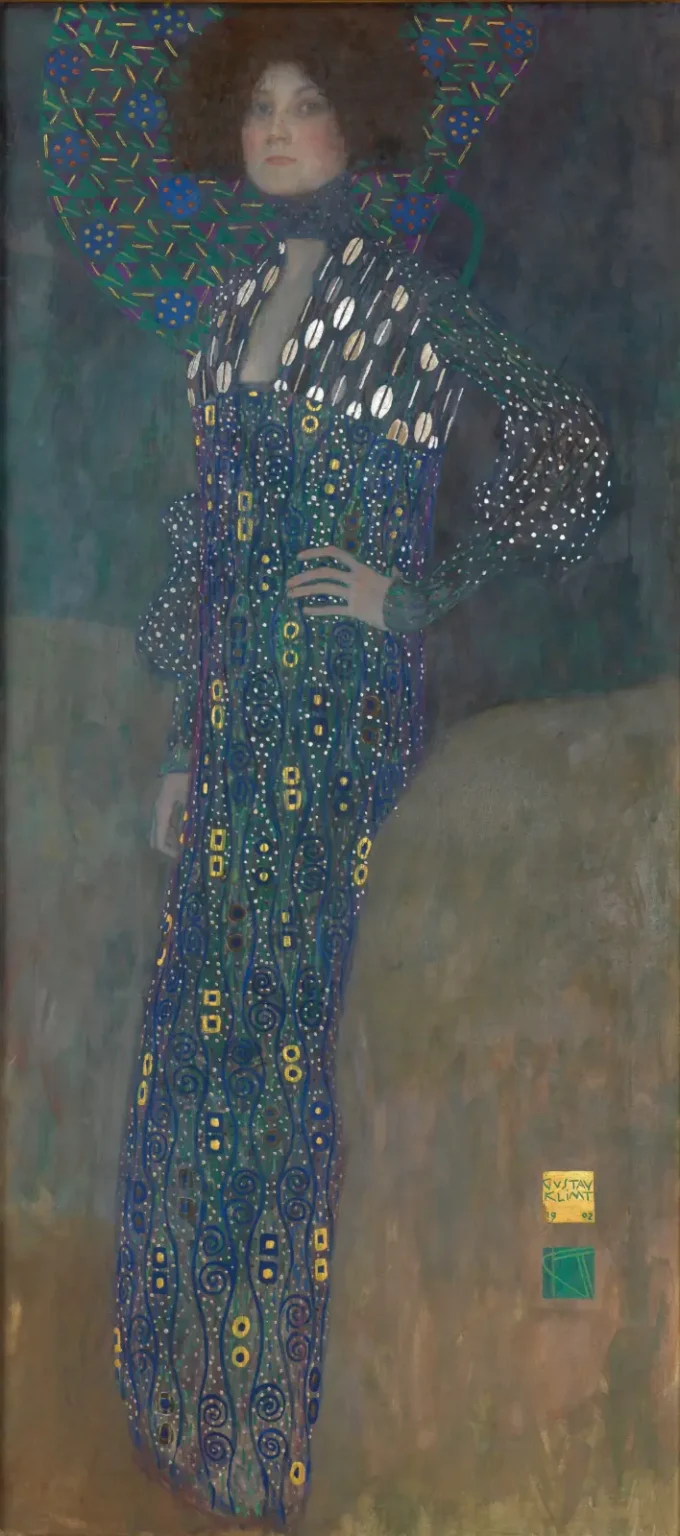
Klimt’s full-length Portrait of Emilie Flöge (1902) shows her in a long blue dress covered in swirling ornament, set against a dark, mosaic-like ground. Emilie is said not to have liked it. The painting was sold to the city of Vienna in 1908 and is now in the Wien Museum.
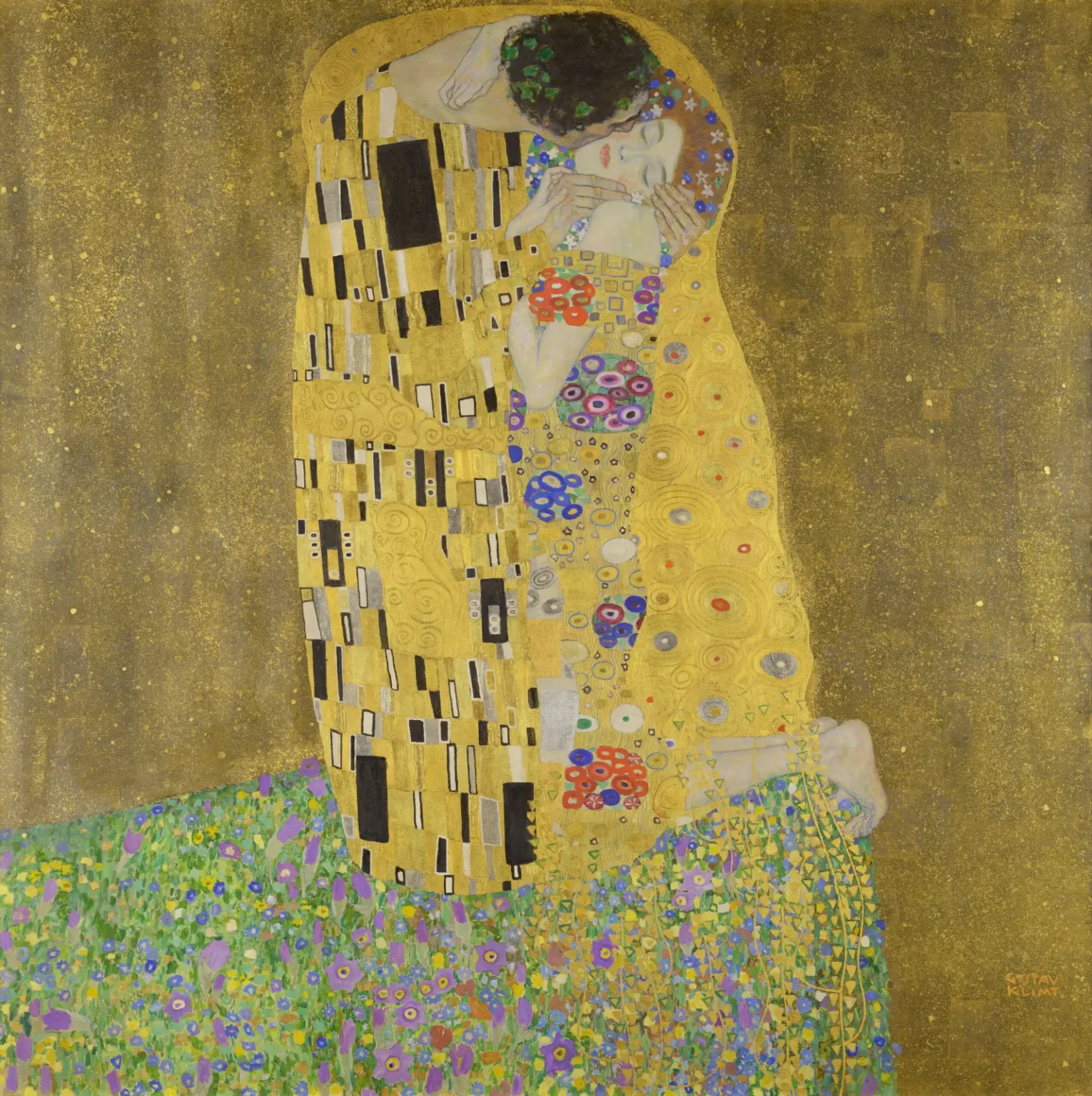
Many writers have also seen Emilie in the woman of The Kiss, with the man as Klimt himself. Neither identification has ever been confirmed.
1900–1916Summers at the Attersee
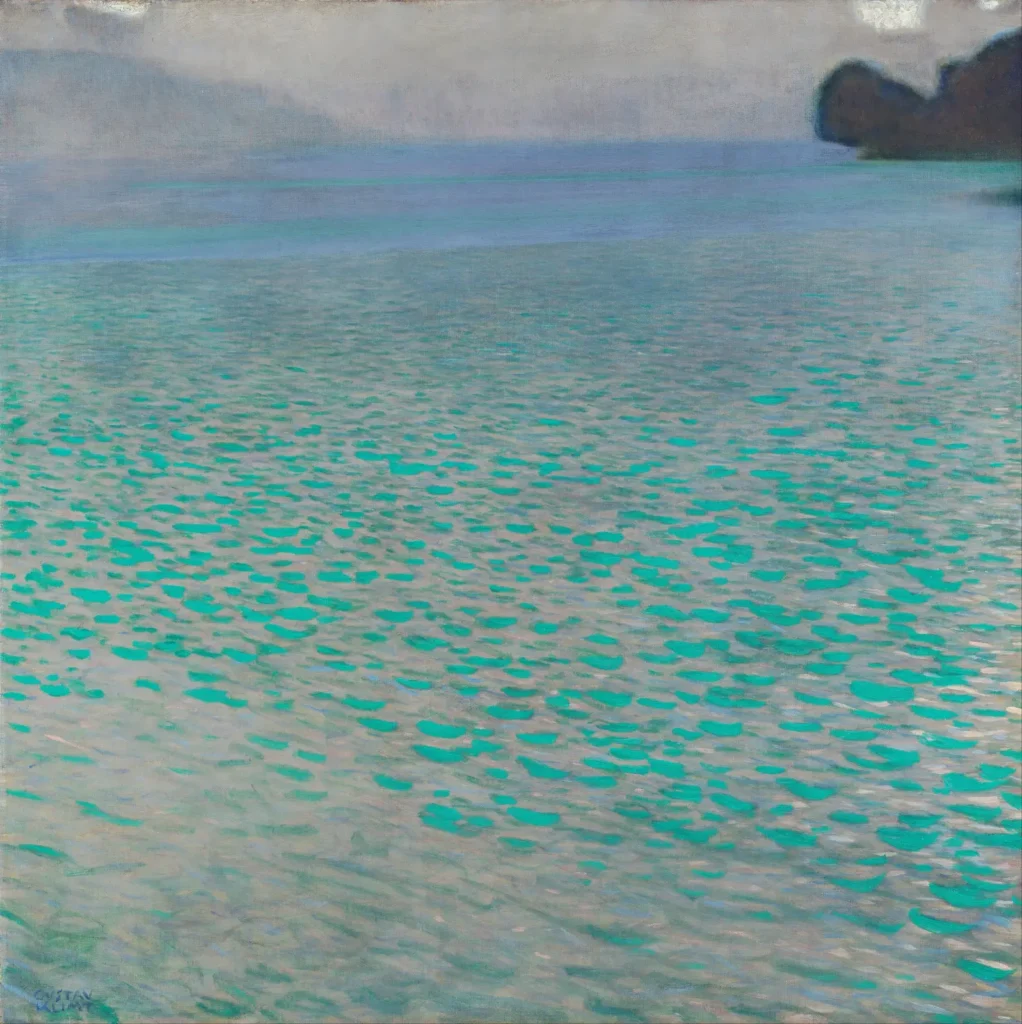
From 1900 Klimt spent his summers with the Flöge family on the Attersee in the Salzkammergut. Here, away from his studio and his patrons, he painted the lake and its shores in the landscapes that became a central part of his work, and he and Emilie rowed, swam and walked together. Hundreds of the postcards Klimt sent her survive, many of them brief notes about the weather, his health and his plans.
The relationshipWhat were they to each other?
Klimt and Emilie never married, never lived together, and no letters between them describe a romantic relationship. Klimt had affairs with other women and fathered children with several of his models. Some historians see Emilie as his intellectual partner and confidante rather than his lover; others believe their bond was deeper than either chose to make public. Klimt is reported to have asked for her after the stroke that led to his death in 1918, and she was one of the heirs to his estate.
1918–1952After Klimt
Emilie ran the salon until 1938, when the annexation of Austria by Nazi Germany cost it much of its Jewish clientele and it closed. Much of what she had kept of Klimt’s, including furniture and papers, was lost when her apartment burned in the last days of the Second World War. She died in Vienna in 1952.
 The Life of Gustav Klimt
 Klimt and Schiele
 Where to see Klimt