The paintings of Klimt’s Golden Phase (around 1899 to 1910) shine because they contain real metal: gold leaf, silver leaf and, in places, metallic paint, combined with oil paint on canvas.
BackgroundA family craft
Klimt’s father was a gold engraver and his brother Georg a metalworker, so he grew up around precious metals. His training as a decorative painter at Vienna’s School of Arts and Crafts also taught him gilding and the techniques of craftsmen.
MethodHow the gold was applied
Gold leaf is gold hammered into sheets so thin they would float in the air. Klimt first prepared the areas to be gilded with an adhesive layer, then laid the leaf on with a brush and pressed it down. He often built up parts of the surface in raised gesso first, so the gold forms low relief that catches the light, as in the spirals and eyes of Adele Bloch-Bauer I. He then painted over and around the gold with oil paint, and sometimes scratched or punched patterns into it.
ExperimentsOther materials
Klimt treated paintings almost like jewellery. The Beethoven Frieze includes applied pieces such as glass, mirror and mother-of-pearl, and the Stoclet Frieze was made in mosaic, enamel and semi-precious stones by craftsmen from his designs.
InspirationRavenna and Byzantium
In 1903 Klimt visited Ravenna in Italy and saw the sixth-century Byzantine mosaics in the church of San Vitale, with their glittering gold backgrounds and flat, hieratic figures. They had a deep effect on him, and the following years produced The Kiss, Danaë and Adele Bloch-Bauer I.
After 1910Why he stopped
Around 1910 Klimt largely abandoned gold for bright colour and pattern, influenced by younger artists and by Matisse and other painters he saw in Paris. Compare Adele Bloch-Bauer II (1912) with the first portrait.
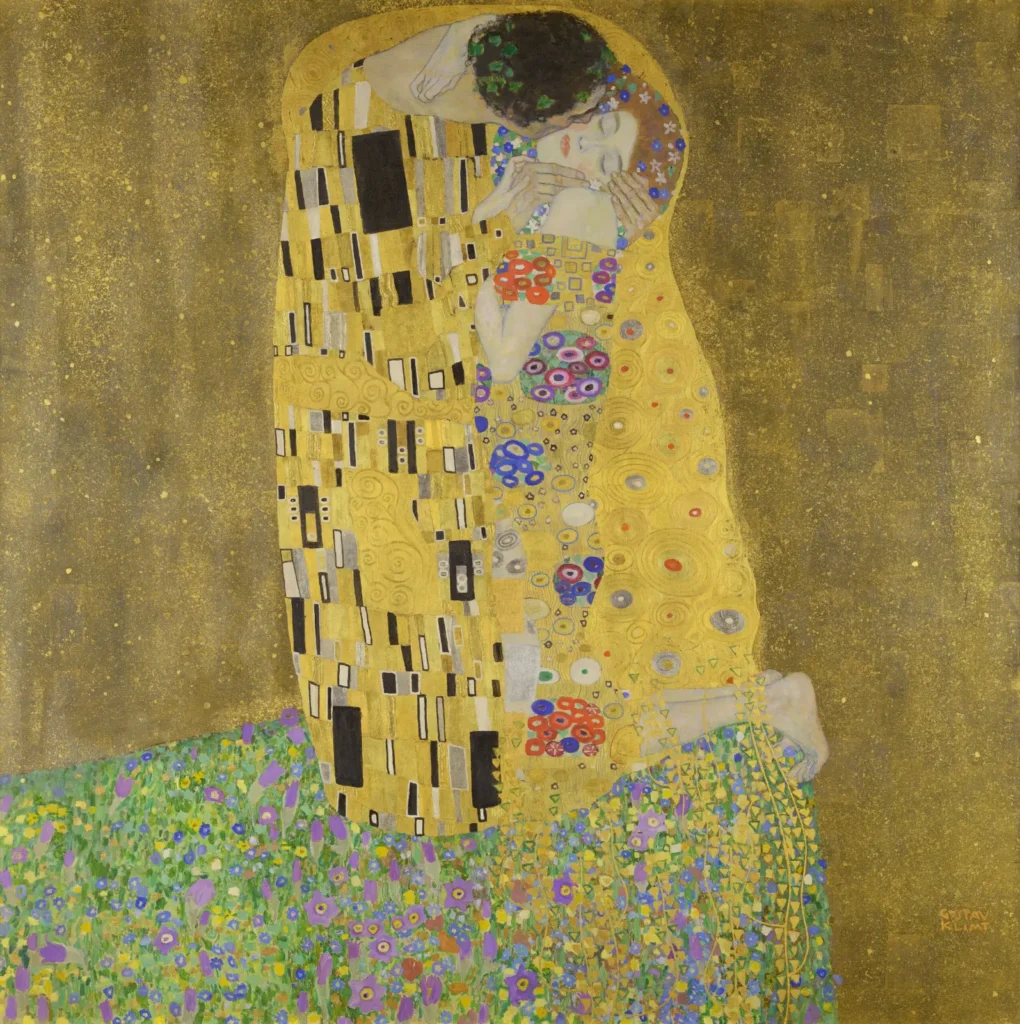 The Golden Phase
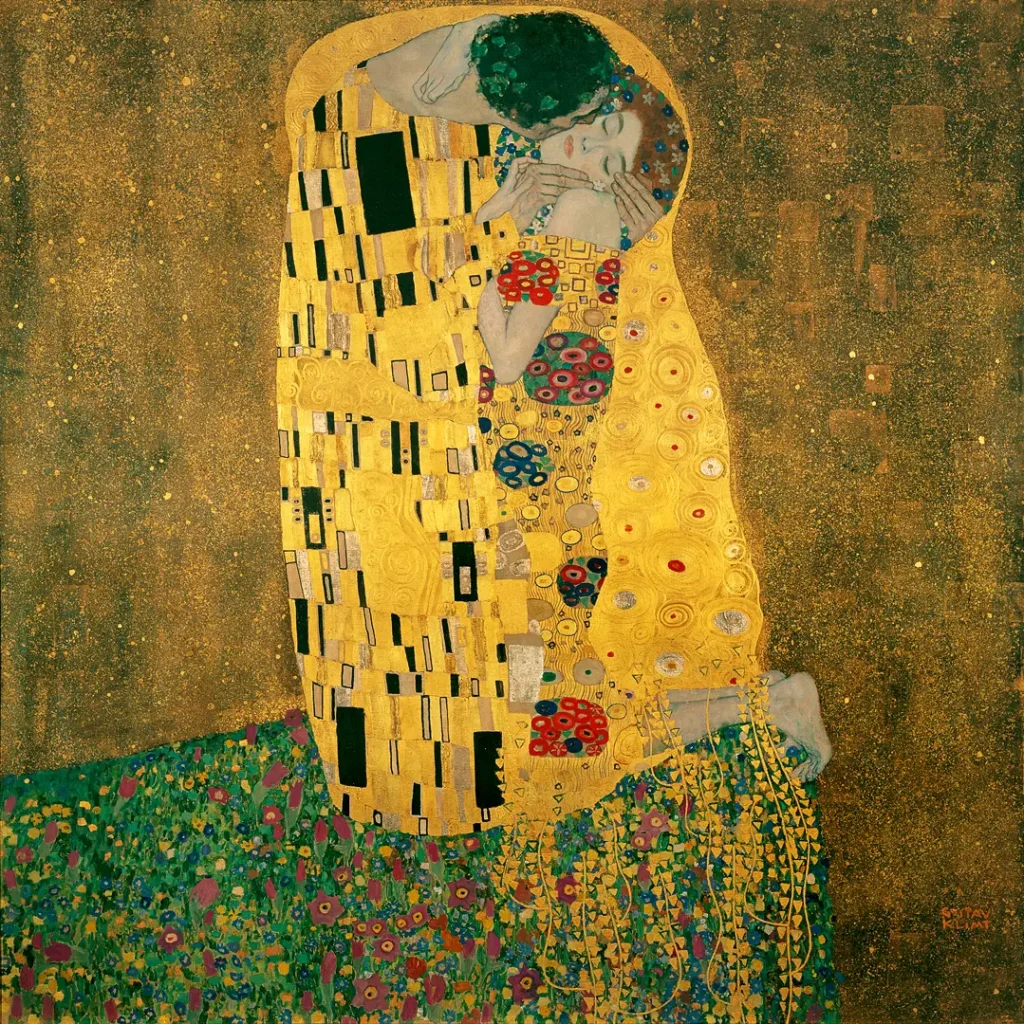 The Kiss
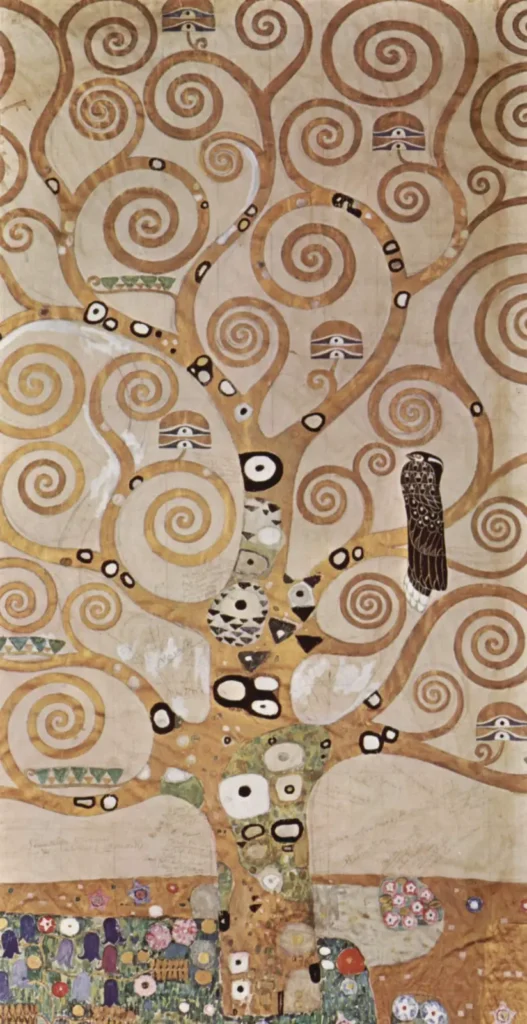 Symbols and patterns
 Explore The Kiss