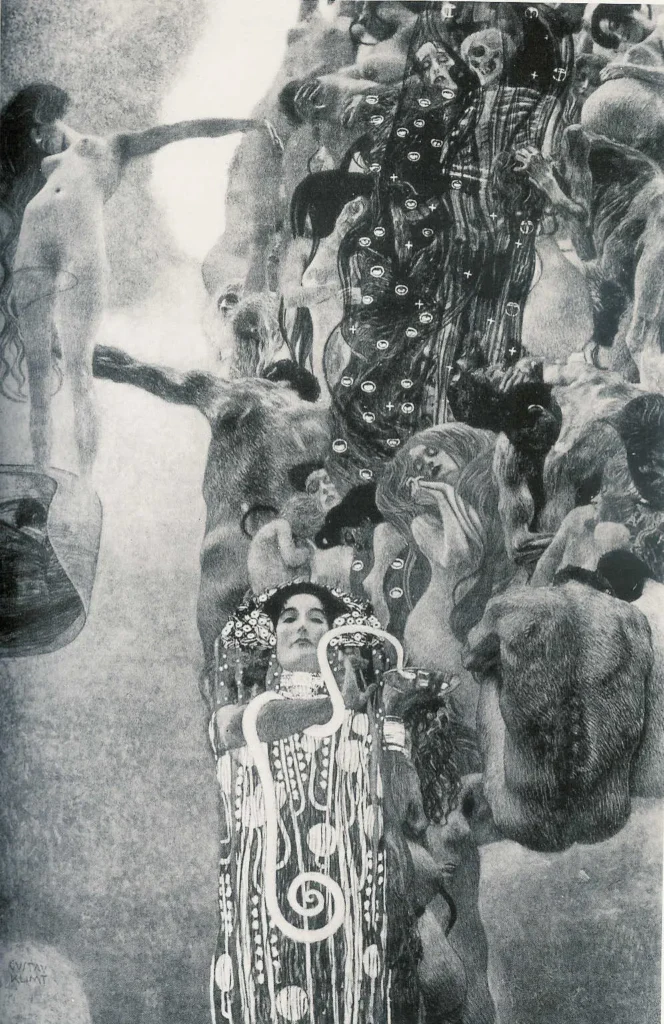
In May 1945 a fire at Schloss Immendorf, a castle in Lower Austria, destroyed a group of Gustav Klimt’s most important paintings. Among them were the three faculty paintings for the University of Vienna, the works that had made him the most controversial artist in Austria.
1900–1907The faculty paintings
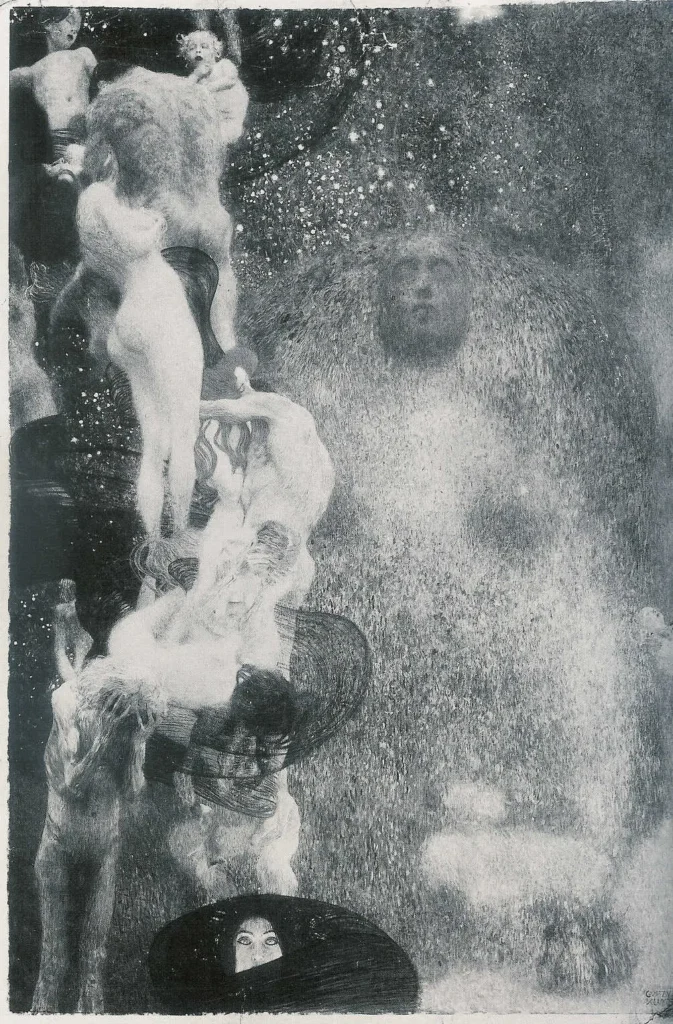
In 1894 Klimt was commissioned to paint three allegories for the ceiling of the University of Vienna’s Great Hall: Philosophy, Medicine and Jurisprudence. Instead of the confident celebration of knowledge the university expected, he painted a dreamlike, pessimistic vision of humanity adrift, with naked, suffering bodies floating through space.
Philosophy provoked protests from university professors when it was shown in 1900, even as it won a gold medal at the Paris World’s Fair. Medicine caused a scandal that reached parliament, and Jurisprudence fared no better. In 1905 Klimt withdrew from the commission and bought the paintings back.
May 1945Schloss Immendorf
By the Second World War, the faculty paintings and other Klimts, many confiscated from Jewish collectors such as the Lederer family, were stored for safety at Schloss Immendorf. On 8 May 1945, as the war in Europe ended, retreating SS troops set the castle on fire. Everything inside was lost.
Besides the three faculty paintings, the fire destroyed works including Music II and Women Friends. They are known today only from black-and-white photographs and a few colour reproductions made before the war, which have been used to attempt digital reconstructions of their original colours.
Portrait of a LadyStolen and found
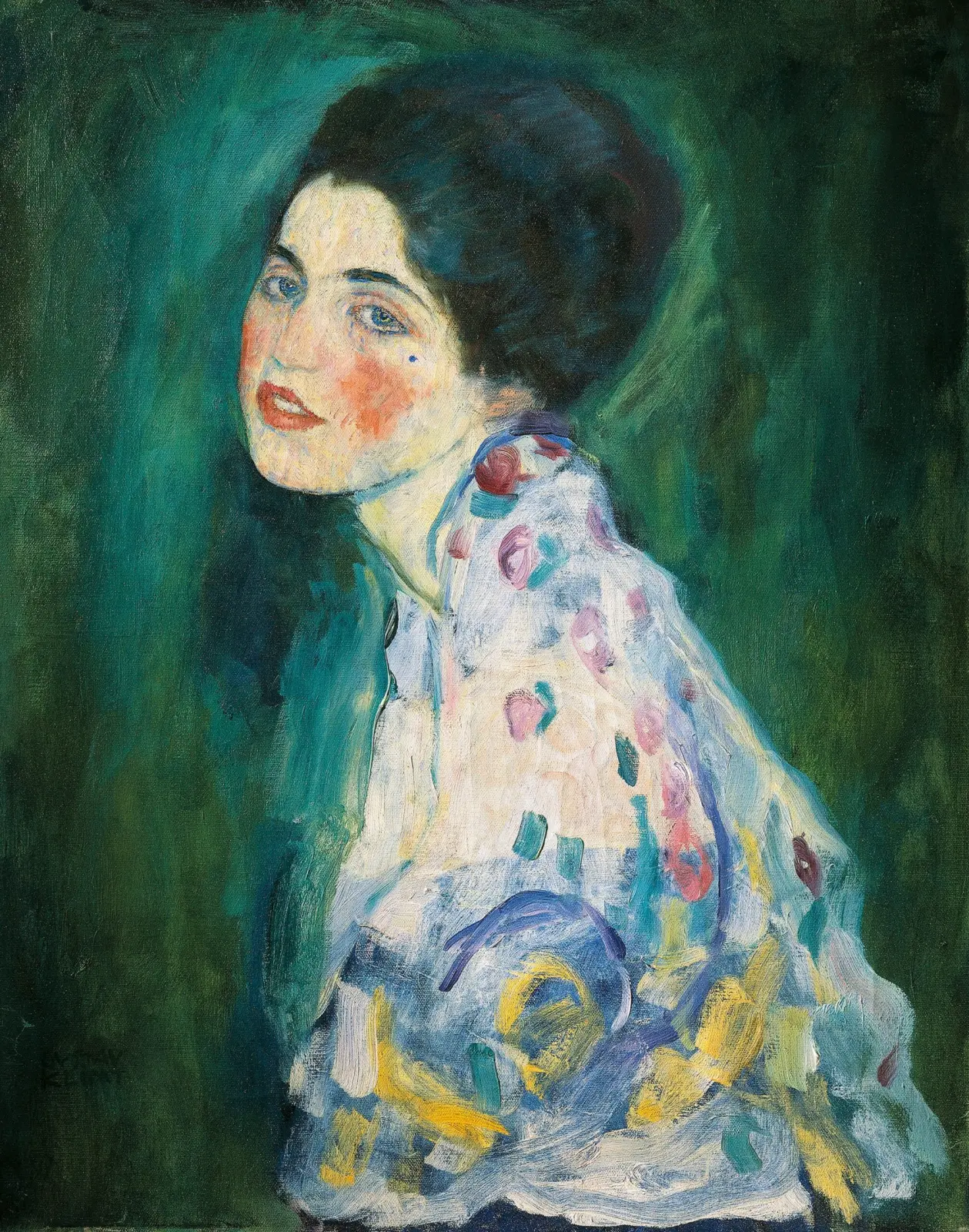
One lost Klimt came back. The Portrait of a Lady (1916–17) was stolen from the Galleria Ricci Oddi in Piacenza, Italy, in 1997. In December 2019 gardeners clearing ivy found it hidden in a cavity in the gallery’s own outer wall, wrapped in a plastic bag, where it had apparently been for years. It has since been authenticated and returned to display.
Explore the paintings that survive in our Klimt painting catalogue, which includes the lost faculty paintings.
 All Klimt paintings
 The Woman in Gold
 The Life of Gustav Klimt
 The Vienna Secession