Compare Klimt Paintings Side by Side
Klimt often returned to the same subject years later. Put the two versions side by side and see how his art changed.
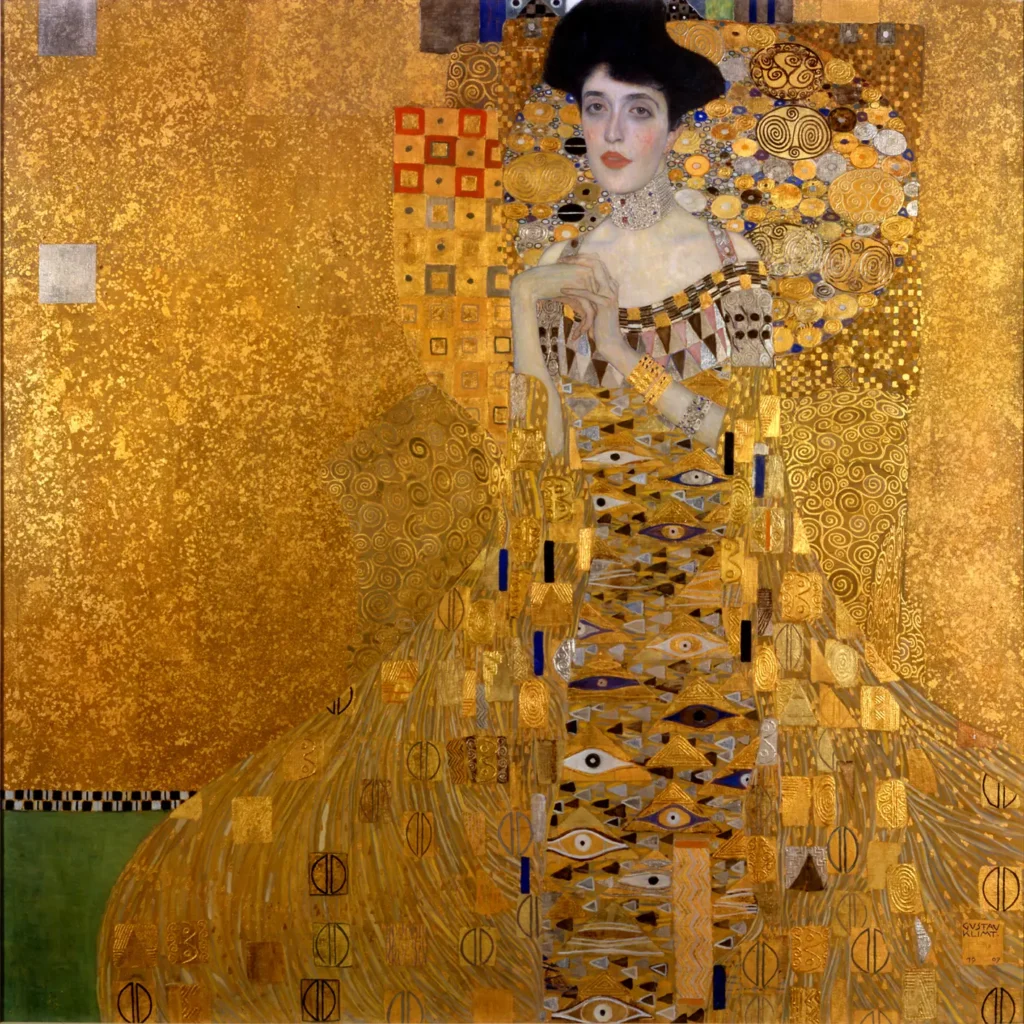
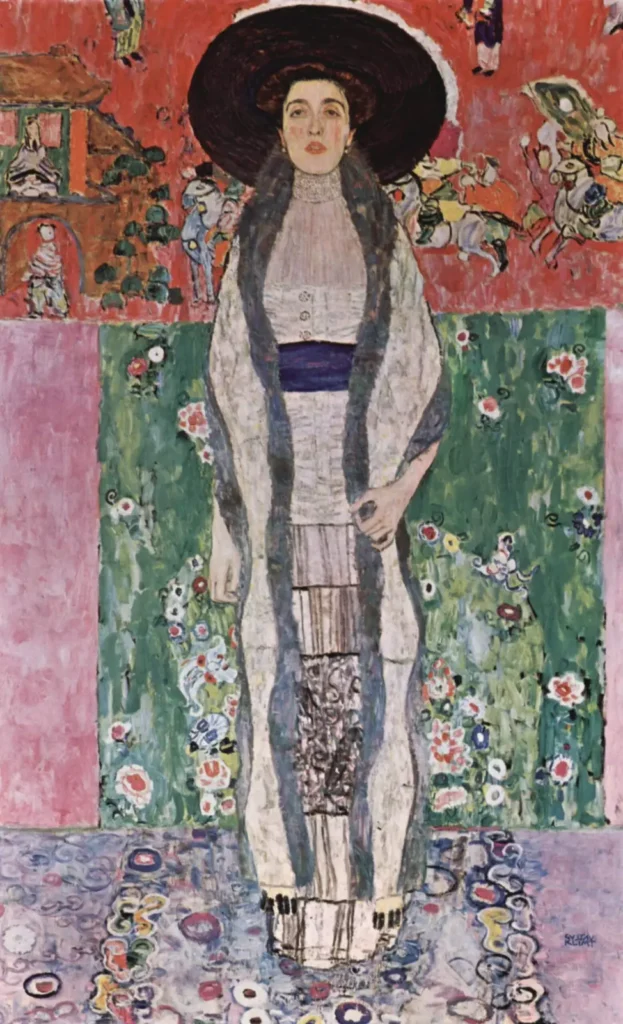
The only person Klimt painted in two full-length portraits. Five years apart, they show his whole change of style: the first is a shimmering field of gold and symbols, the second a bright, flat design of colour and pattern with no gold at all. Both belonged to the Bloch-Bauers, both were seized by the Nazis and both were returned to Maria Altmann in 2006.
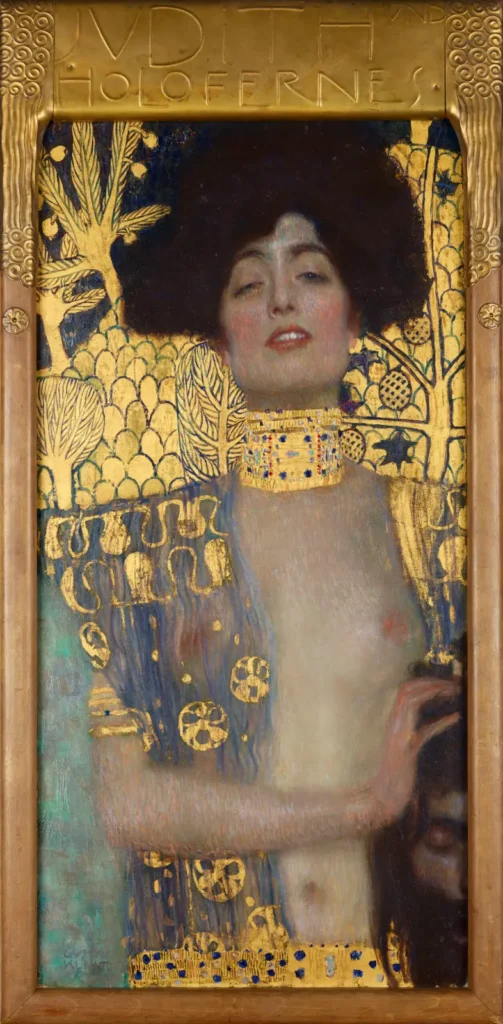
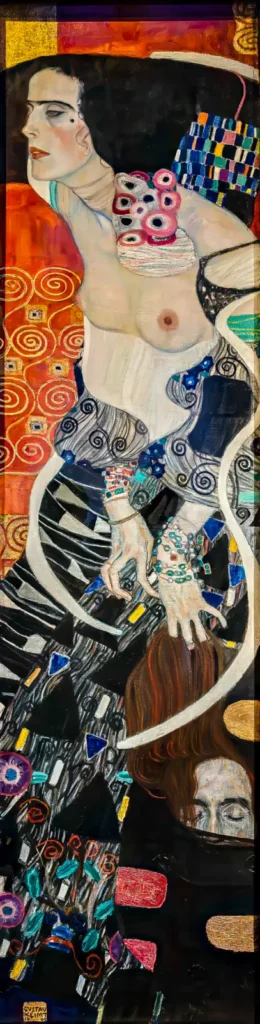
The same biblical heroine, eight years apart. Judith I is calm, sensual and framed in gold; Judith II is tense and claw-handed, stretched into a tall, narrow format with a hard, angular style influenced by the younger generation.
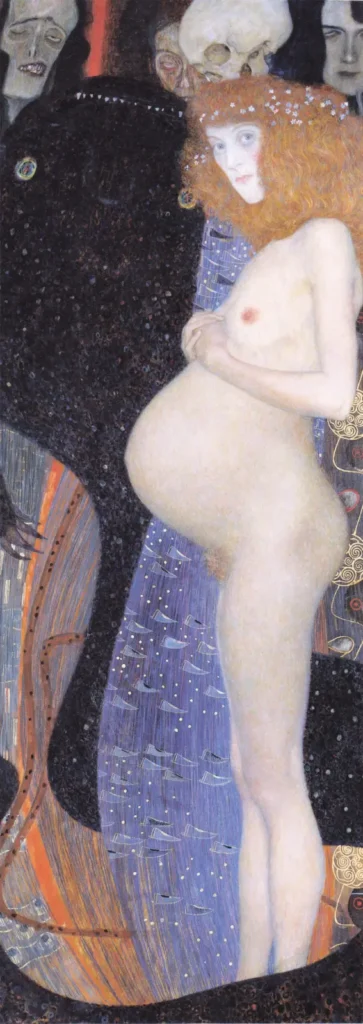
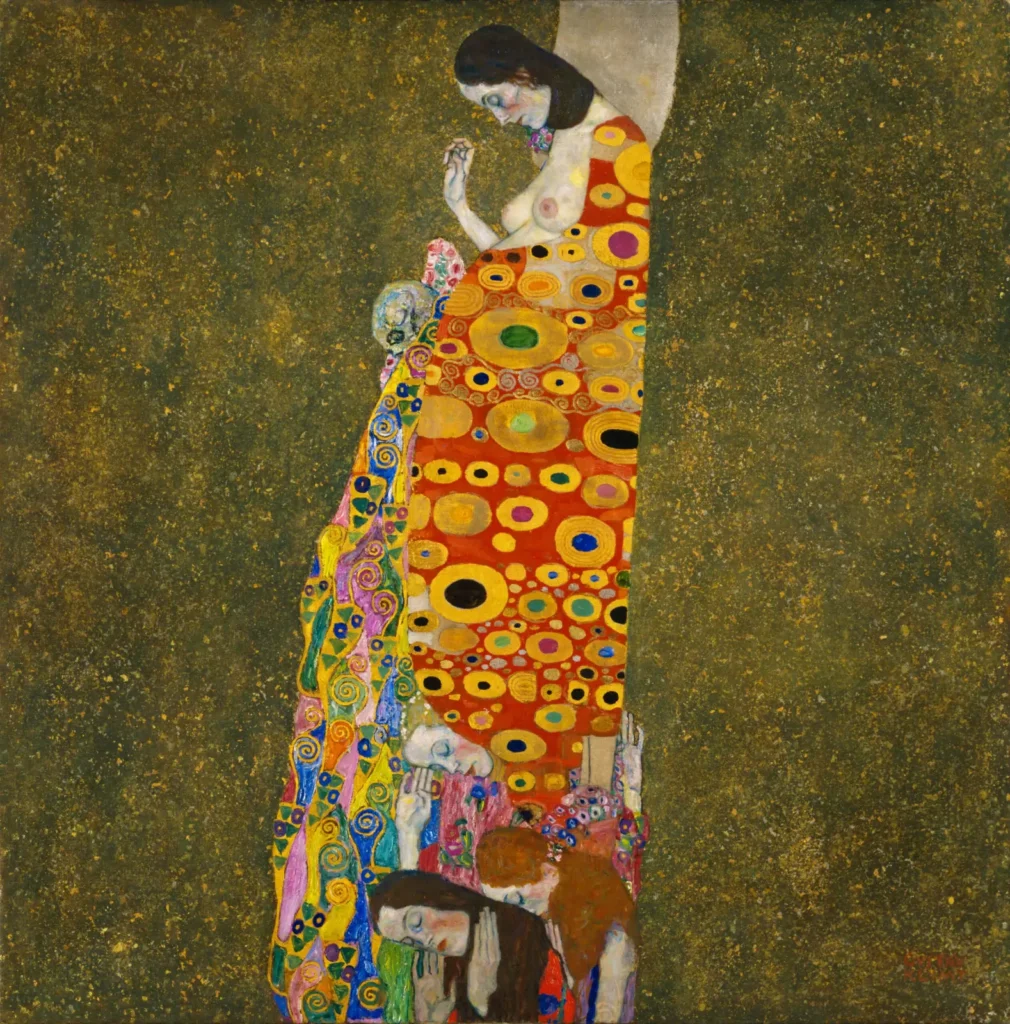
Both show a pregnant woman with death close by. Hope I is a frank nude so daring it was kept from view for years; Hope II wraps the same model in a golden robe, with praying women at her feet and a skull resting on her belly.
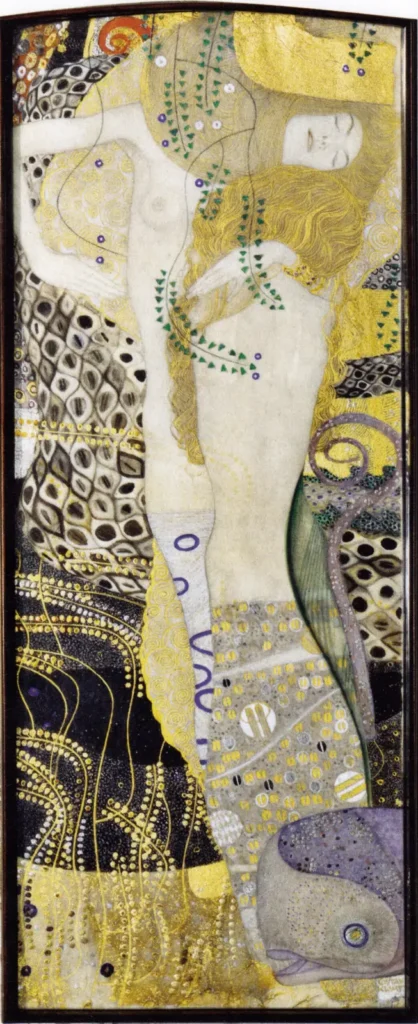
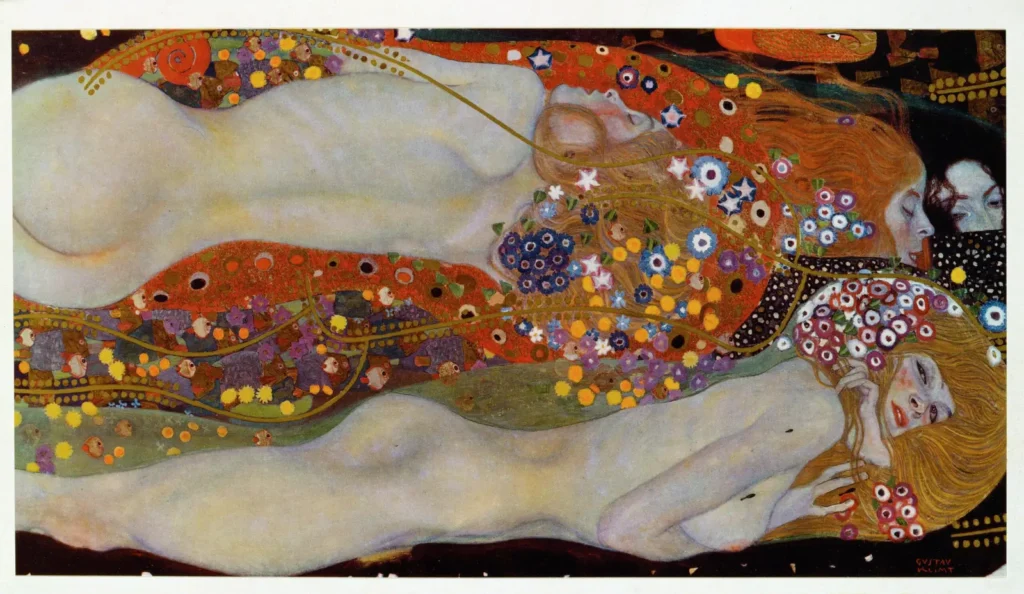
Two visions of women floating in water. The first is small, vertical and jewel-like, worked in gold and watercolour on parchment; the second is a larger, horizontal oil painting where the women drift and sleep in a dark stream of flowing hair.
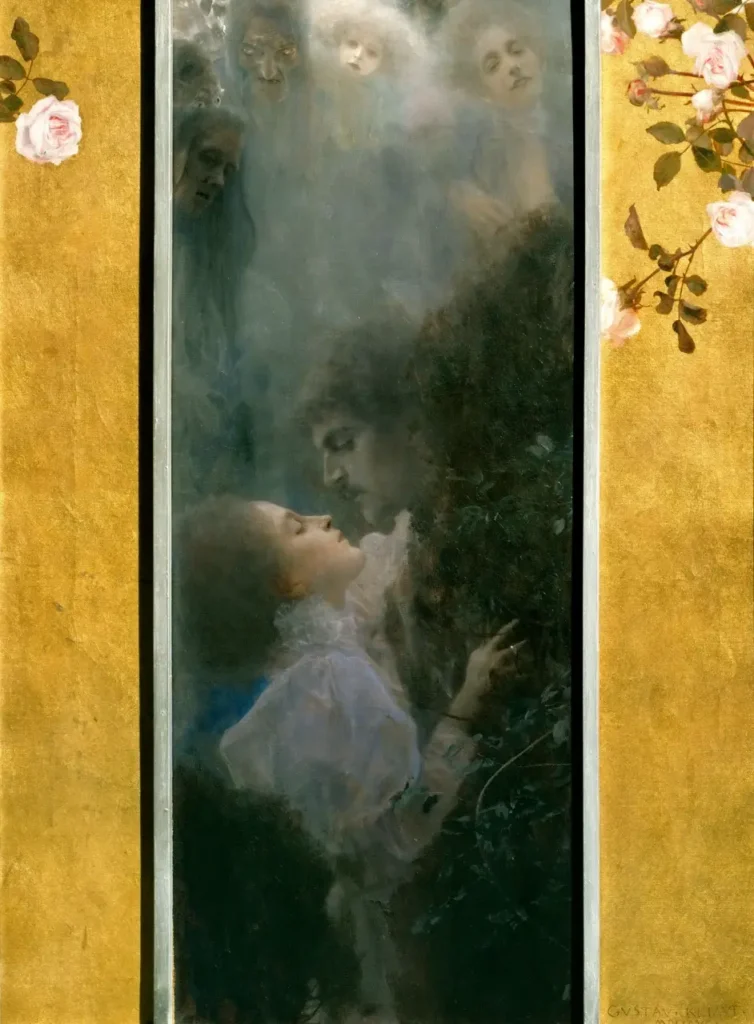
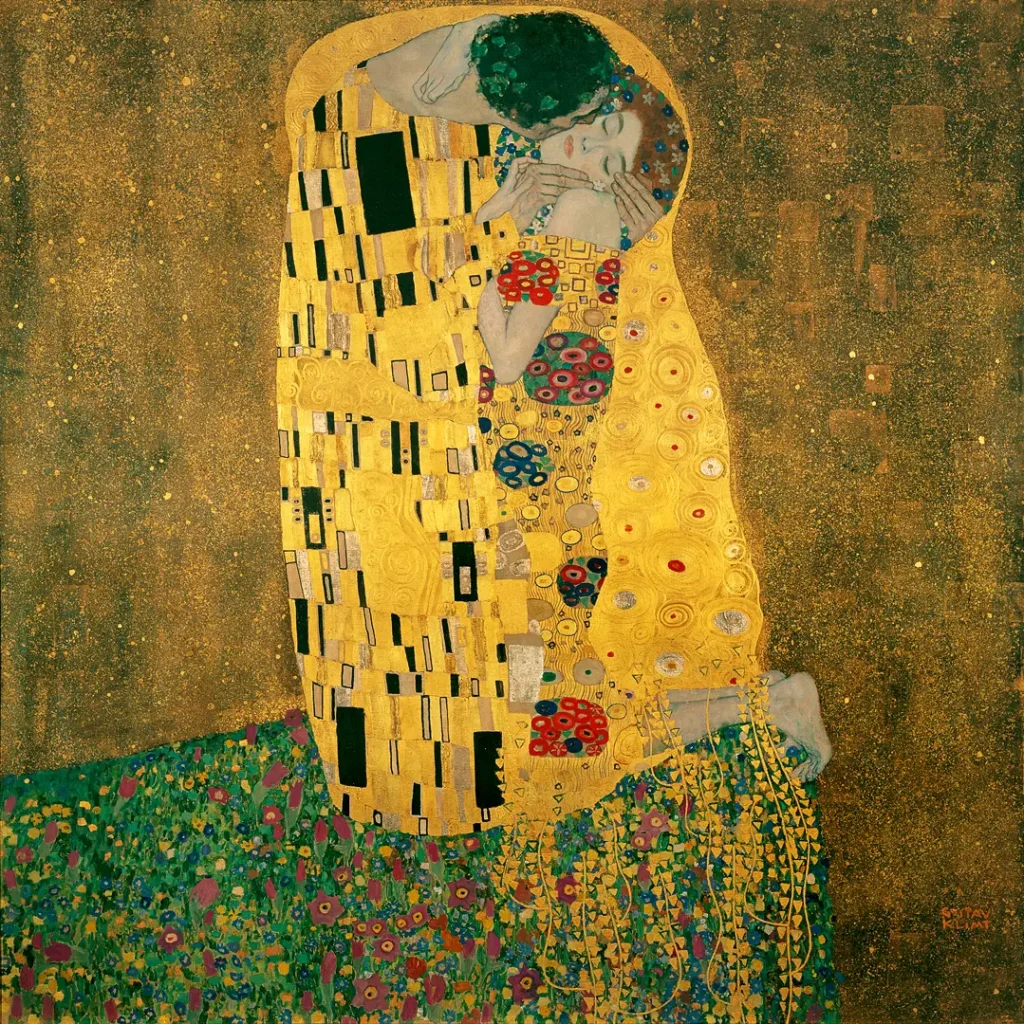
Twelve years separate these two embracing couples. In Love the pair are painted naturalistically, watched by ghostly faces; in The Kiss they are fused into one golden shape, with only faces and hands left in the real world.
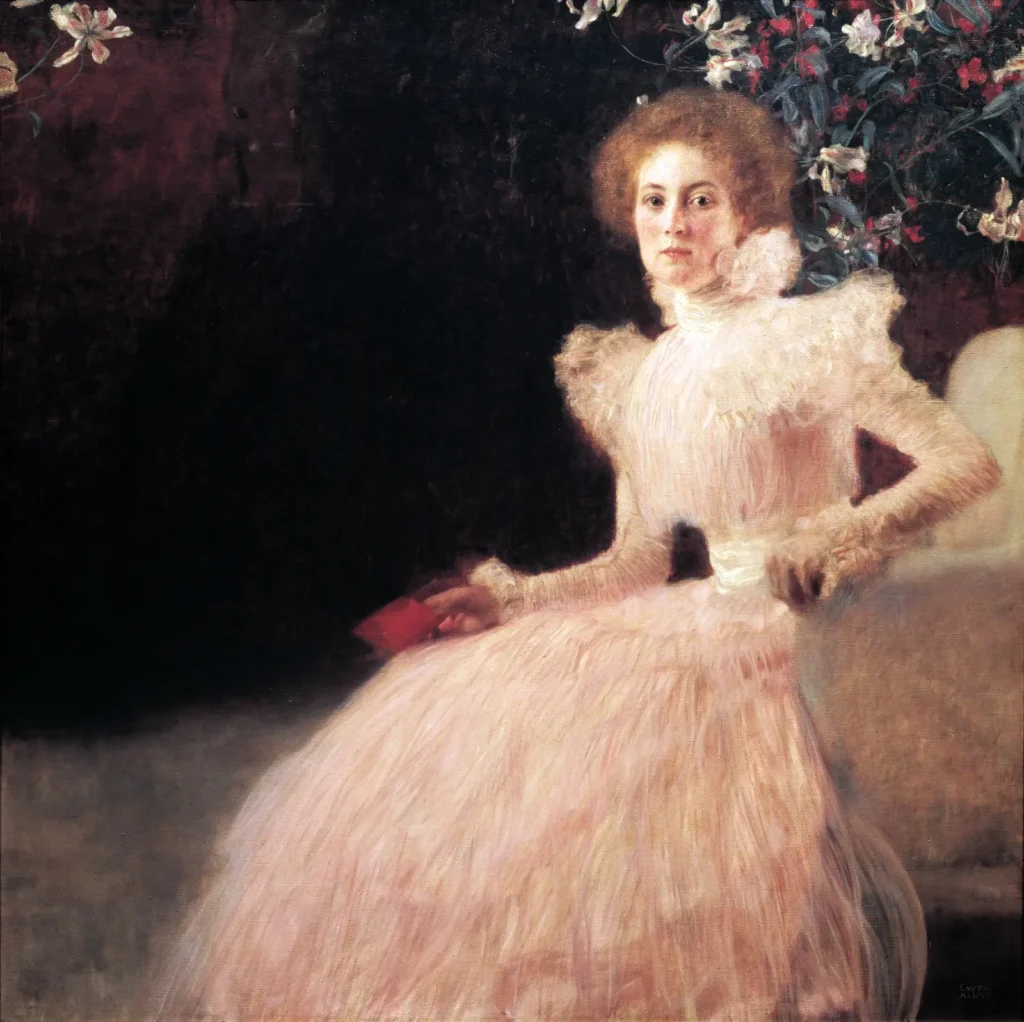
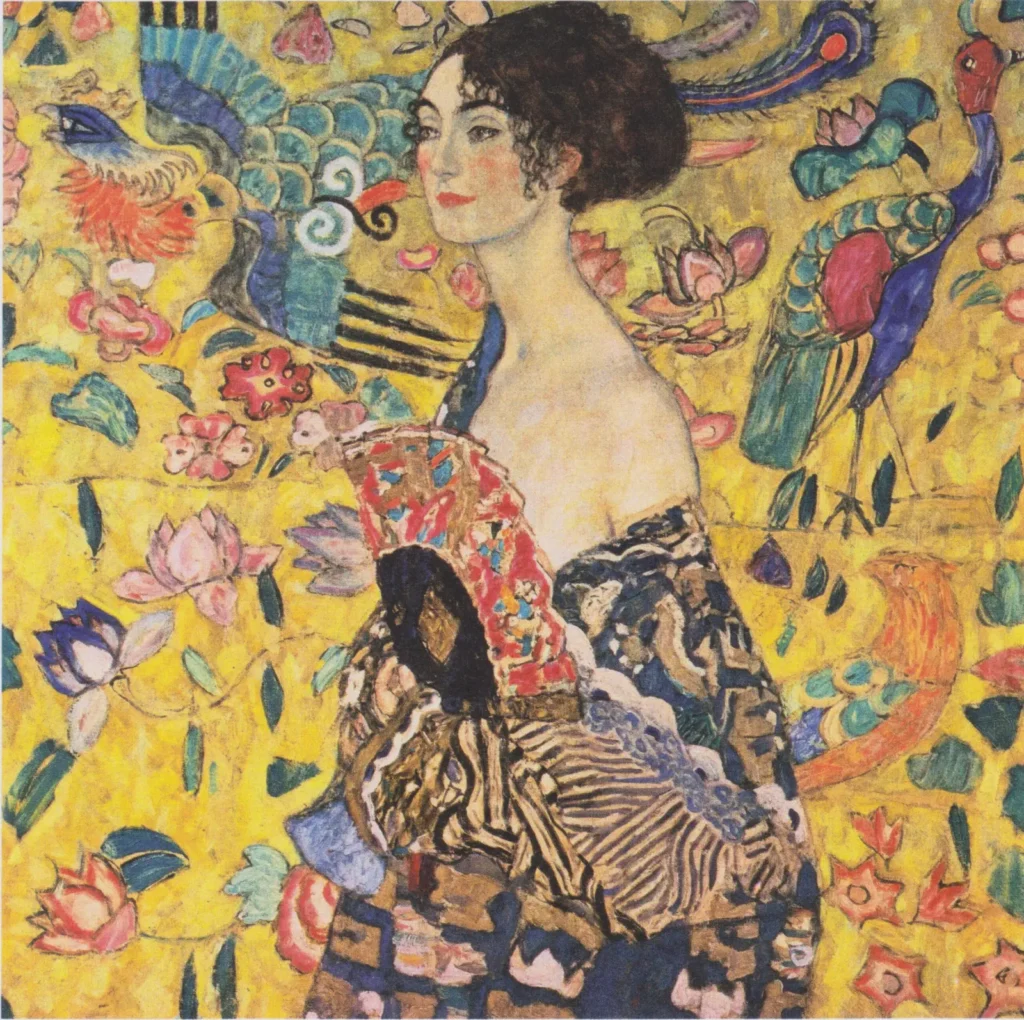
Klimt’s portraits from the start and end of his mature career. Sonja Knips sits in a misty, Whistler-like room of pink and grey; the Lady with a Fan turns her bare shoulder against a blaze of Chinese-inspired birds and flowers.
How Klimt’s style changed
Klimt moved from the academic realism of his early decorative work, through the gold of his Golden Phase, to the bright colour of his late years. Follow it step by step on the Klimt timeline or in the catalogue of his paintings.