Gustav Klimt (1862–1918) and Egon Schiele (1890–1918) are the two great painters of Vienna 1900. Twenty-eight years apart in age, they were mentor and protégé, friends and, in the end, two of the most famous victims of the last year of the First World War.
1907First meeting
Schiele, born in Tulln on the Danube in 1890, was a seventeen-year-old student at the Vienna Academy of Fine Arts when he met Klimt in 1907. He admired Klimt intensely, and his early work is full of Klimt’s influence: flat ornamental grounds, gold, and elongated, stylised figures.
Klimt was generous to the young artist. He is said to have bought or exchanged drawings with him, introduced him to collectors and patrons, and helped him make contacts with the Wiener Werkstätte.
BreakthroughThe Kunstschau of 1909
In 1909 Klimt invited Schiele to show his work at the second Kunstschau, the exhibition organised by the Klimt group after it left the Vienna Secession. It was Schiele’s first major public exhibition. Within a year he had moved far beyond Klimt’s style towards the raw, angular and psychologically intense figures that define his work.
Ornament and anguishDifferent artists
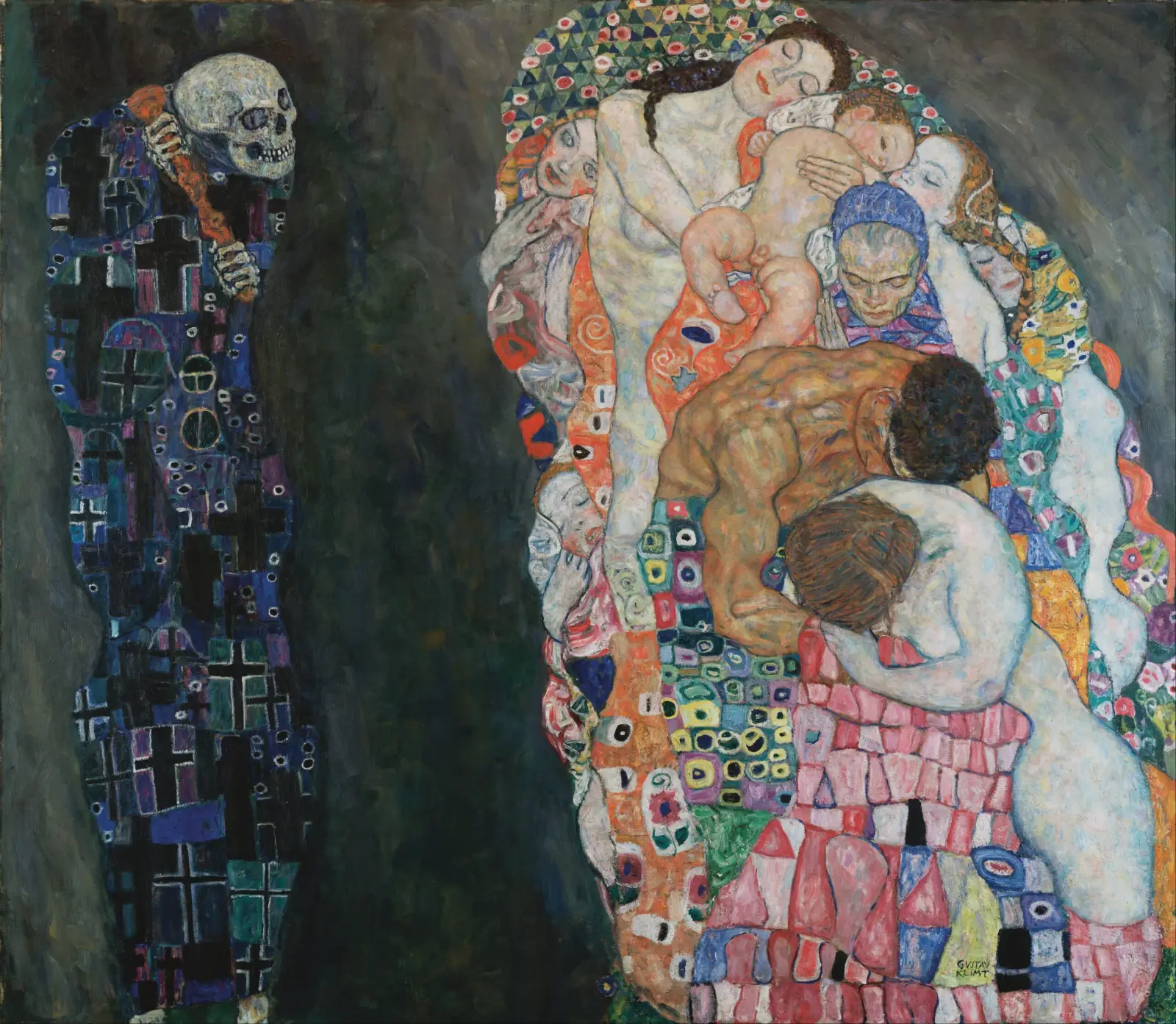
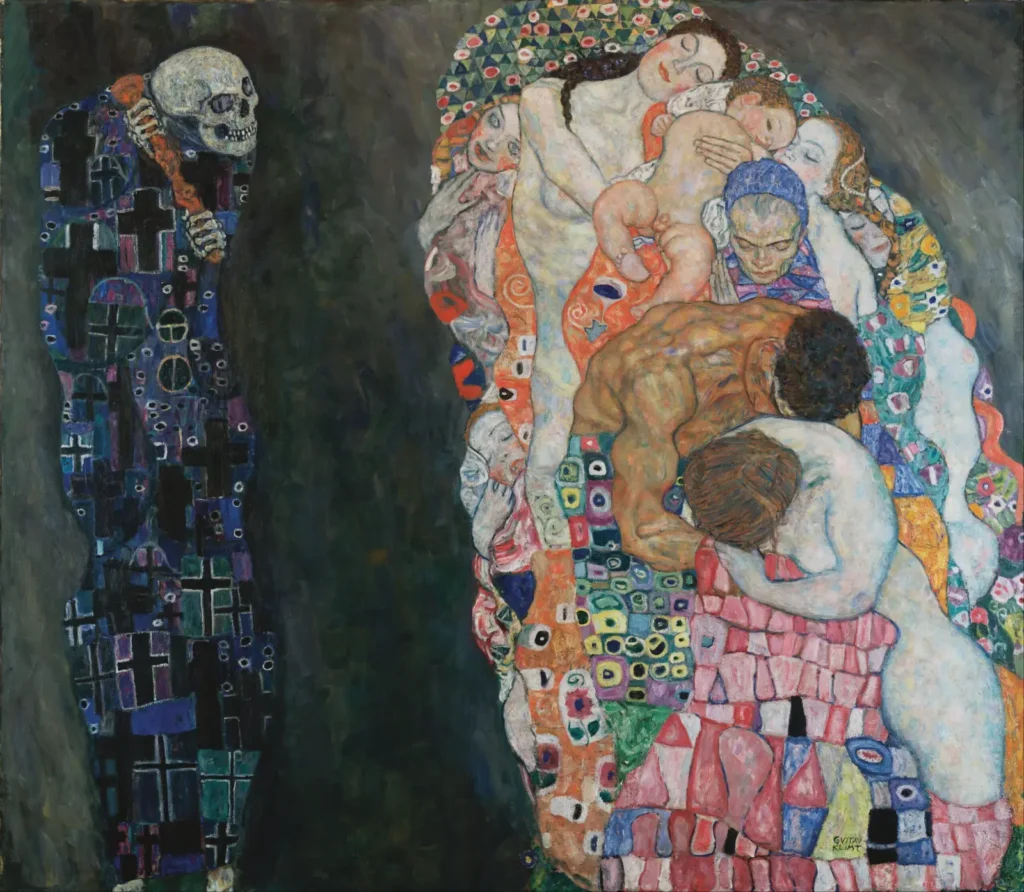
Where Klimt wrapped his figures in gold and pattern, Schiele stripped them bare. His nudes and self-portraits are thin, twisted and exposed, drawn with a nervous, expressive line. Klimt’s women are often serene or ecstatic; Schiele’s figures are anxious and confrontational. Yet both returned again and again to the same themes of love, sexuality, death and the cycle of life, as in Klimt’s Death and Life.
Schiele acknowledged the debt. His painting The Hermits (1912) shows two cloaked figures, usually read as Schiele and Klimt, standing close together.
The end of an era1918
When Klimt died in February 1918, Schiele made drawings of him on his deathbed. In March that year Schiele was the star of the Secession’s 49th exhibition and was widely seen as Klimt’s successor at the head of Austrian art. Seven months later, in October 1918, he died of the Spanish flu, three days after his pregnant wife Edith. He was 28.
Today the two artists can be seen side by side in Vienna, above all at the Leopold Museum and the Belvedere. See our guide to where to see Klimt.
 The Life of Gustav Klimt
 The Vienna Secession
 Death and Life
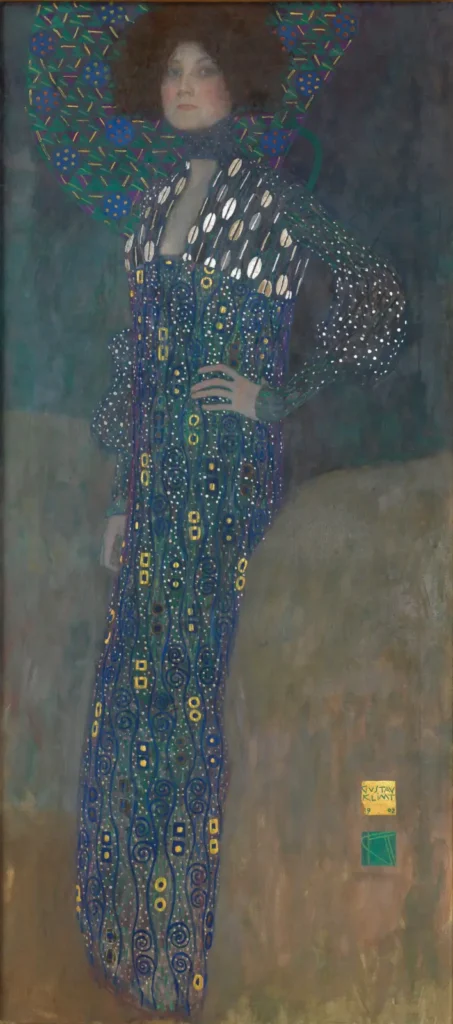 Emilie Flöge