Gustav Klimt died in Vienna on 6 February 1918, at the age of 55, in the last year of the First World War.
Cause of deathWhat happened
On 11 January 1918 Klimt suffered a stroke at his apartment in Vienna, which left him partly paralysed on his right side, so that he could no longer paint. He was taken to the General Hospital, where he developed pneumonia, and he died there on 6 February. 1918 was also the year of the Spanish flu pandemic, which is often linked to his death, though the immediate cause recorded was the stroke and pneumonia. Emilie Flöge is said to have been the first person he asked for.
Last portraitSchiele’s drawings
The day after his death, his friend and admirer Egon Schiele drew Klimt on his deathbed in the hospital mortuary. Schiele himself died of the Spanish flu eight months later, in October 1918.
VisitHis grave
Klimt is buried in Hietzing Cemetery in Vienna (Hietzinger Friedhof), not far from Schönbrunn Palace. The simple grave bears only his name in gold letters. It is near the Klimt Villa, his last studio, which you can also visit.
LegacyThe unfinished paintings
When he died, several large canvases stood unfinished in his studio, giving a rare view of how he worked: drawing the figures first, then painting faces and bodies before the decorative clothing and backgrounds. They include The Bride, Adam and Eve, Baby (Cradle) and the Portrait of Amalie Zuckerkandl. His last completed portraits include Lady with a Fan.
ReputationAfter his death
In the decades after 1918 Klimt was seen as old-fashioned, and many of his works were seized, lost or destroyed during the Nazi era and the war; see lost Klimt paintings. His reputation revived from the 1960s, and today he is among the most popular painters in the world; see Klimt’s legacy.
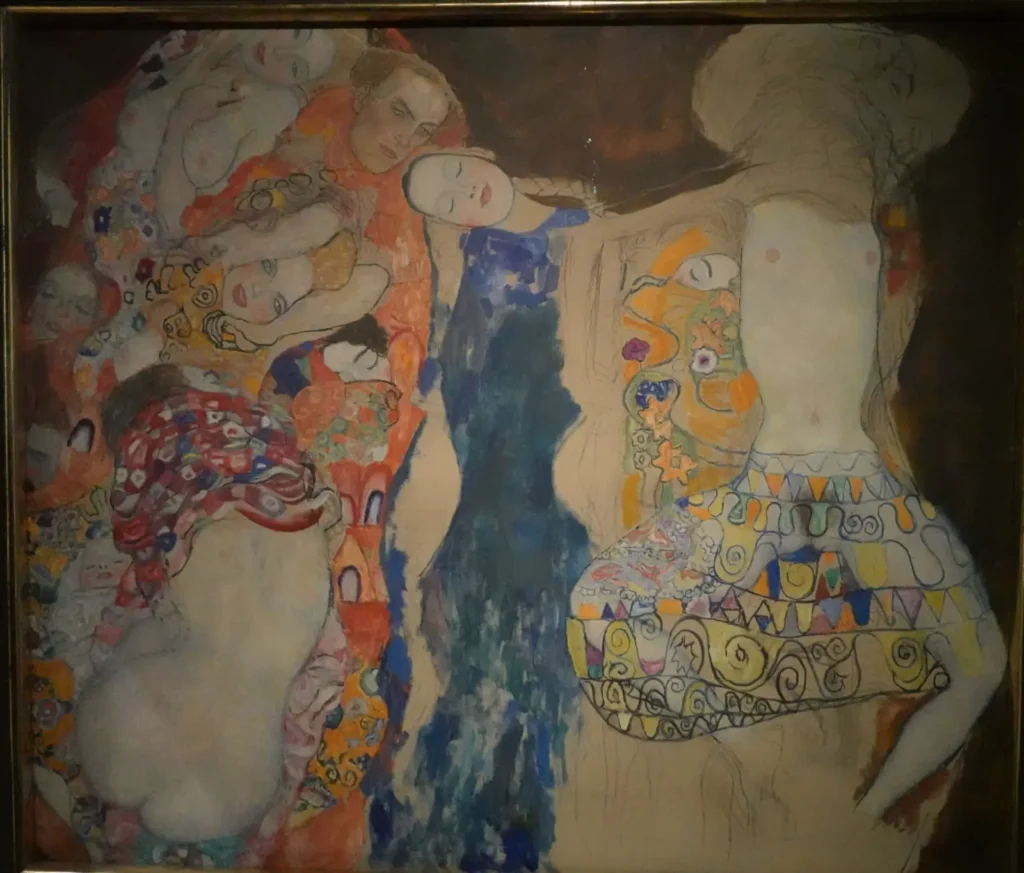 The Bride
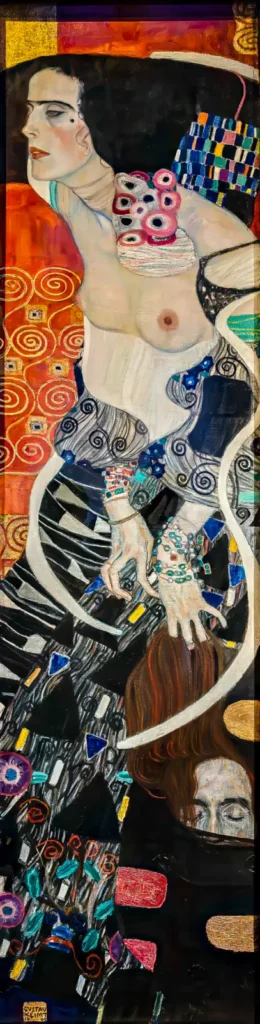 Klimt and Schiele
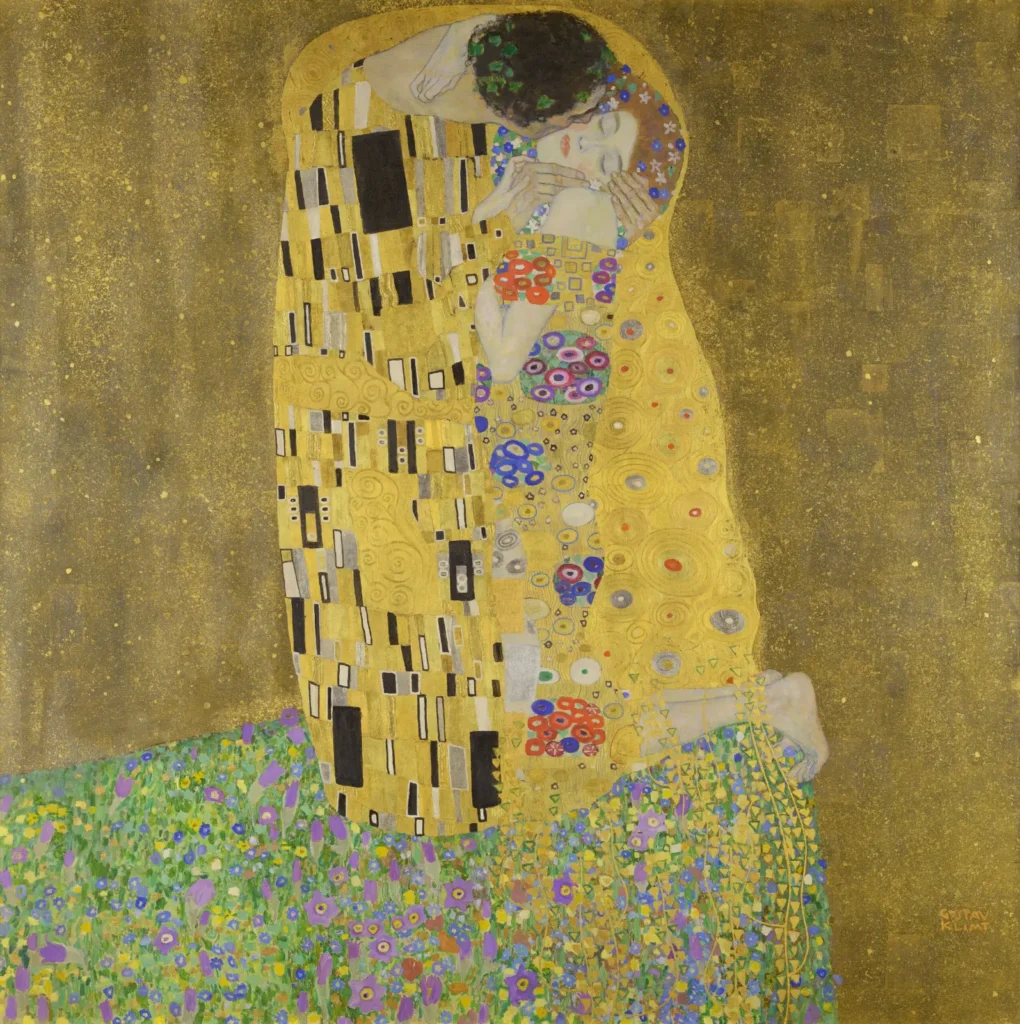 Klimt’s legacy
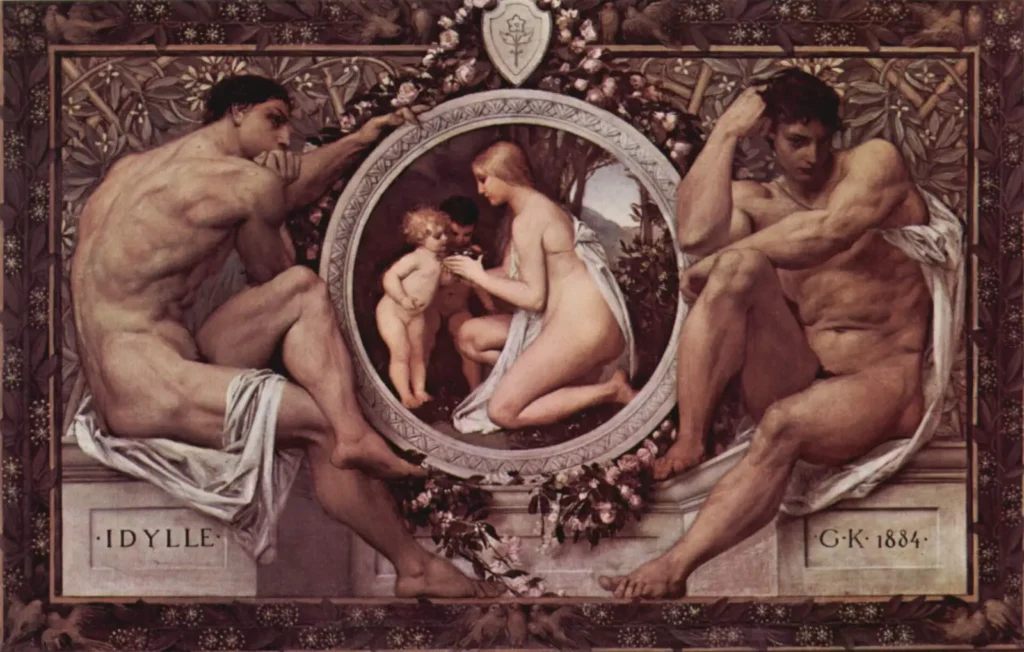 Klimt timeline