Klimt filled his paintings with patterns taken from ancient Egypt, Greece, Byzantium and Japan. He rarely explained them, but many carry recognisable meanings.
Male and femaleSquares and circles
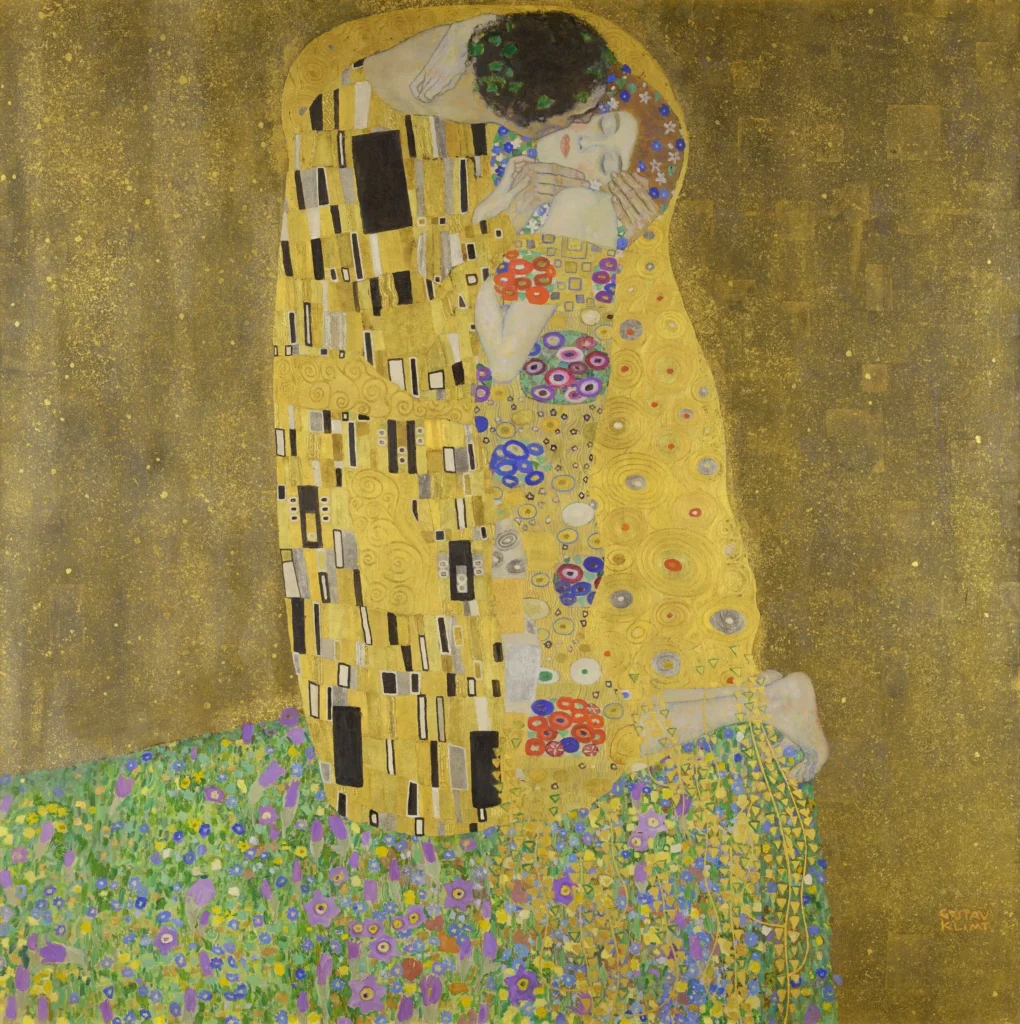
In The Kiss the man’s robe is covered with black and white rectangles, while the woman’s dress is full of circles and flowers. Art historians usually read the hard, upright squares as masculine and the soft, round forms as feminine, two opposites joined in one golden shape.
Life and eternitySpirals
The great curling branches of the Tree of Life spiral endlessly outwards. Spirals appear in ancient Mycenaean and Celtic art, and in Klimt they suggest growth, the cycle of life and eternity.
WatchingEyes
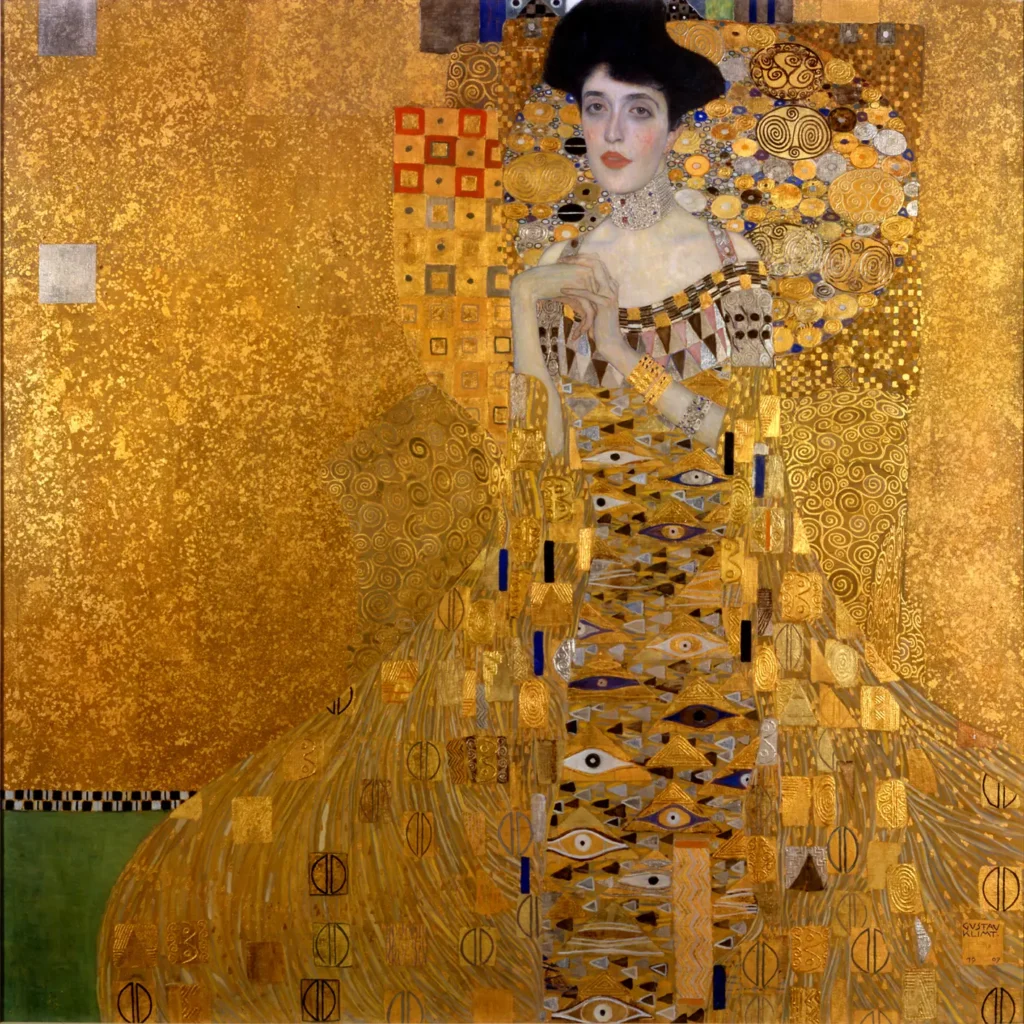
Eye-shaped motifs, inspired by the Egyptian Eye of Horus, appear on robes and backgrounds, most famously in the dress of Adele Bloch-Bauer I. They may stand for protection or for being watched, and some writers see Adele’s initials hidden among the gold ornament.
Nature and desireSnakes, fish and water
Snakes, fish and flowing water recur in paintings of women such as Water Serpents and Goldfish, and in Nuda Veritas. They connect the female body with nature, fertility and temptation.
LifeFlowers
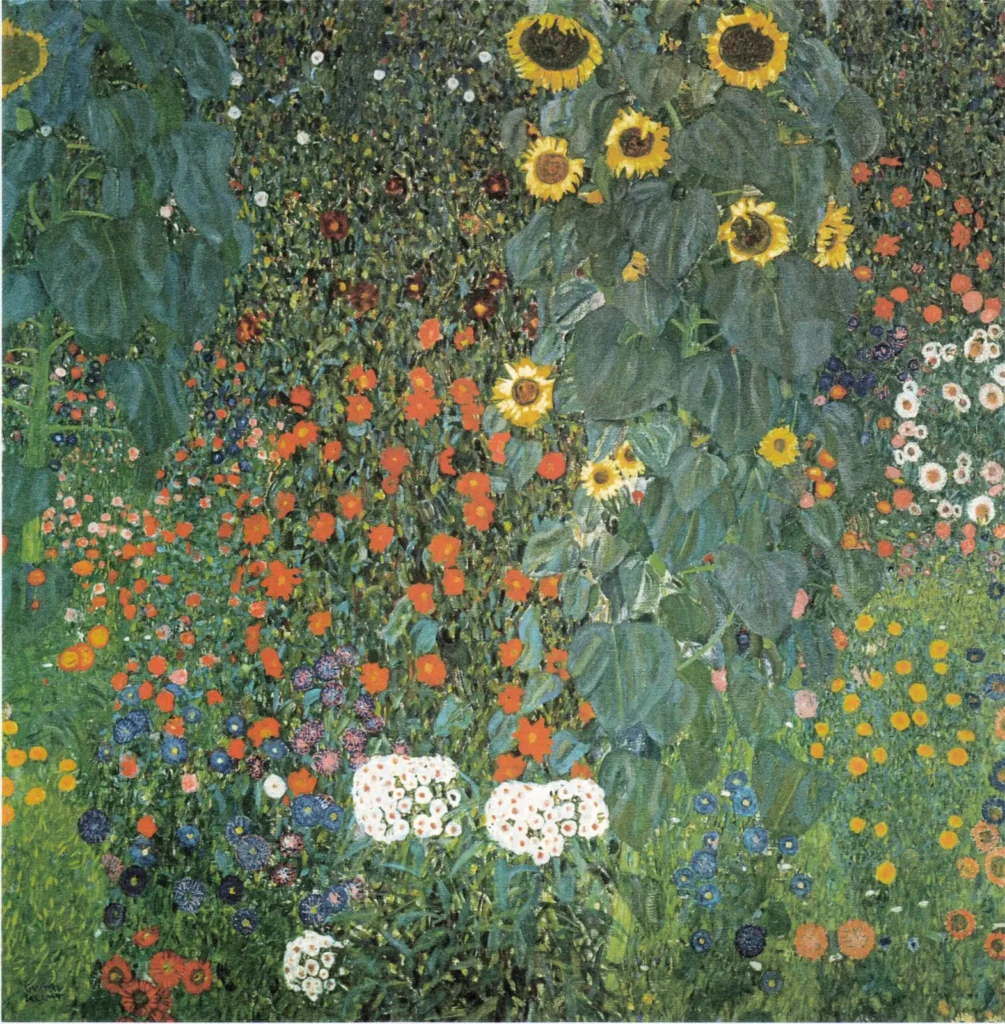
Flowers fill the meadows beneath lovers and the dresses of his later sitters, linking people to the cycle of the seasons, as in his garden landscapes like Farm Garden with Sunflowers.
SourcesWhere the patterns came from
Klimt studied ancient art in Vienna’s museums, admired the Byzantine mosaics he saw in Ravenna in 1903, and collected Japanese woodcuts, textiles and Chinese porcelain. His brother Georg and the designers of the Wiener Werkstätte worked with similar ornament. For colours, try our Klimt colour palettes, and see how the gold was made in Klimt’s gold leaf technique.
 Explore The Kiss
 Gold leaf technique
 Colour palettes
 The Golden Phase