Like many European artists of his generation, Klimt was fascinated by the art of Japan, which flooded into Europe after the 1860s. Vienna saw major displays of Japanese art, and the Secession held an exhibition of it in 1900.
CollectionWhat Klimt collected
Klimt owned Japanese woodblock prints, kimonos and textiles, and Chinese and Korean objects. Photographs of his last studio show East Asian robes and pictures on the walls; you can see a reconstruction at the Klimt Villa.
InfluenceSquare formats and flat space
Japanese prints taught European artists to flatten space, crop scenes boldly and treat a picture as a decorative surface. Klimt’s square landscapes and his figures set against flat gold grounds owe much to this. Even his signature, often placed in a small square, recalls the red seals on Japanese prints.
InfluenceGold and pattern
Gold-leaf screens from Japan, with their figures set against shimmering grounds, are one of the sources for the gold of his Golden Phase, alongside Byzantine mosaics. The repeating motifs of kimono fabrics echo in the robes of The Kiss.
Late workEast Asian backgrounds
In his last years Klimt filled the backgrounds of portraits with figures, birds and flowers taken from Chinese and Korean art and porcelain, as in Friederike Maria Beer, Lady with a Fan, Adele Bloch-Bauer II and The Dancer. See also Klimt’s symbols and patterns.
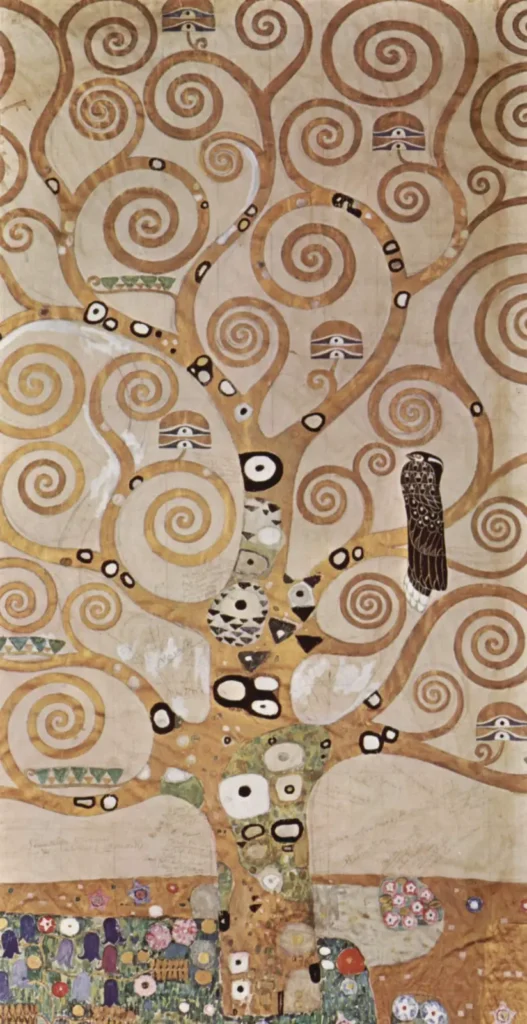 Symbols and patterns
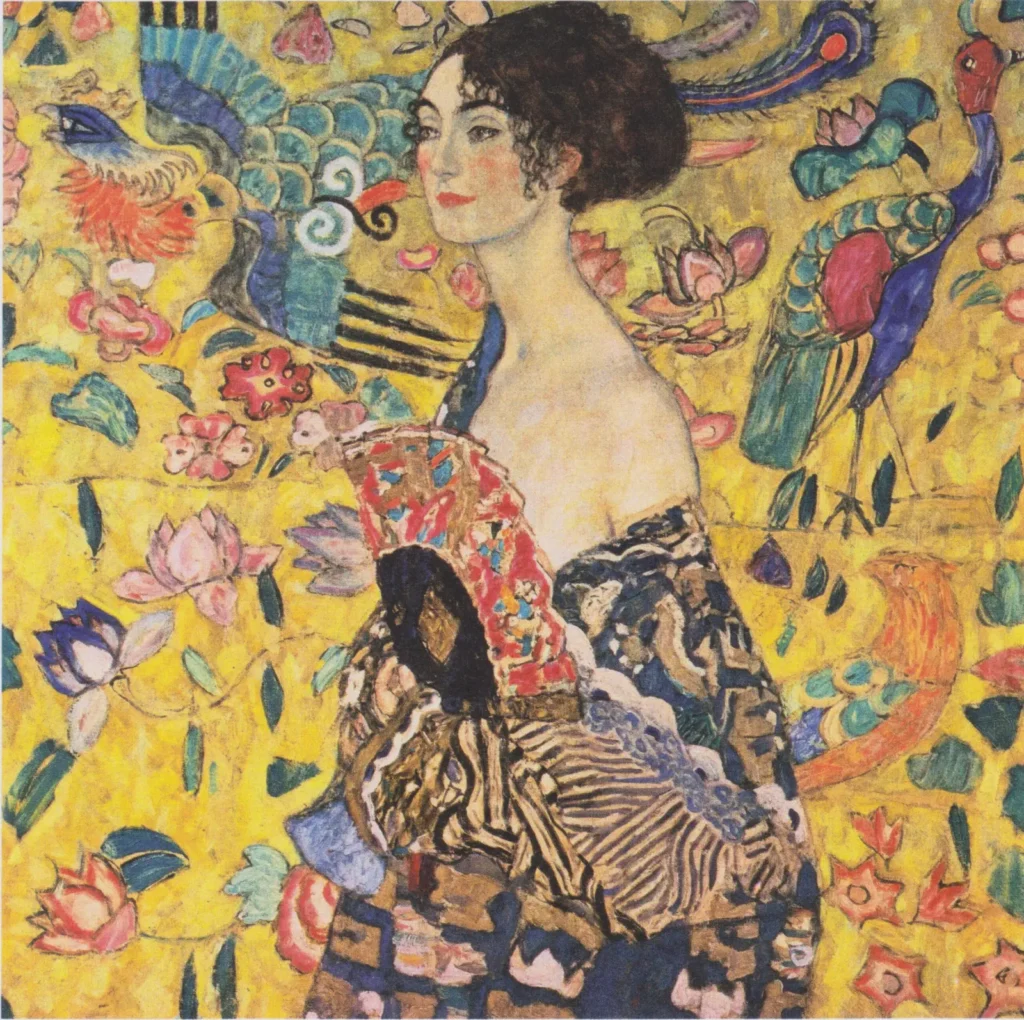 Lady with a Fan
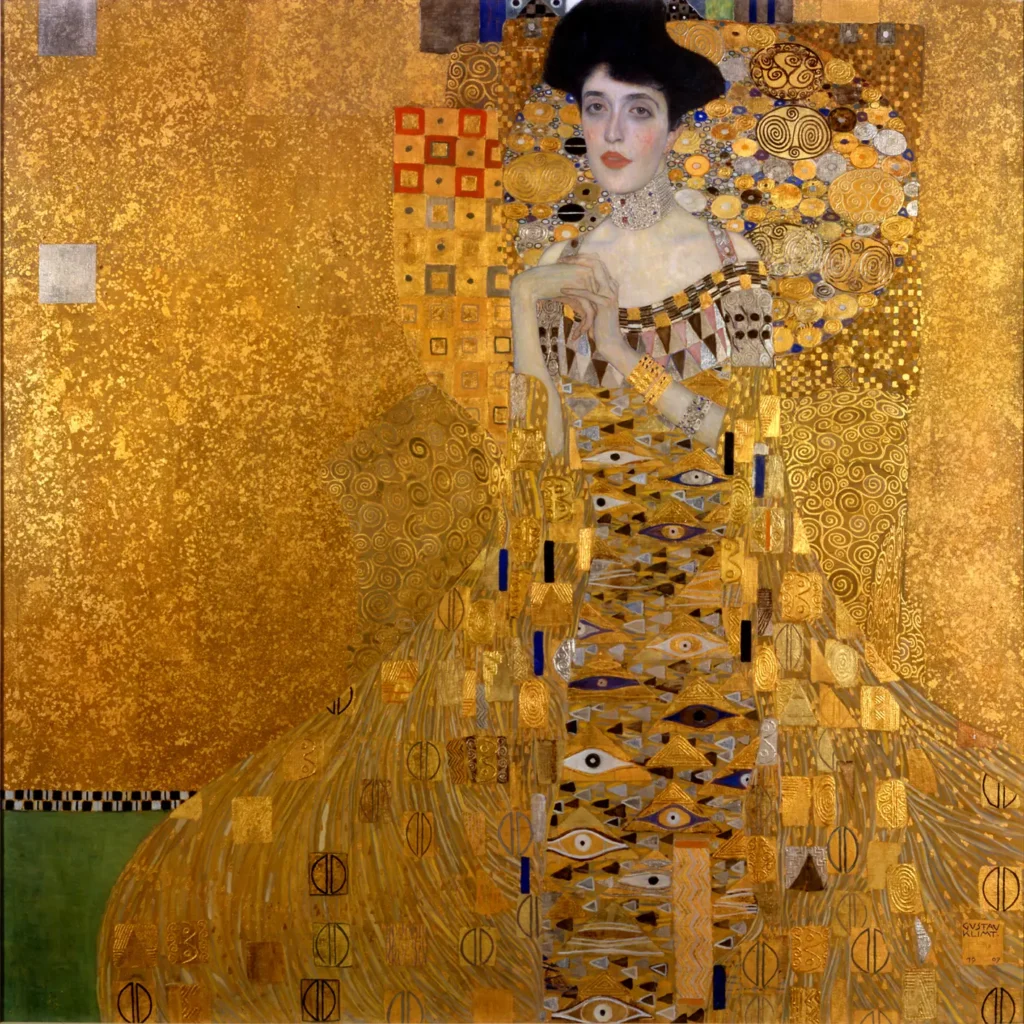 Gold leaf technique
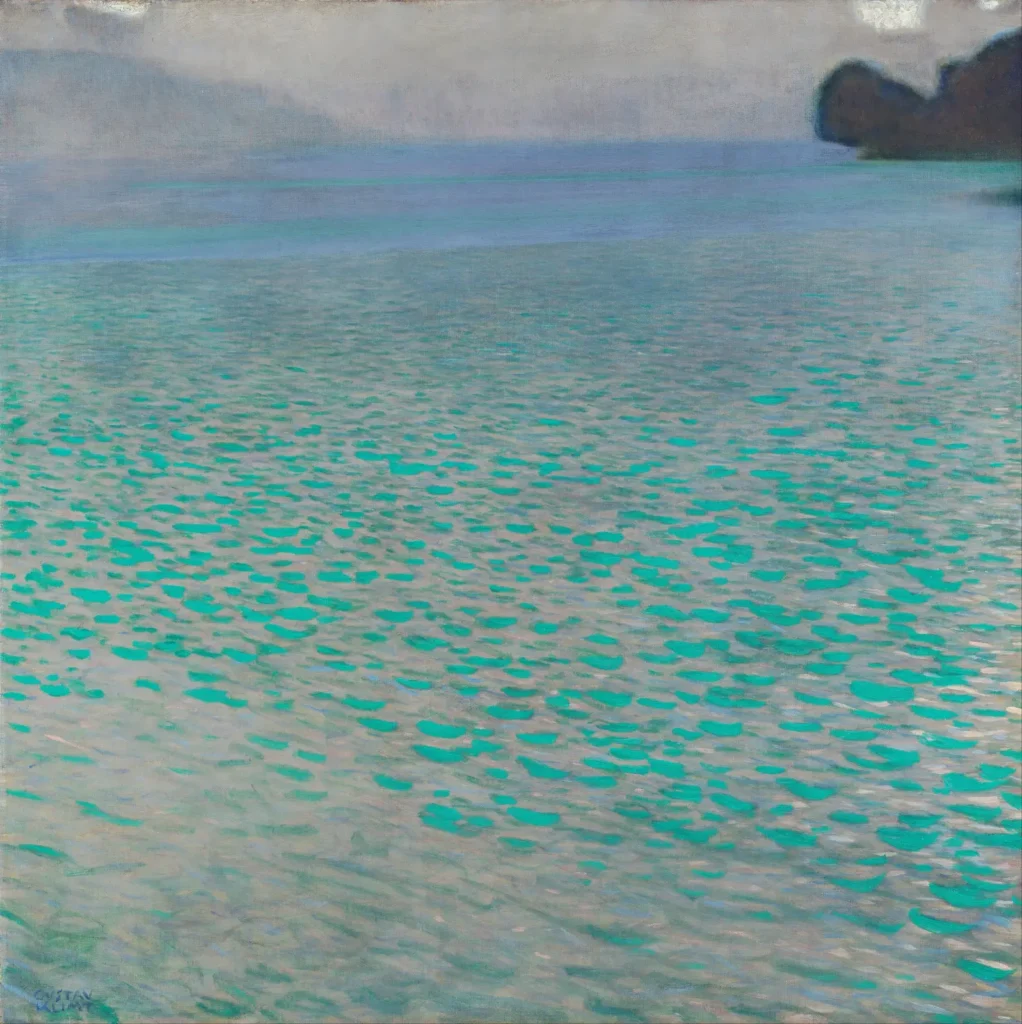 Klimt’s landscapes