The Wiener Werkstätte
Furniture, silver, jewellery, fabrics and whole buildings: the Vienna Workshop set out to make every object beautiful.
The Wiener Werkstätte (Vienna Workshop) was founded in 1903 by the architect Josef Hoffmann and the designer Koloman Moser, with money from the industrialist Fritz Waerndorfer. It ran until 1932.
PhilosophyThe idea
Inspired by the English Arts and Crafts movement, the founders wanted to end the divide between fine art and craft and to create a Gesamtkunstwerk, a total work of art, in which architecture, furniture, tableware and even clothing were designed as one. Objects were made by hand to high standards and stamped with the workshop’s rose mark and the monograms of designer and maker.
WorkFamous projects
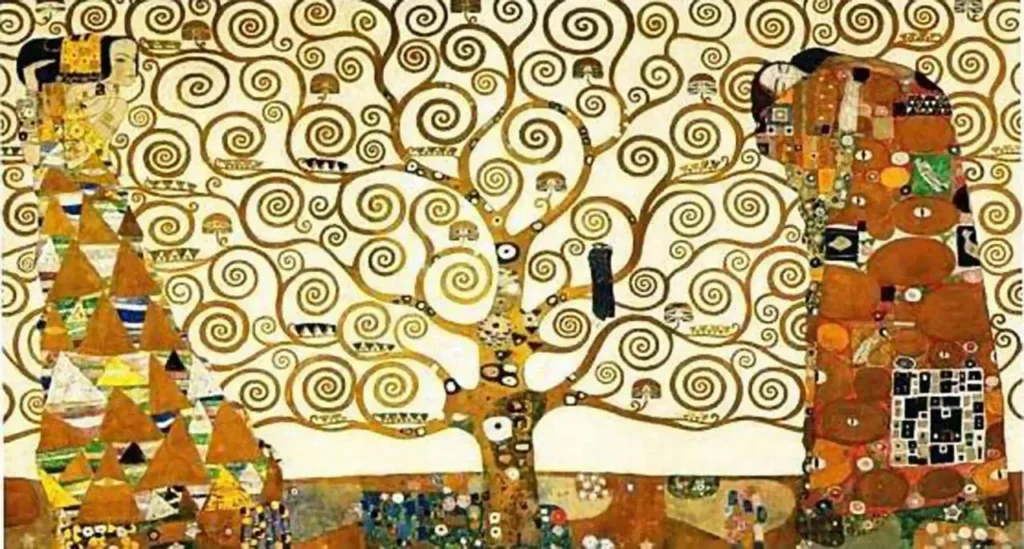
Its greatest commissions included the Purkersdorf Sanatorium near Vienna (1904), the Cabaret Fledermaus (1907) and the Palais Stoclet in Brussels (1905–11), for which Klimt designed the mosaic frieze. The workshop also designed the fashion salon of Emilie Flöge and her sisters in 1904, and later opened its own fashion and textile departments.
ConnectionKlimt and the workshop
Klimt was never a member, but he was close to its founders, wore its designs, showed with them at the Kunstschau 1908, and his Golden Phase paintings share its love of geometry, gold and pattern. His frames were often designed by Hoffmann or made by his brother Georg.
VisitWhere to see it
The MAK in Vienna has the largest collection, and the Leopold Museum and the Neue Galerie in New York also show Wiener Werkstätte design.
 Josef Hoffmann
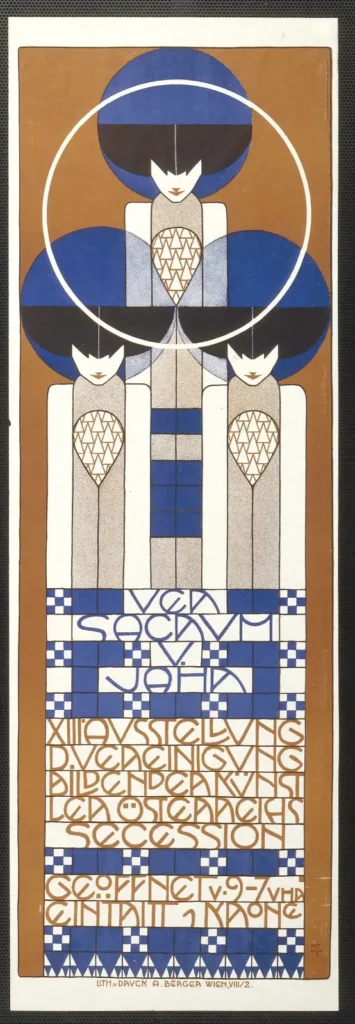 Koloman Moser
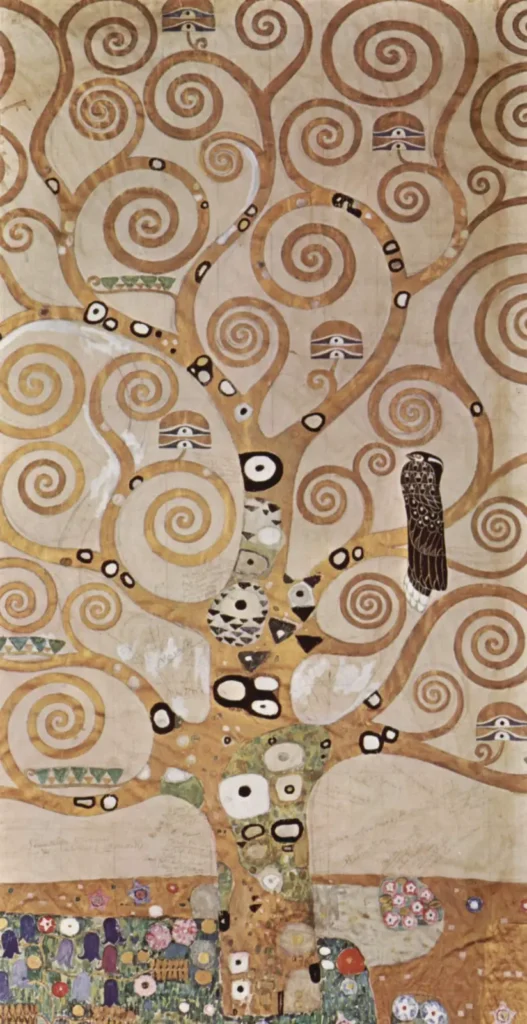 The Stoclet Frieze
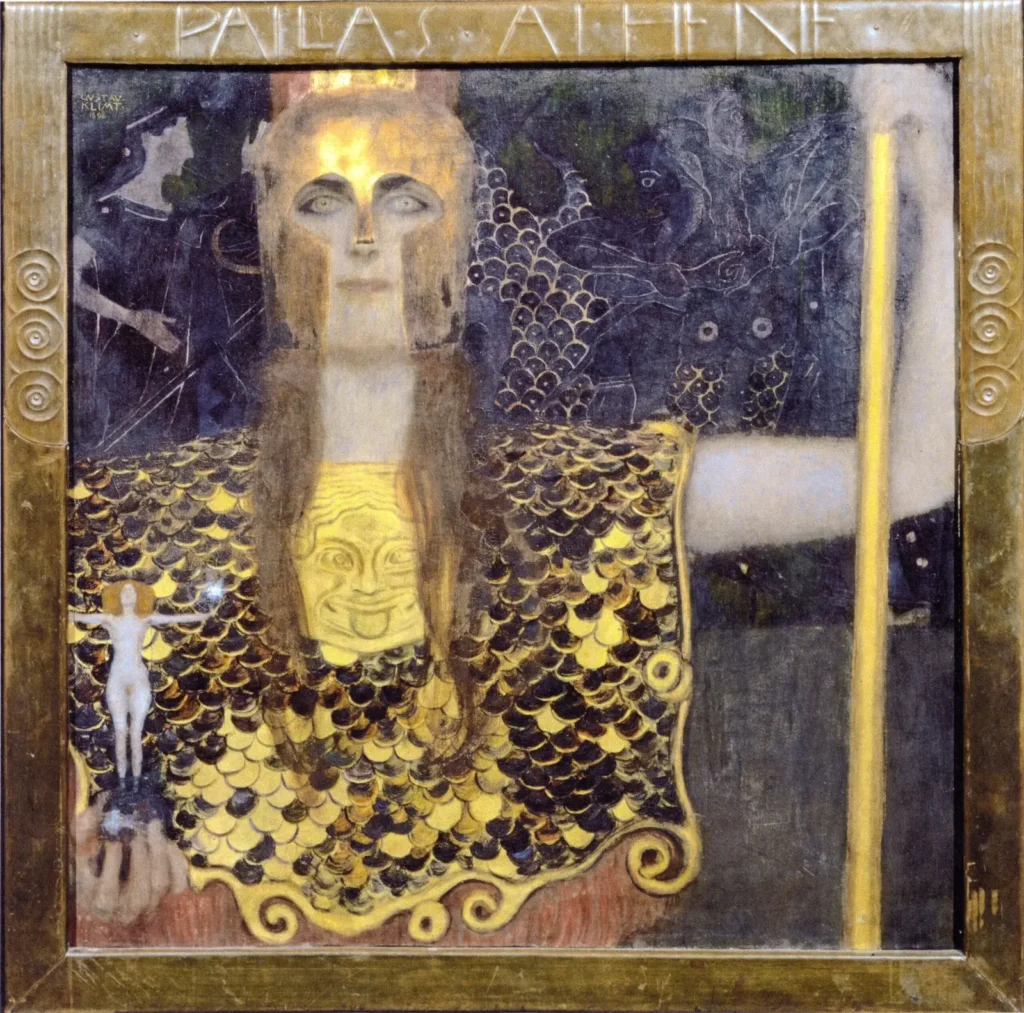 Vienna 1900