In 1883 Gustav Klimt, his brother Ernst and their friend Franz Matsch set up the Künstler-Compagnie (Artists’ Company), a partnership that decorated theatres and public buildings across the Habsburg empire. Their biggest early commission was the decoration of the two grand staircases of the new Burgtheater on the Ringstrasse, which opened in 1888.
The paintings
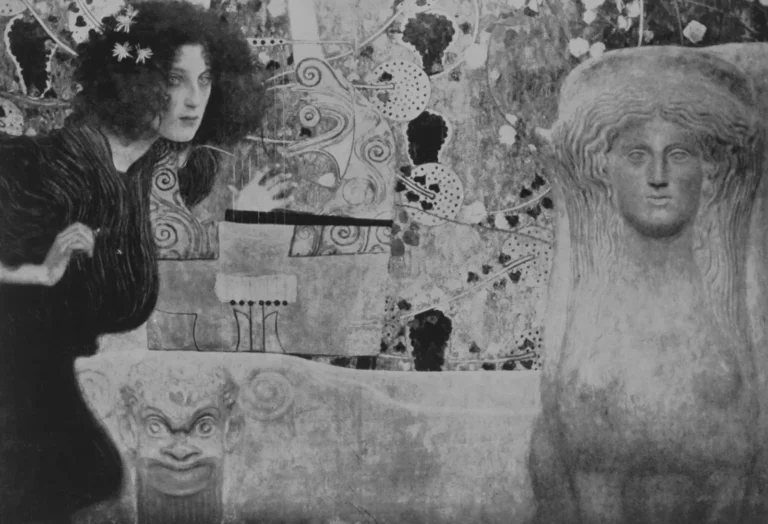
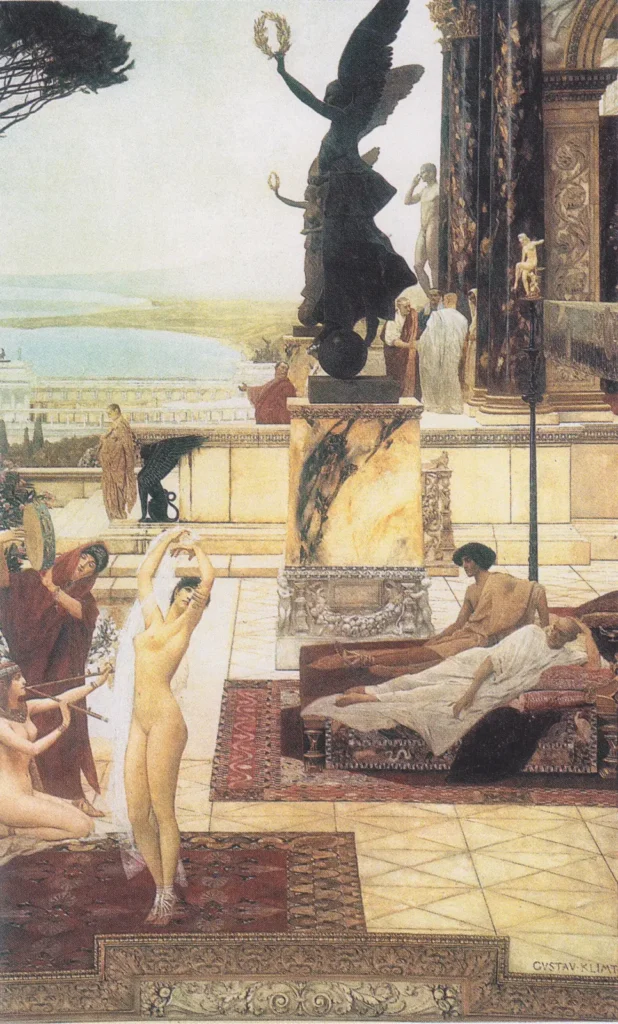
The ceilings tell the history of theatre from ancient times to the modern age. Gustav’s share included The Theatre at Taormina, a sunlit Greek theatre in Sicily with a dancer before an altar; The Cart of Thespis, showing the legendary founder of Greek drama touring with his cart; Shakespeare’s Globe Theatre in London; and The Altar of Dionysus.
The Globe scene is famous because Klimt put himself in it: among the audience are portraits of Gustav, his brother Ernst and Franz Matsch. The style is polished, historical and theatrical, close to that of Hans Makart, and very different from the art Klimt would make ten years later.
Recognition and how to see them
The work earned the three artists the Golden Cross of Merit from Emperor Franz Joseph in 1888. The paintings are still in place on the staircases of the Burgtheater, and can be seen on guided tours of the building. Klimt also painted a record of the old theatre’s interior, Auditorium of the Old Burgtheater, before it was demolished. Read more about Klimt’s early work and the Künstler-Compagnie.
Sources and further reading
- Tobias G. Natter (ed.), Gustav Klimt: The Complete Paintings, Taschen
- Frank Whitford, Klimt, Thames & Hudson
- Klimt Foundation, Gustav Klimt Database
Image: Gustav Klimt, Burgtheater Ceiling Paintings, public domain, via Wikimedia Commons.
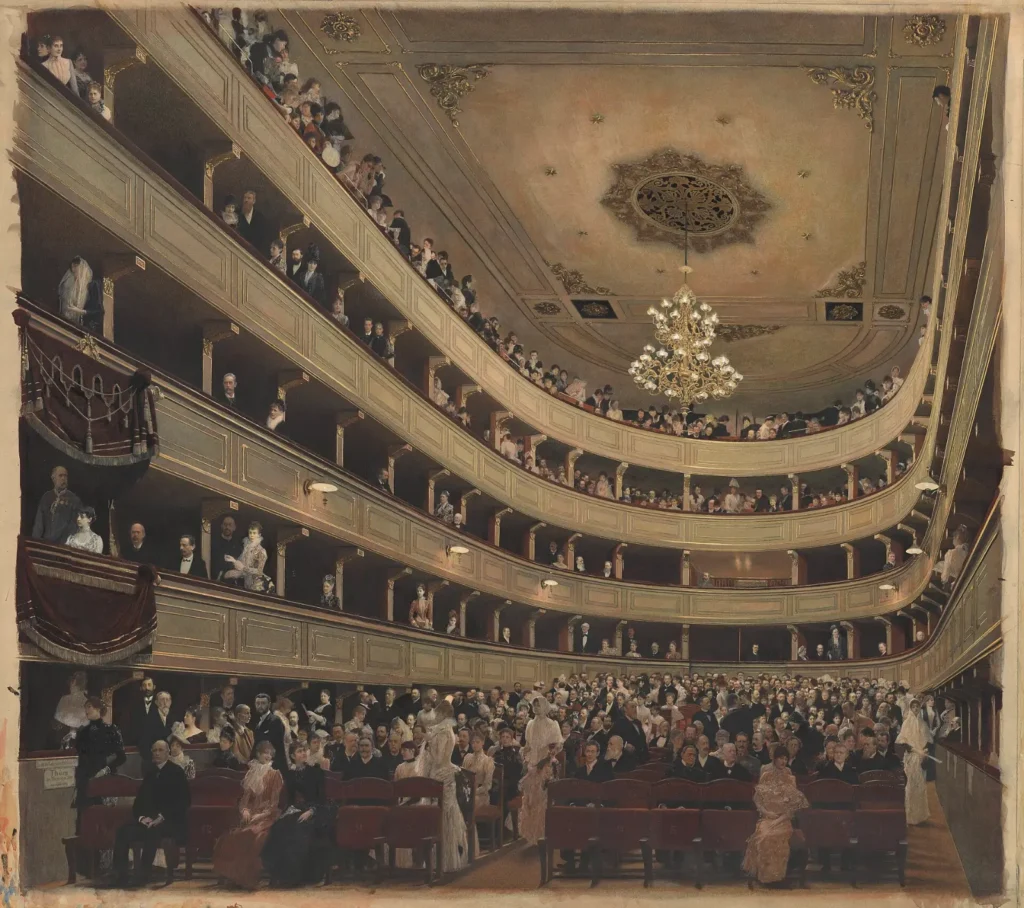 Auditorium of the Old Burgtheater
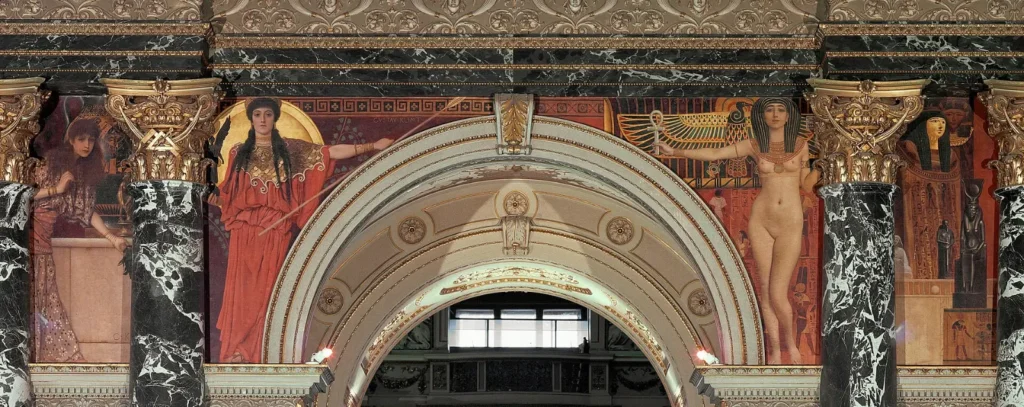 KHM staircase paintings
 Klimt Vienna map
 Klimt’s early work