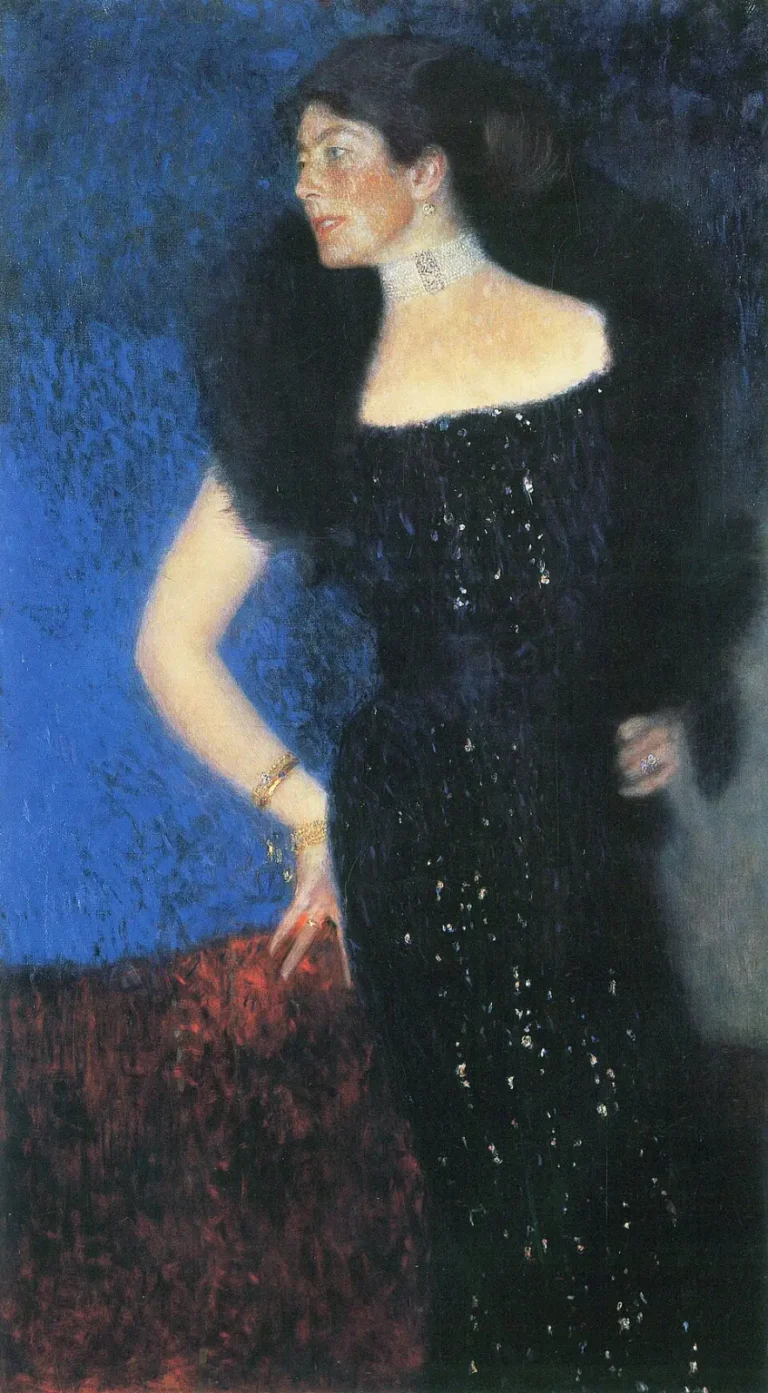
Johanna Staude was a model and a figure in Vienna’s artistic circles. Klimt painted her in the last year of his life.
CompositionThe painting
She is shown half-length, in a blouse made from a strongly patterned Wiener Werkstätte fabric with a dark fur collar, against an intense, flat orange-red background. Her face is finished, but parts of the picture, including her mouth, were left incomplete when Klimt died. The bold colour and simple shapes show how close Klimt’s late style came to Expressionism.
VisitWhere to see it
The portrait hangs in the Upper Belvedere in Vienna. See also Amalie Zuckerkandl and Lady with a Fan.
ExploreRelated works
If you are interested in Portrait of Johanna Staude, these works by Klimt make good companions:
- Lady in White (1917–18): also in the Belvedere, another portrait.
- Portrait of Amalie Zuckerkandl (1917–18): also in the Belvedere, another portrait.
- Adam and Eve (1916–18): also in the Belvedere, painted around the same time.
- The Bride (1917–18): also in the Belvedere, painted around the same time.
Browse every known work in our catalogue of Klimt’s paintings, or find out where every Klimt painting is today.
FAQFrequently asked questions
Where is Portrait of Johanna Staude today?
Portrait of Johanna Staude is in the Belvedere, Vienna.
When did Gustav Klimt paint Portrait of Johanna Staude?
Klimt painted Portrait of Johanna Staude in 1917–18 (unfinished). It belongs to his late period, from about 1910 until his death in 1918, when colour replaced gold.
What materials did Klimt use for Portrait of Johanna Staude?
It is oil on canvas.
Who is the sitter in Portrait of Johanna Staude?
Johanna Staude (1883–1967).
Sources and further reading
- Tobias G. Natter (ed.), Gustav Klimt: The Complete Paintings, Taschen
- Frank Whitford, Klimt, Thames & Hudson
- Klimt Foundation, Gustav Klimt Database
Image: Gustav Klimt, Portrait of Johanna Staude, public domain, via Wikimedia Commons.
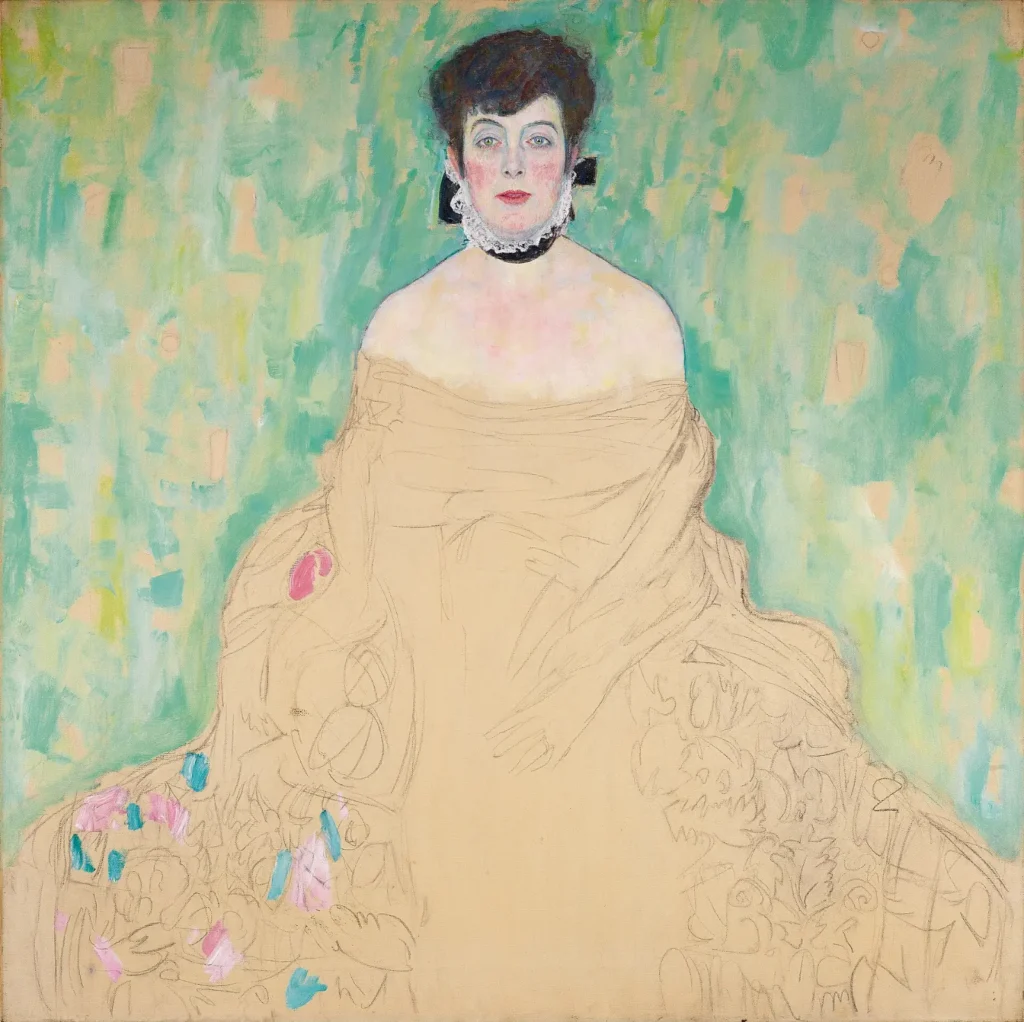 Amalie Zuckerkandl
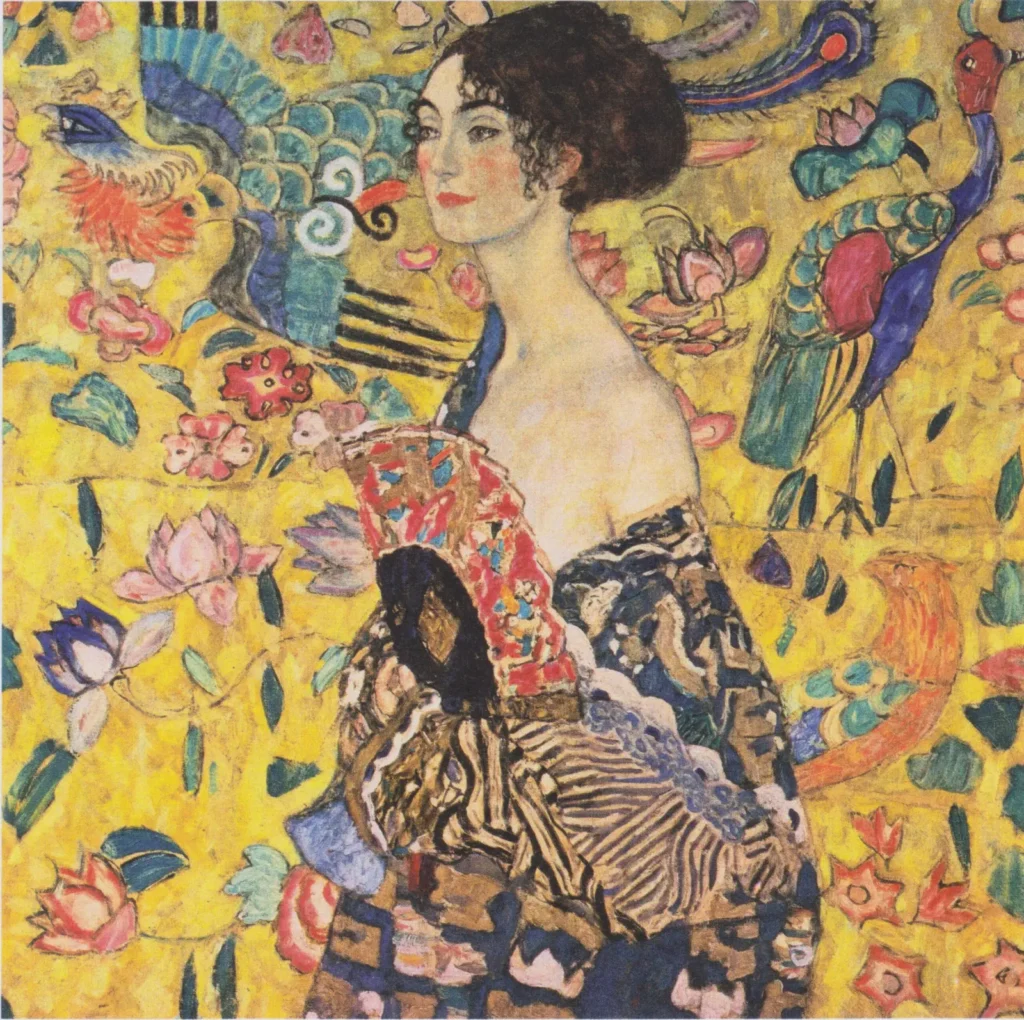 Lady with a Fan
 Klimt and Schiele
 Klimt at the Belvedere