Tragedy shows a woman in a black robe, her face pale and staring, holding up a theatrical mask with a twisted expression. The image is surrounded by a decorative border picked out in gold. It was made in 1897 for the new series of Martin Gerlach’s Allegorien.
The work
Compared with the soft, academic allegories Klimt designed for Gerlach in the 1880s, such as Fable, Tragedy is stark and modern. The figure is flat and frontal, the black dress forms a strong silhouette, and the border is no longer a frame but part of the design. This was the year Klimt co-founded the Vienna Secession, and the sheet shows the new style taking shape.
Its companion in the same series, Sculpture, and the posters and illustrations for Ver Sacrum share the same graphic power.
Where to see it
The work is in the Wien Museum, which owns many of Klimt’s early allegories and drawings. Read more about Klimt’s early work and the Künstler-Compagnie.
Sources and further reading
- Tobias G. Natter (ed.), Gustav Klimt: The Complete Paintings, Taschen
- Frank Whitford, Klimt, Thames & Hudson
- Klimt Foundation, Gustav Klimt Database
Image: Gustav Klimt, Tragedy, public domain, via Wikimedia Commons.
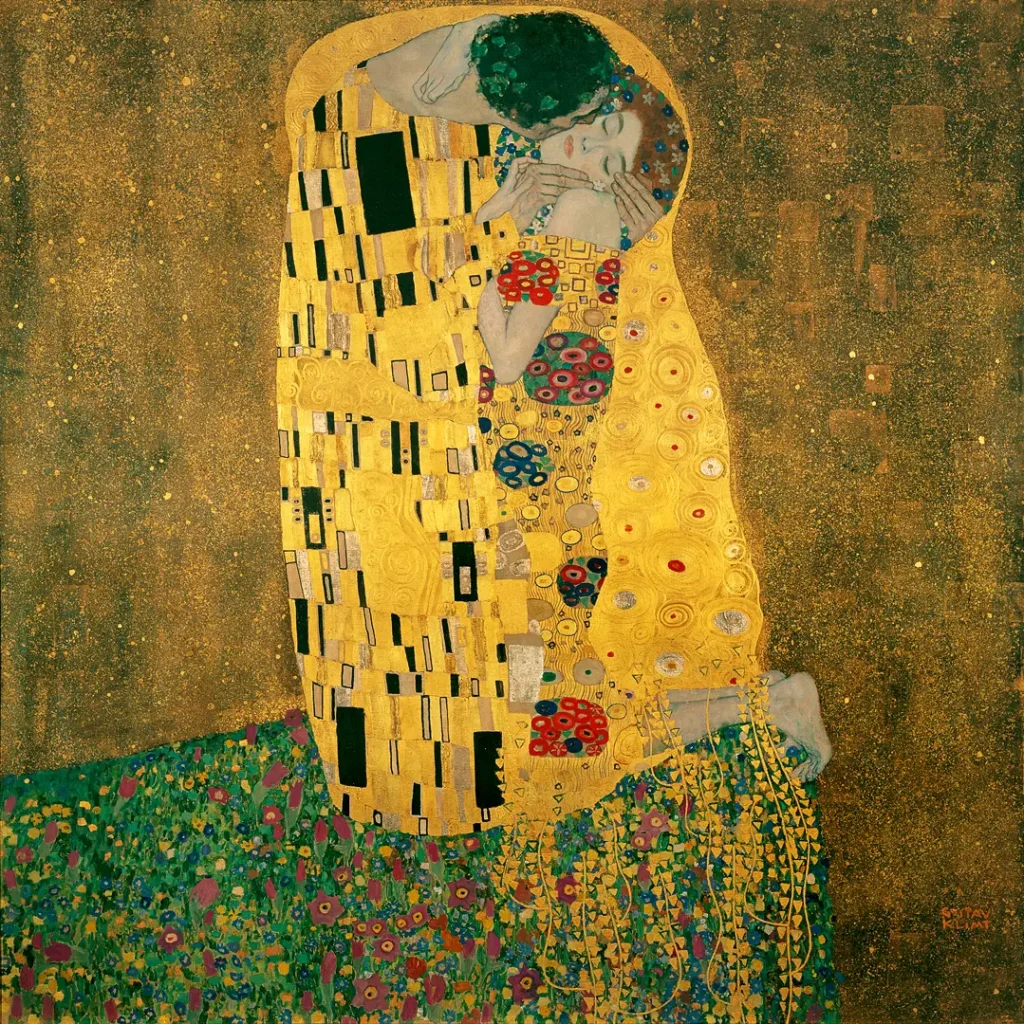 The Vienna Secession
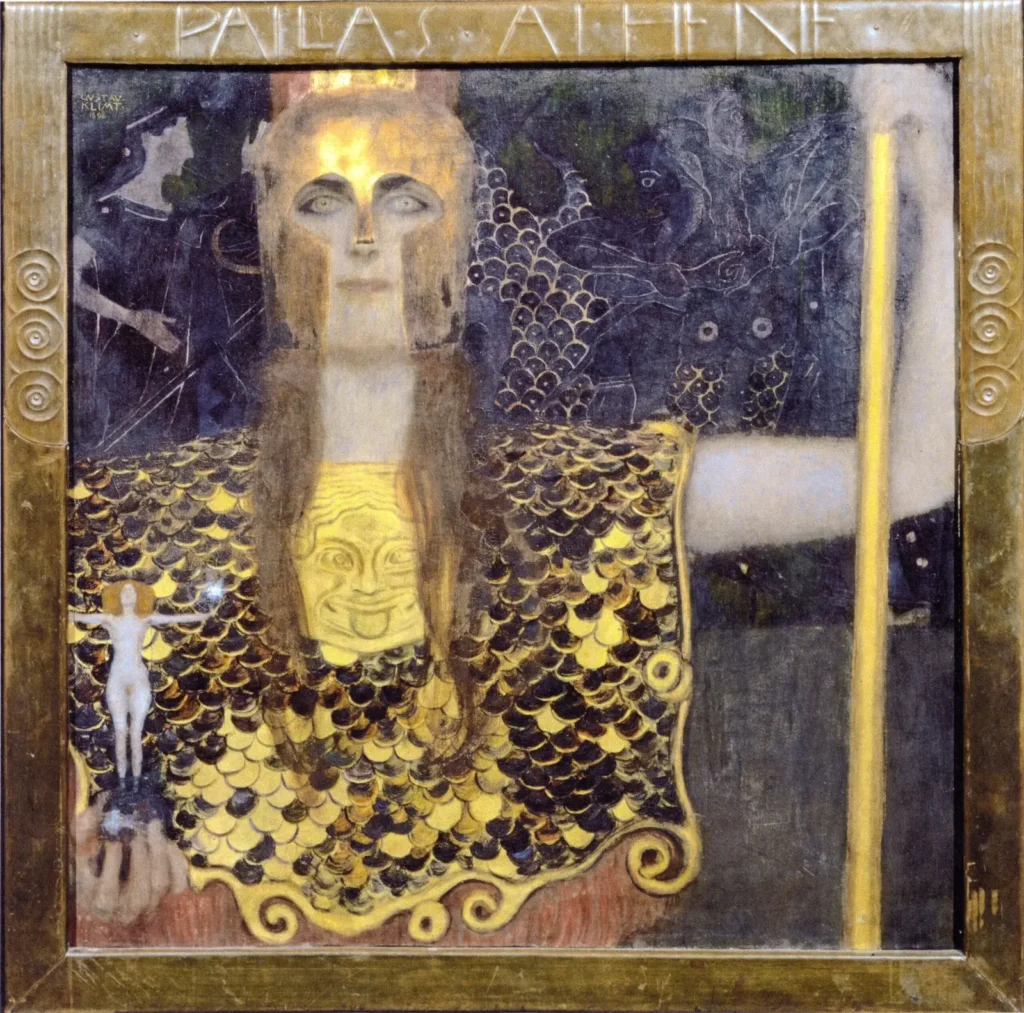 Pallas Athene
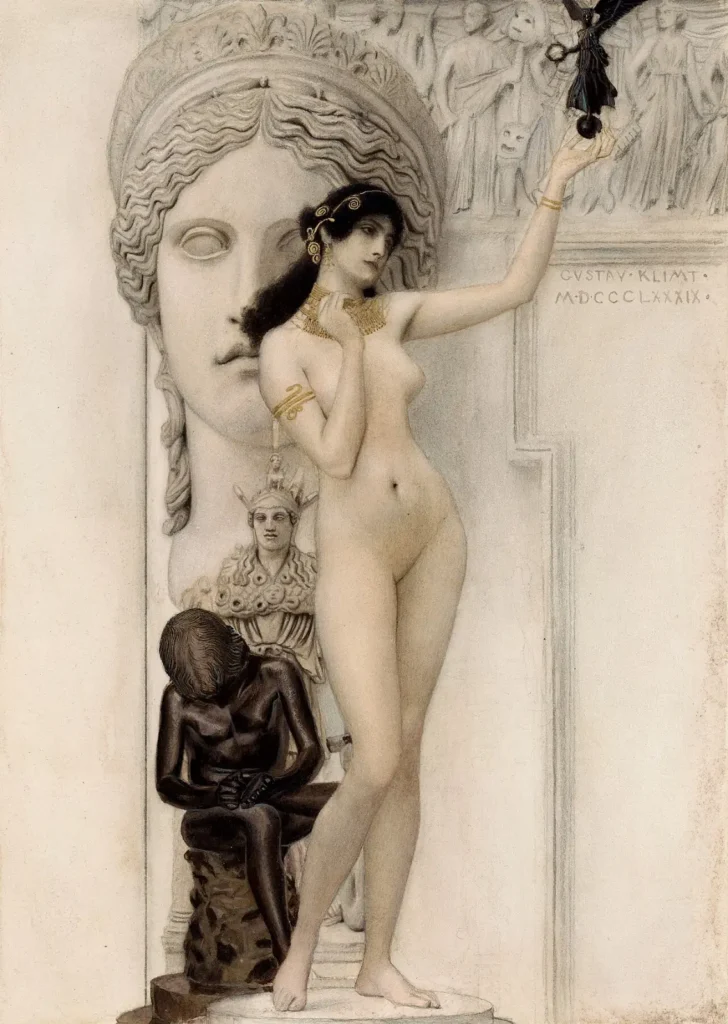 Allegory of Sculpture
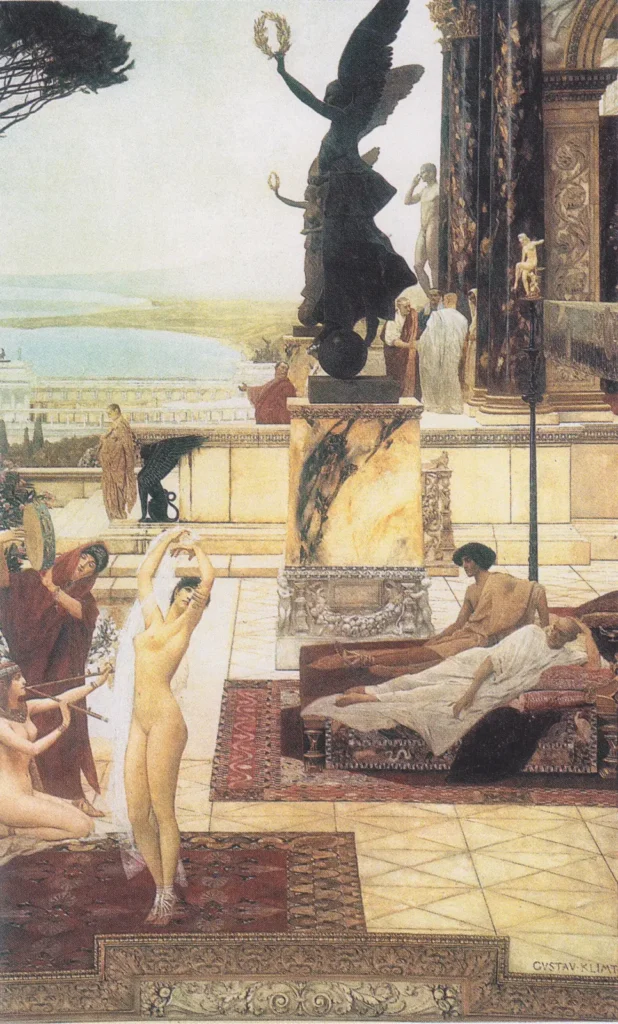 Klimt’s early work