The Black Bull of 1900 shows a massive dark bull standing in a stable, its body almost filling the square canvas, with straw on the floor and light coming through a window behind.
The painting
Animals are rare in Klimt’s work, but in his first country summers around 1900 he painted farm life directly. The bull is a near-silhouette, its bulk suggested by dark tones rather than detail, while green straw and patches of light break up the shadows. It is a close companion to Cows in the Stable.
Where to see it
The painting is in the Leopold Museum in Vienna. More in our Klimt landscapes guide.
ExploreRelated works
If you are interested in The Black Bull, these works by Klimt make good companions:
- A Morning by the Pond (1899): also in the Leopold Museum, another landscape.
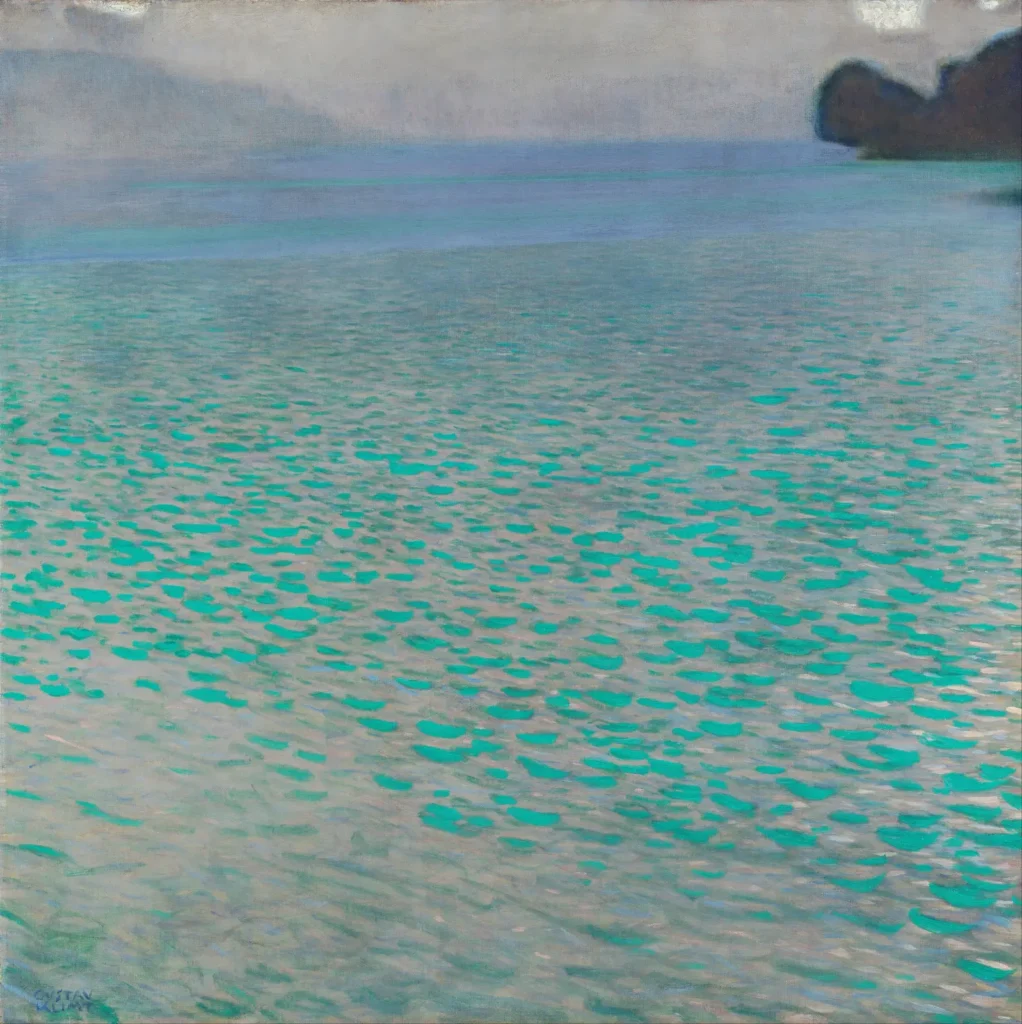
- On Lake Attersee (1900): also in the Leopold Museum, another landscape.
- Orchard in the Evening (1898): also in the Leopold Museum, another landscape.
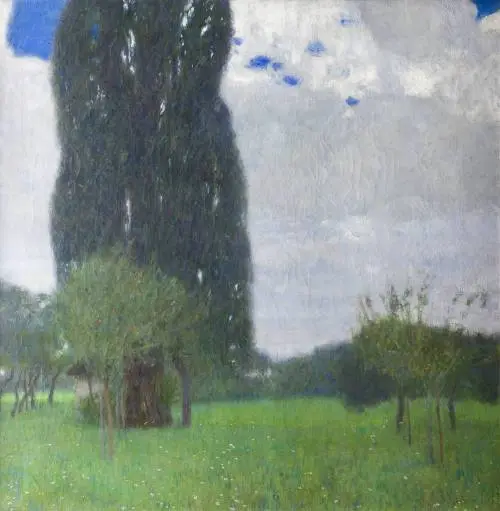
- The Large Poplar II (1902–03): also in the Leopold Museum, another landscape.
Browse every known work in our catalogue of Klimt’s paintings, or find out where every Klimt painting is today.
FAQFrequently asked questions
Where is The Black Bull today?
The Black Bull is in the Leopold Museum, Vienna.
When did Gustav Klimt paint The Black Bull?
Klimt painted The Black Bull in 1900. It belongs to his Secession years around 1897–1902, when he broke with academic painting.
How big is The Black Bull?
It measures 82 × 82 cm, or about 32 × 32 inches. The square format was a favourite of Klimt’s, used for almost all his landscapes and several portraits.
What materials did Klimt use for The Black Bull?
It is oil on canvas.
Sources and further reading
- Tobias G. Natter (ed.), Gustav Klimt: The Complete Paintings, Taschen
- Frank Whitford, Klimt, Thames & Hudson
- Klimt Foundation, Gustav Klimt Database
Image: Gustav Klimt, The Black Bull, public domain, via Wikimedia Commons.
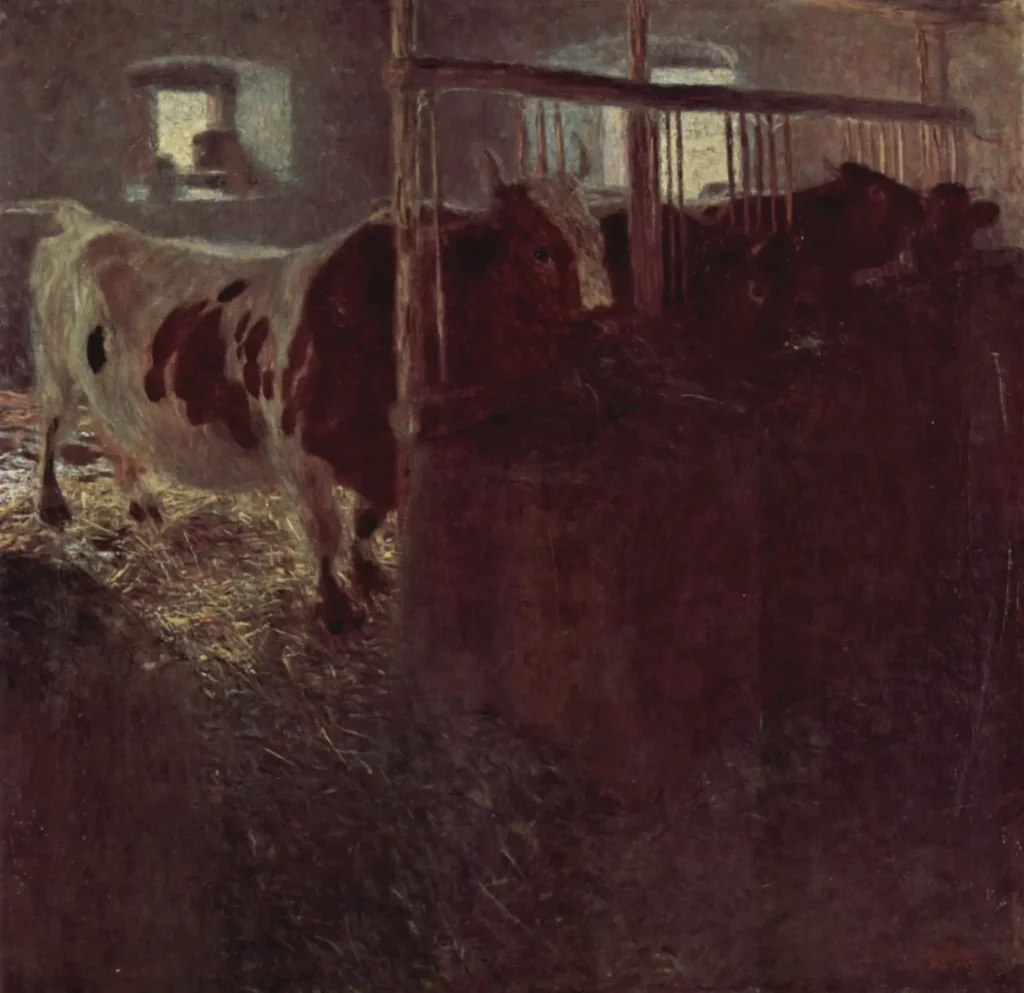 Cows in the Stable
 Leopold Museum
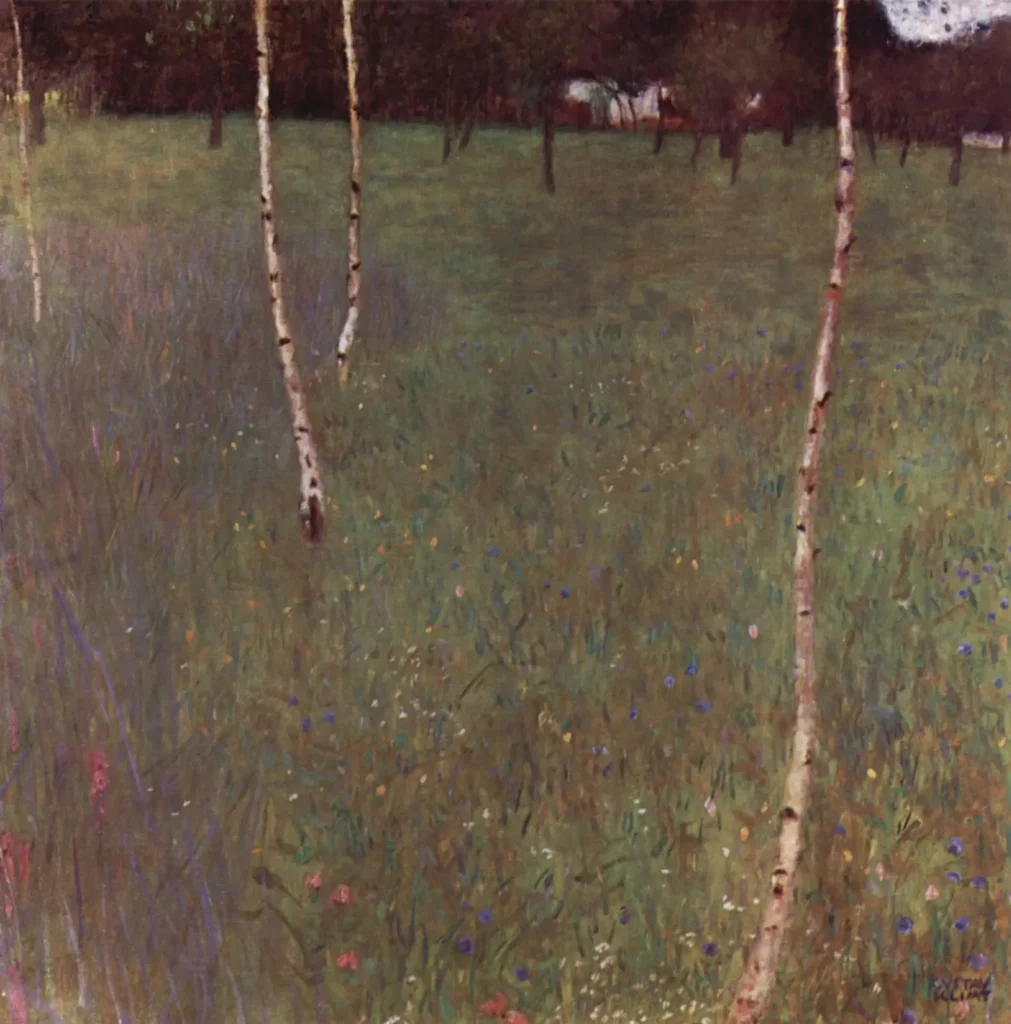 Farmhouse with Birch Trees
 Klimt landscapes