When the painter Hans Makart died in 1884, the decoration of the grand staircase of the new Kunsthistorisches Museum was left unfinished. In 1890–91 the Künstler-Compagnie of Gustav and Ernst Klimt and Franz Matsch completed it with a series of paintings in the spandrels (the triangular spaces above the arches) and between the columns.
The paintings
The cycle represents the history of art, each epoch shown as one or more figures in period dress surrounded by typical objects. Gustav painted Ancient Egypt, Ancient Greece, Old Italian Art, the Roman and Venetian Quattrocento, and Florentine art of the Quattrocento and Cinquecento.
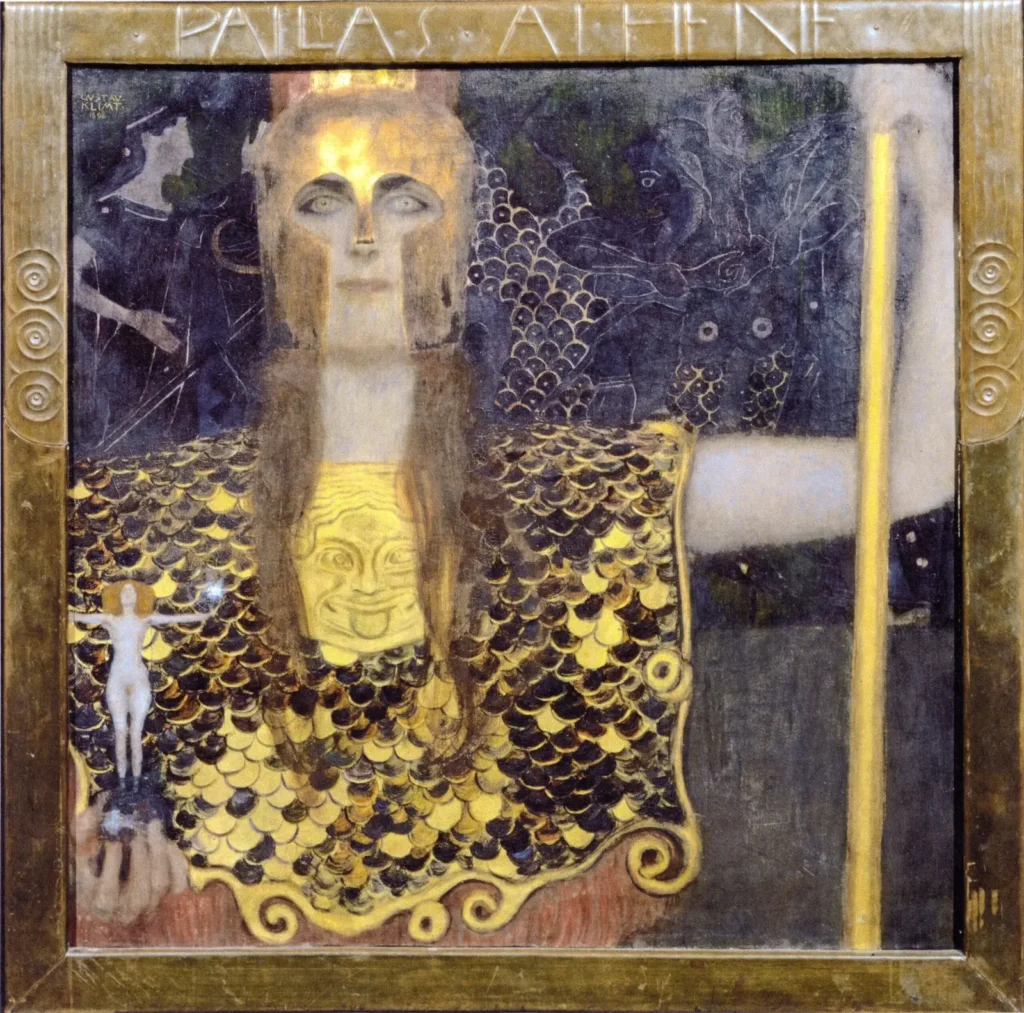
The best-known figure is the young woman representing Ancient Greece, often called the girl from Tanagra after the small clay statues found at Tanagra in Greece. With her direct gaze and modern-looking face, she is the first of Klimt’s seductive female figures, and points towards Pallas Athene and Judith.
How to see them
The paintings are still in place on the main staircase of the Kunsthistorisches Museum, high up near the ceiling, so bring binoculars or use a phone zoom. At times the museum has built a temporary bridge, the “Stairway to Klimt”, so visitors could see them close up. The museum also owns Klimt’s early Lady with a Lilac Scarf. Read more about Klimt’s early work and the Künstler-Compagnie.
Sources and further reading
- Tobias G. Natter (ed.), Gustav Klimt: The Complete Paintings, Taschen
- Frank Whitford, Klimt, Thames & Hudson
- Klimt Foundation, Gustav Klimt Database
Image: Gustav Klimt, Kunsthistorisches Museum Staircase Paintings, public domain, via Wikimedia Commons.
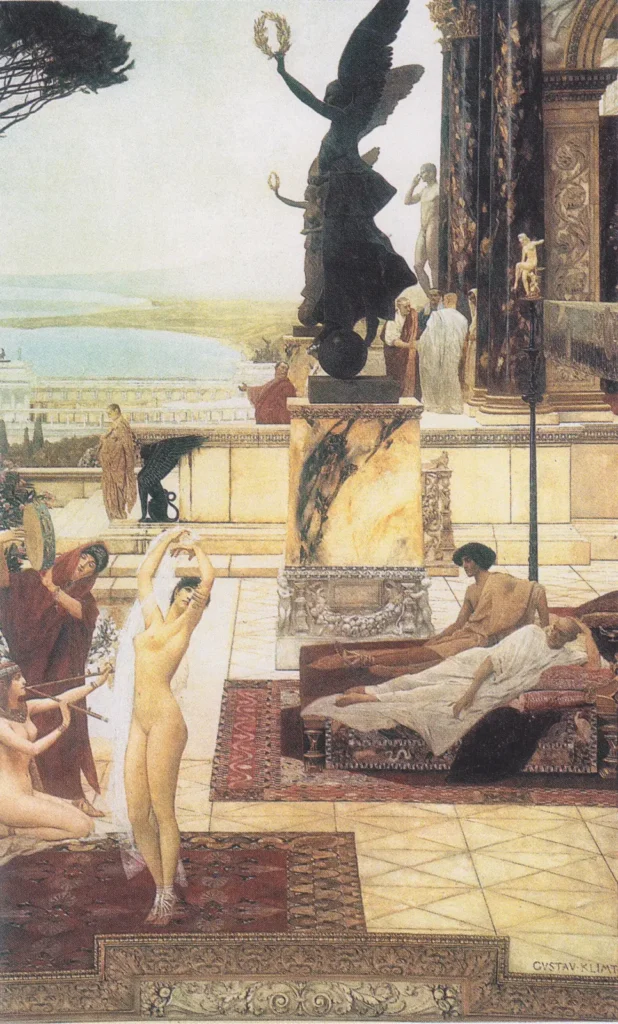 Burgtheater ceilings
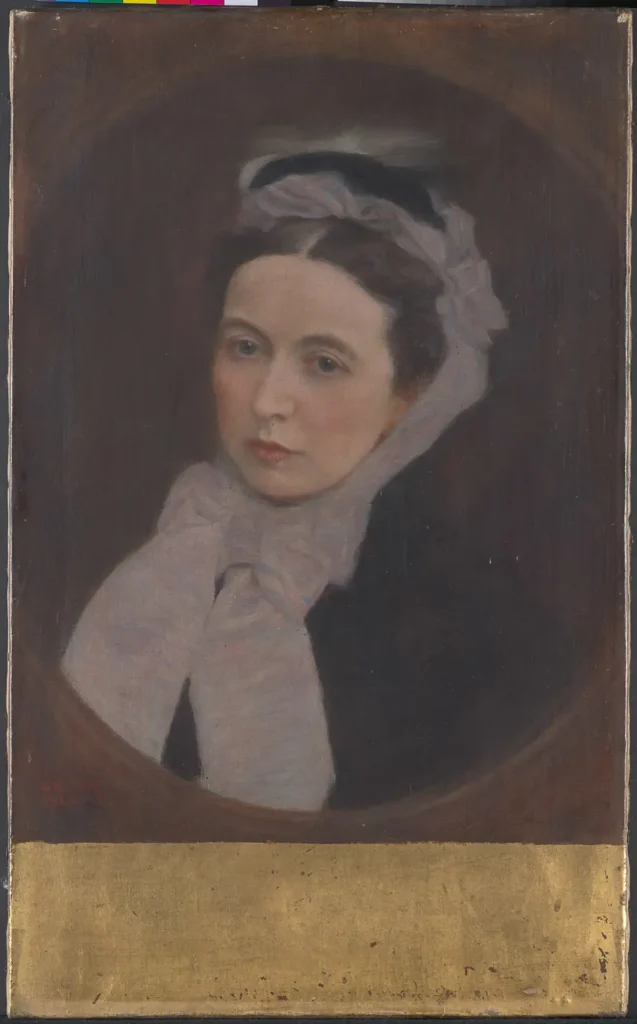 Lady with a Lilac Scarf
 Pallas Athene