The Bride (Die Braut) is one of the paintings Gustav Klimt left unfinished in his studio when he died in February 1918. Its incomplete state makes it one of the most revealing works he ever made.
CompositionThe painting
On the left of the wide canvas, a mass of sleeping and dreaming figures floats together, among them a young woman with her head tilted to one side, often identified as the bride. On the right, apart from the group, a female figure reclines with her legs spread, half covered by a patterned skirt.
Like The Maiden and Death and Life, it is an allegory of love, dreams and the stages of a woman’s life, painted in the brilliant colours of Klimt’s late style.
An unfinished paintingHow Klimt worked
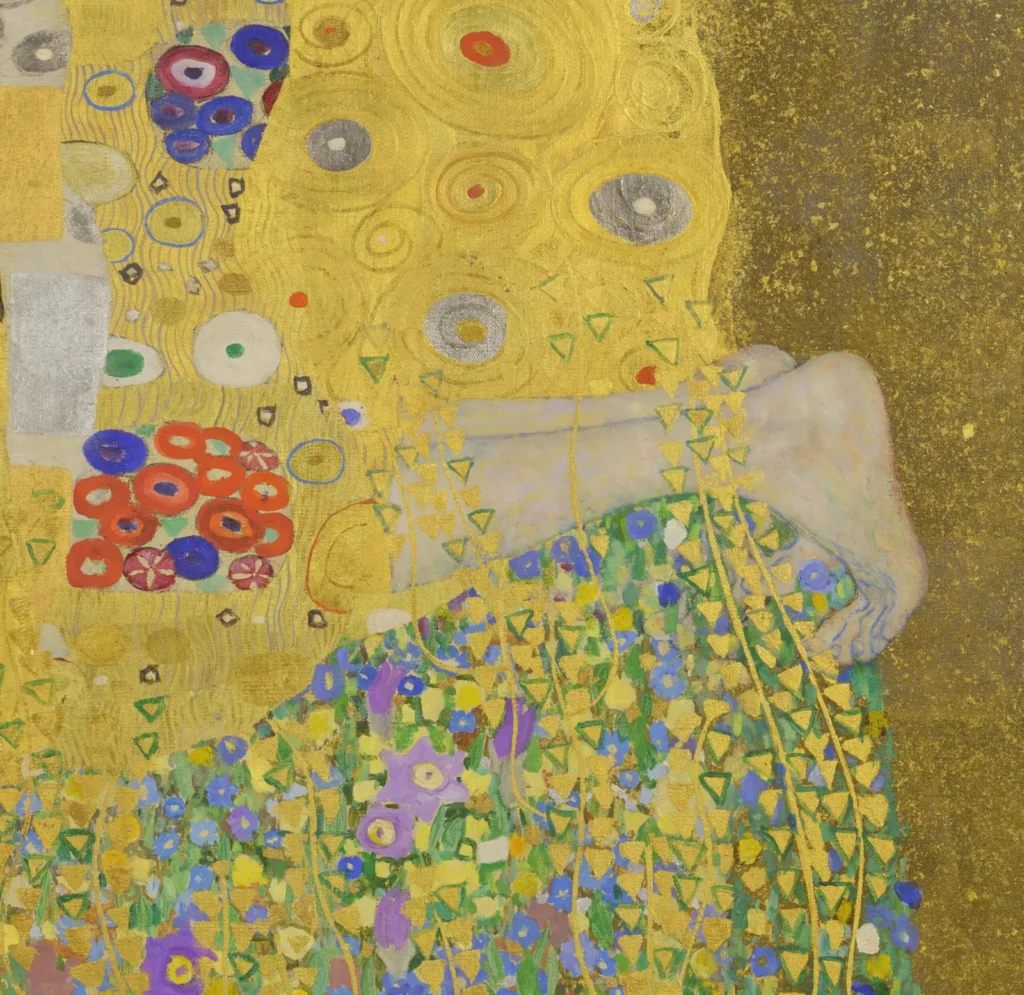
Because Klimt did not finish it, The Bride shows his working method. He began by painting his figures nude, with careful anatomy, and only then covered parts of them with clothing made of flat, colourful pattern. On the right-hand figure you can see this happening: the ornamental skirt has been laid over a body that is still fully visible beneath it. In his finished works, these underlying bodies are hidden.
VisitWhere to see it
The Bride is shown in Vienna’s Belvedere, along with Klimt’s other unfinished late work, Adam and Eve. See our guide to Klimt at the Belvedere.
DetailsLook closer: an unfinished masterpiece
The Bride was left on an easel in Klimt’s studio in the Hietzing district of Vienna when he suffered a stroke in January 1918. He died on 6 February, and the painting was found exactly as he had left it, which makes it one of the most revealing works in his whole career.
On the left, a dense tangle of sleeping figures surrounds a young woman whose head is tilted sideways, eyes closed: the bride. A man’s face, perhaps the bridegroom, appears among them. On the right stands a single, almost nude woman, her legs apart. Klimt had already started to paint a richly patterned skirt over her body, but in the unfinished areas you can still see the nude figure he drew first underneath.
This shows exactly how he worked: he drew and painted the figures naked, and only afterwards dressed them in ornament. It also suggests the painting’s theme, the dreams, fears and desires of a woman on the threshold of marriage.
ContextKlimt’s last studio
From 1911 Klimt rented a single-storey garden studio at Feldmühlgasse 11 in Hietzing, surrounded by a garden of flowers. Photographs taken soon after his death show The Bride and Lady with a Fan on easels there, along with other unfinished works. The house has been restored and opened as the Klimt Villa, with a recreated studio.
The Bride belongs today to the Klimt Foundation in Vienna and has been on long-term loan to the Belvedere, where it can usually be seen with Klimt’s other late works.
Quick facts10 facts about The Bride
- It was painted in 1917–18 and left unfinished.
- It measures 165 × 191 cm.
- It was on an easel in Klimt’s studio when he died in February 1918.
- The bride is the sleeping woman with her head tilted on the left.
- On the right, a woman’s nude body shows through an unfinished patterned skirt.
- It reveals Klimt’s method of painting figures nude before dressing them.
- It is one of his last large allegories.
- It belongs to the Klimt Foundation in Vienna.
- It has been on long-term loan to the Belvedere.
- Photographs of Klimt’s last studio show it on the easel.
FAQFrequently asked questions
Where is The Bride by Klimt?
It belongs to the Klimt Foundation in Vienna and has been on long-term loan to the Belvedere.
Why is The Bride unfinished?
Klimt was still working on it when he suffered a stroke in January 1918. He died a few weeks later.
What does The Bride show?
A young bride asleep among dreaming figures on the left, and a standing female figure on the right. It is usually read as an allegory of a woman’s dreams and desires before marriage.
What can The Bride tell us about how Klimt worked?
In the unfinished right side you can see that he painted the woman nude first and then began to paint a patterned skirt over her body.
How big is The Bride?
165 × 191 cm, about 65 × 75 inches.
Sources and further reading
- Tobias G. Natter (ed.), Gustav Klimt: The Complete Paintings (Taschen)
- Frank Whitford, Klimt (Thames & Hudson, World of Art)
Image: Gustav Klimt, The Bride, public domain, via Wikimedia Commons.
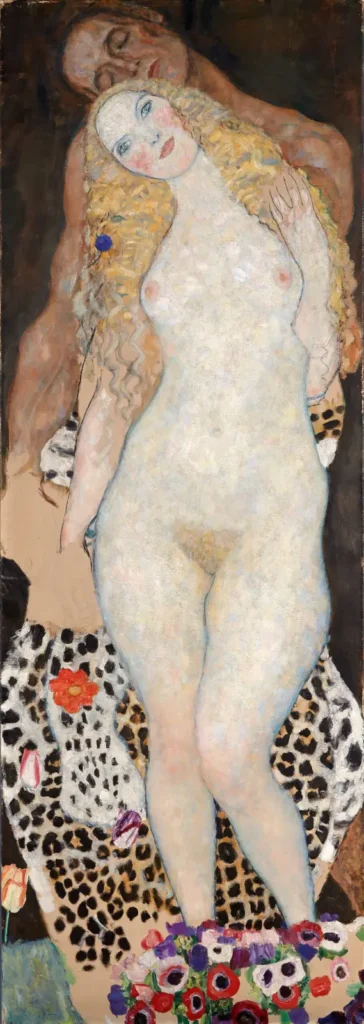 Adam and Eve
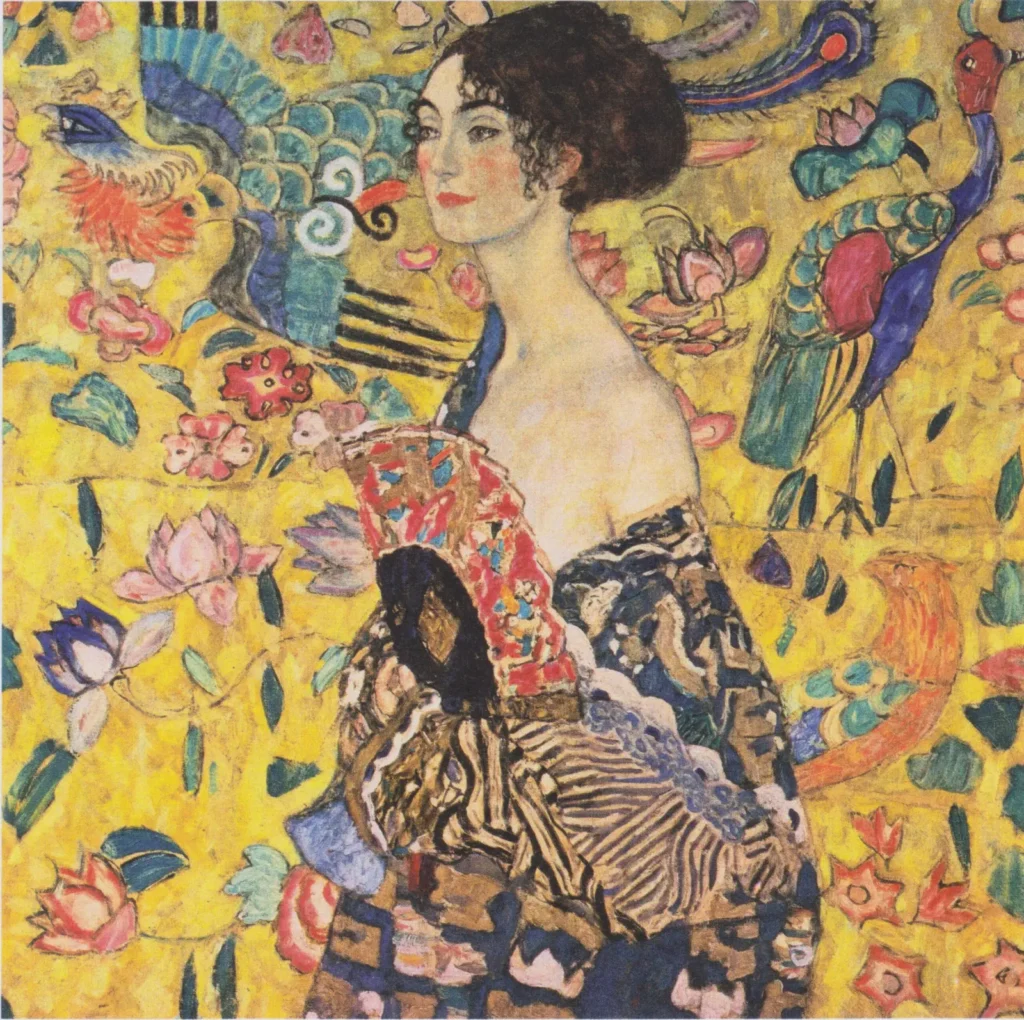 Lady with a Fan
 Klimt’s death
 All Klimt paintings