The Faculty Paintings (Fakultätsbilder) were three monumental canvases, Philosophy, Medicine and Jurisprudence, that Gustav Klimt painted for the ceiling of the Great Hall of the University of Vienna. Their reception changed the course of his career.
1894The commission
In 1894 the Austrian Ministry of Education commissioned Klimt and Franz Matsch, his former partner in the Künstler-Compagnie, to decorate the ceiling of the university’s new Great Hall. Matsch was to paint the central panel, The Triumph of Light over Darkness, and the faculty of Theology; Klimt was given the faculties of Philosophy, Medicine and Jurisprudence. The university expected confident images of the triumph of reason and science.
1900Philosophy
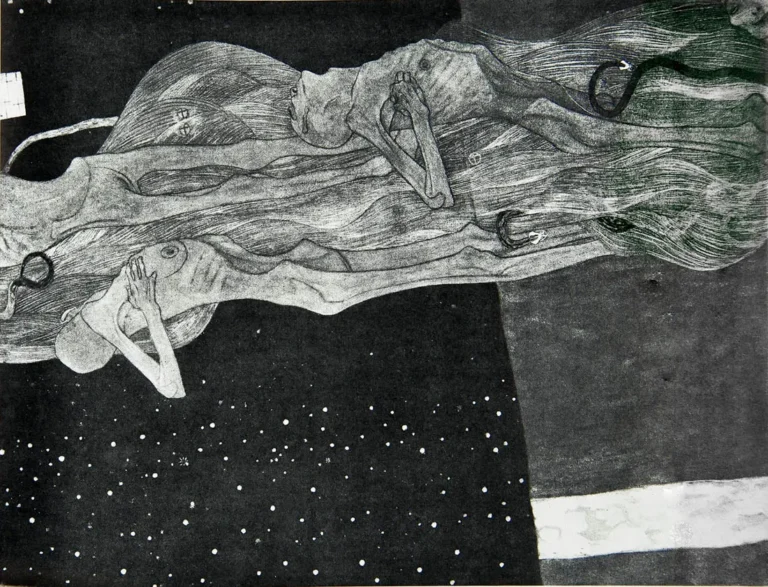
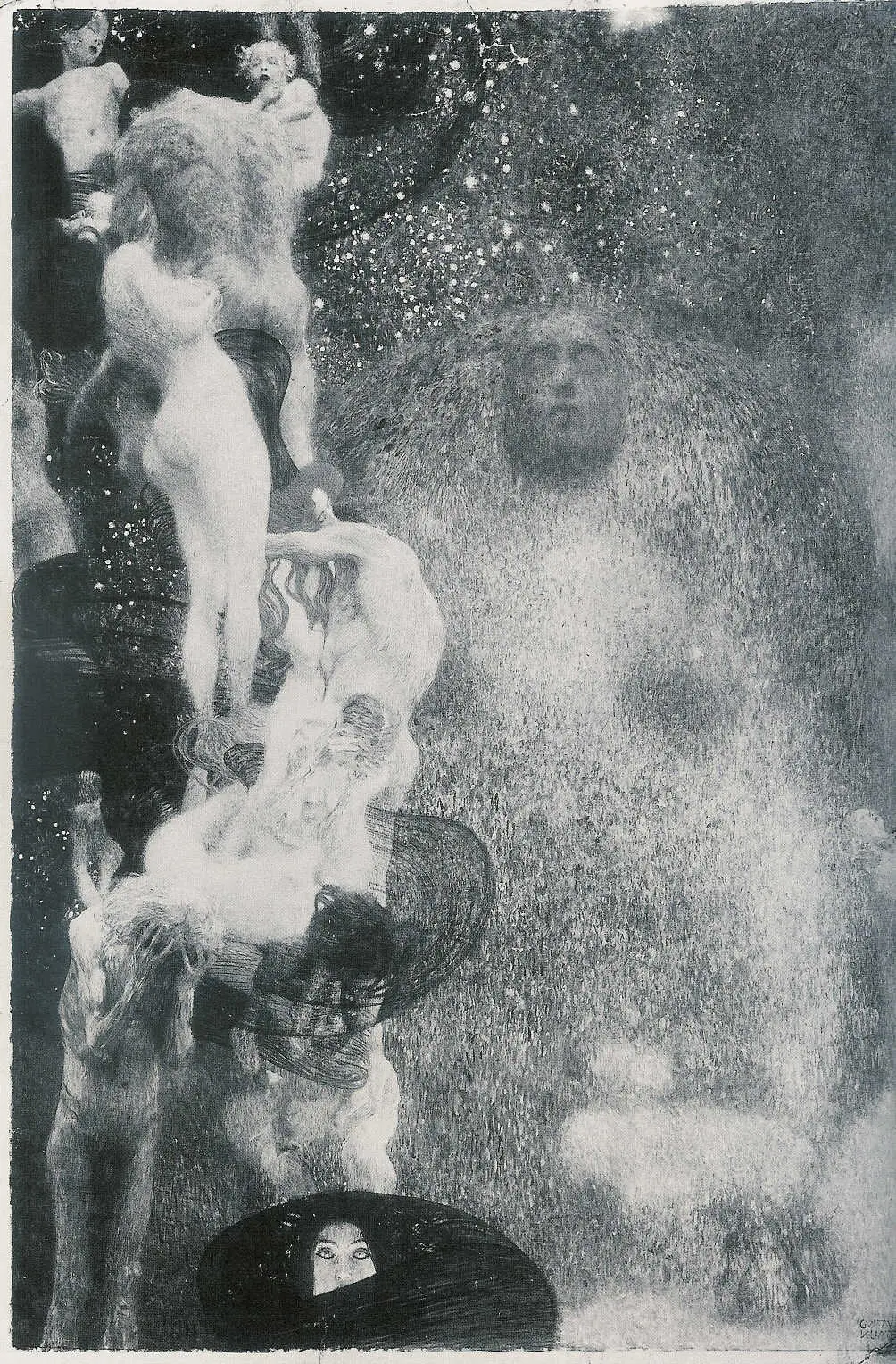
Klimt’s Philosophy, shown at the Vienna Secession in 1900, offered instead a dreamlike column of naked bodies, young and old, drifting through a dark cosmos past a vast, veiled face, with a single illuminated head of Knowledge at the bottom. Dozens of professors signed a petition against it. At the Paris World’s Fair later that year, the same painting won a gold medal.
1901Medicine
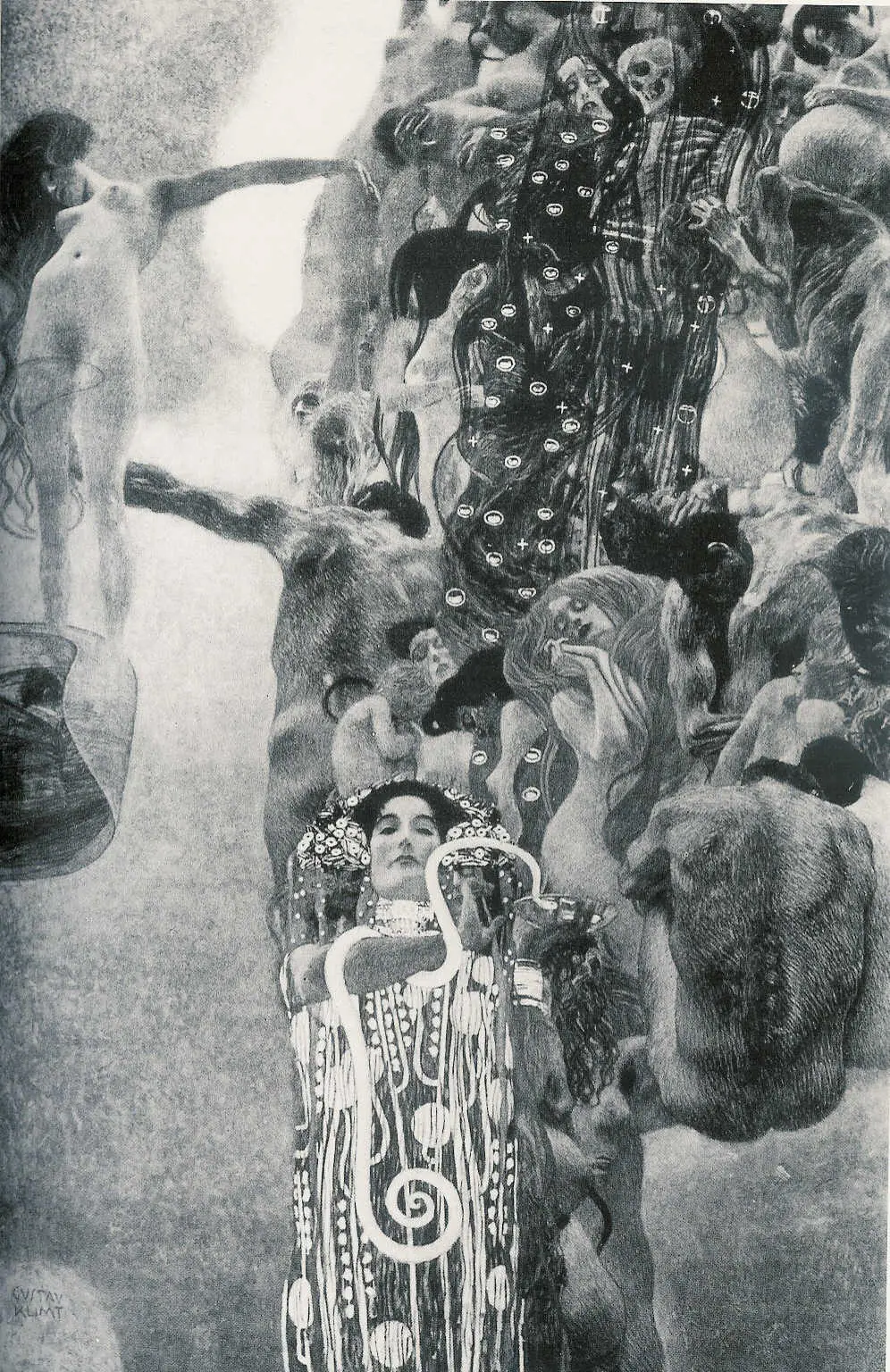
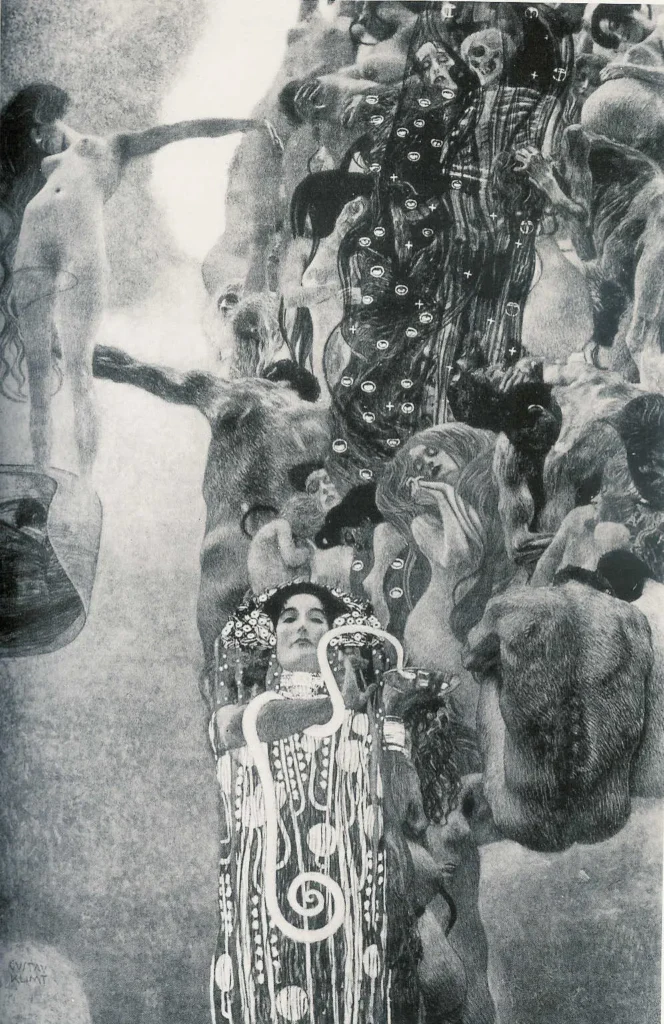
Medicine (1901) showed a stream of suffering humanity with a skeleton among them, next to a naked floating woman, and in front the goddess Hygieia with a snake. It was attacked as pornographic and as an insult to medical science, and the controversy reached the Austrian parliament.
1903–07Jurisprudence
In Jurisprudence, the last of the three, an emaciated old man stands helpless before a giant octopus, surrounded by three female furies, while the figures of Truth, Justice and Law appear small and distant above. Far from a celebration of the law, it is an image of punishment and fear.
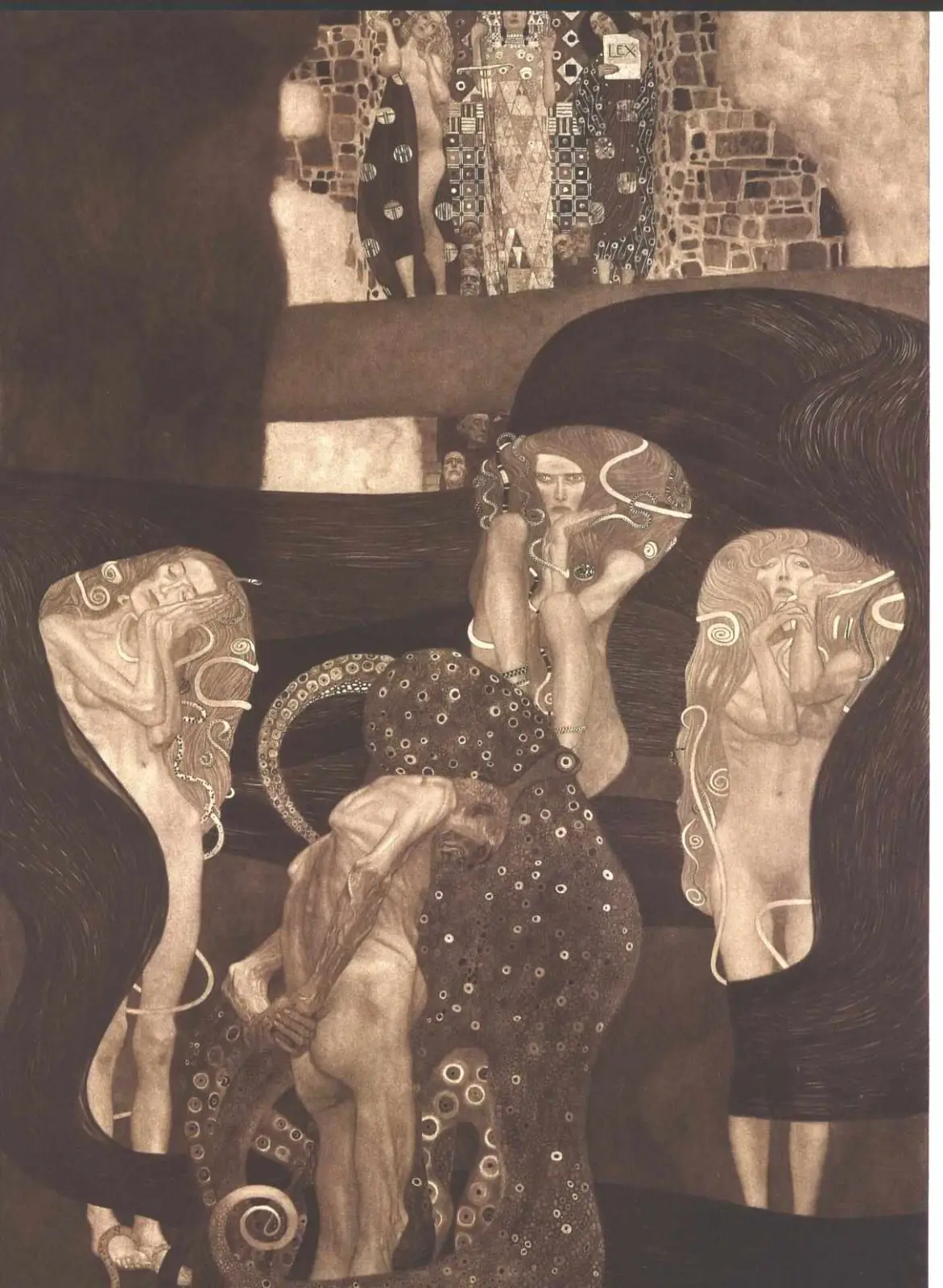
1905Klimt withdraws
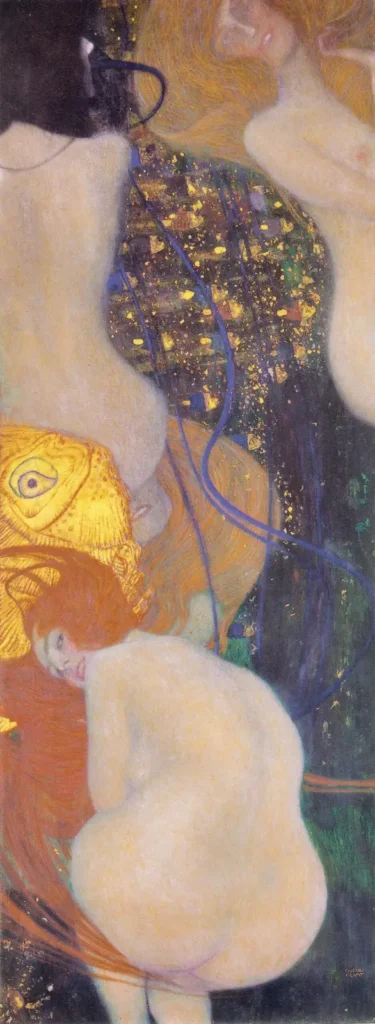
Worn down by the attacks, Klimt withdrew from the commission in 1905, returned his fee and bought the paintings back with the help of the collector August Lederer. He never again accepted a public commission. The episode pushed him towards private patrons and the luxurious, gold-filled style of the Golden Phase, and directly inspired his mocking Goldfish.
FateDestroyed in 1945
During the Second World War the paintings, then in Jewish collections seized by the Nazis, were stored with other Klimt works at Schloss Immendorf in Lower Austria. On 8 May 1945 the castle was set on fire and they were lost. They are known today from black-and-white photographs and a few colour reproductions, and have been the subject of digital reconstructions. Read more in The Lost Klimts.
Sources and further reading
- Tobias G. Natter (ed.), Gustav Klimt: The Complete Paintings (Taschen)
- Frank Whitford, Klimt (Thames & Hudson, World of Art)
- Klimt Foundation, Vienna: Gustav Klimt Database
Image: Gustav Klimt, The Faculty Paintings, public domain, via Wikimedia Commons.
 The Lost Klimts
 Goldfish
 The Vienna Secession
 The Life of Klimt