Fritza Riedler
The wife of a celebrated engineer, painted by Klimt in 1906 in one of the first portraits of his Golden Phase.
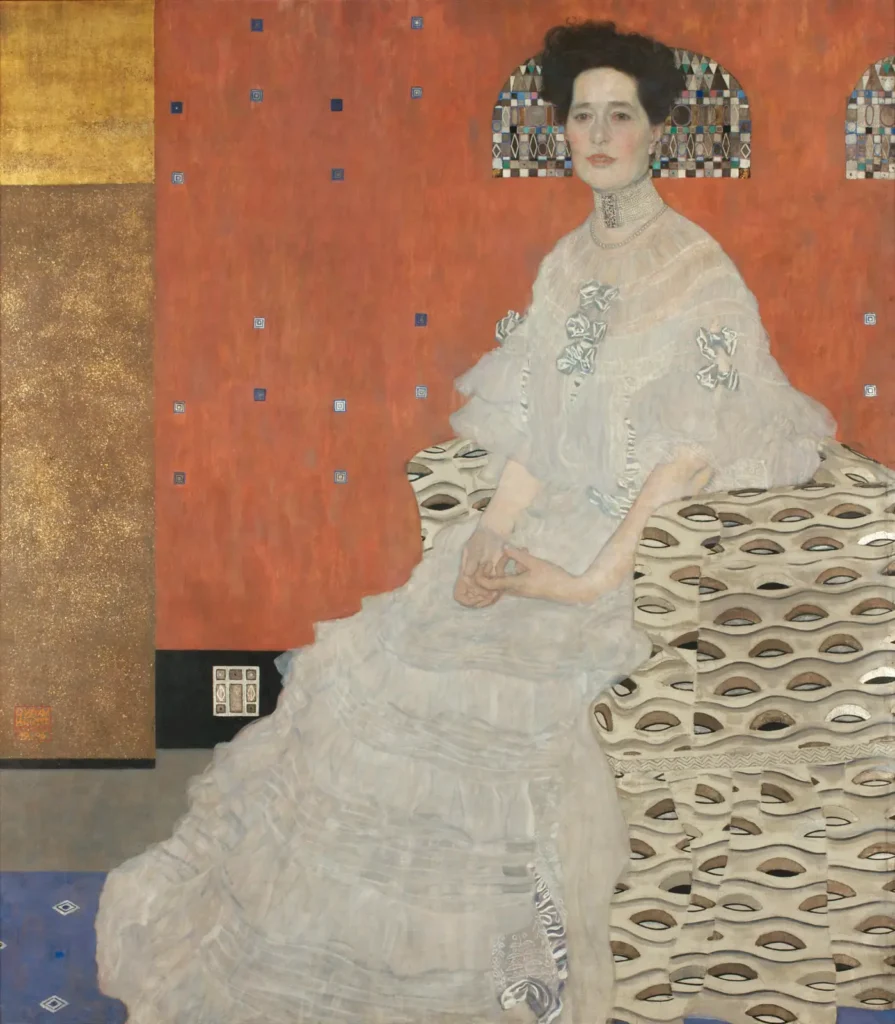
Friederike “Fritza” Riedler, born Langer, was the wife of Alois Riedler, an Austrian-born professor of mechanical engineering in Berlin. Klimt painted her in 1906, and the portrait is now one of the treasures of the Belvedere in Vienna.
| Born | Friederike Langer, 1860 |
|---|---|
| Died | 1927 |
| Married | Alois Riedler, engineer |
| Portrait | 1906, oil on canvas, 153 × 133 cm |
| Where to see it | Belvedere, Vienna |
LifeWho she was
Fritza Riedler belonged to the prosperous professional class that commissioned so much of Klimt’s portrait work around 1900. Her husband Alois Riedler was a respected engineer and academic, and the couple divided their lives between Berlin and Vienna. Unlike many of Klimt’s sitters, she left few traces in diaries or letters, so the portrait is the main record of how she wished to be seen.
The paintingThe portrait
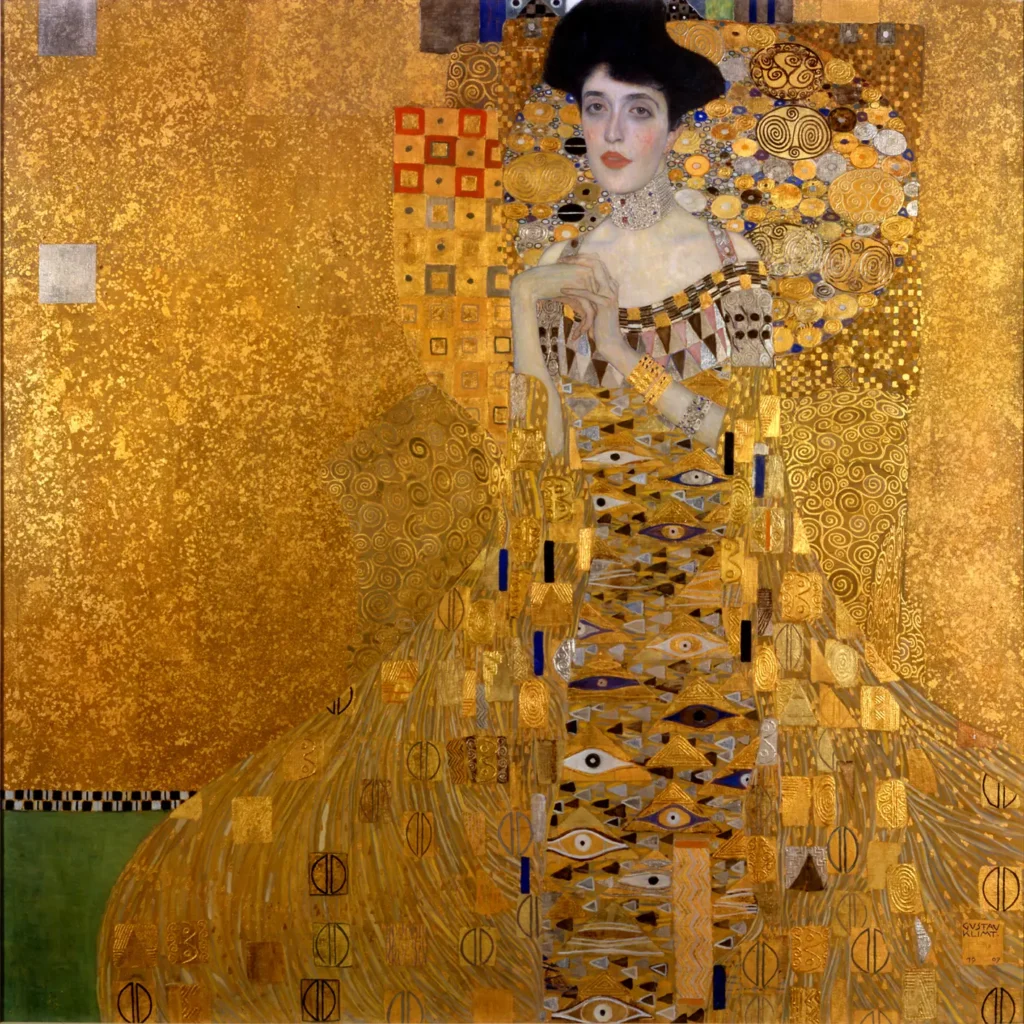
Klimt shows her seated in a chair whose upholstery dissolves into a pattern of eyes and spirals, while a flat panel of coloured mosaic behind her head works like a halo or headdress. Writers have long compared that panel to the elaborate hairstyles in Velázquez’s portraits of Spanish princesses, which Klimt knew from Vienna’s imperial collection. Her face and hands are painted naturalistically; everything else turns into ornament. The same balance between a real woman and a decorative surface leads directly to Adele Bloch-Bauer I the following year.
Read more about the painting on our Portrait of Fritza Riedler page, or see it among the other Golden Phase works.
FAQFrequently asked questions
Who was Fritza Riedler?
Friederike “Fritza” Riedler (1860–1927), born Langer, was the wife of the engineer Alois Riedler. Klimt painted her portrait in 1906.
Where is the Portrait of Fritza Riedler?
In the Upper Belvedere in Vienna, which holds the world’s largest collection of Klimt paintings.
Why is it important?
It is one of the first portraits of Klimt’s Golden Phase, where a realistically painted face sits inside an almost abstract field of ornament.
 Klimt’s models and muses
 The Belvedere
 Klimt’s patrons