Klimt at the Kunsthistorisches Museum
Klimt’s early paintings above the grand staircase, and a portrait that went unseen for a century.
Most visitors come to the Kunsthistorisches Museum for Bruegel, Vermeer and Velázquez, and walk under Klimt without noticing. In 1890–91, before the Secession, he painted part of the decoration of the museum’s main staircase, and the museum also owns one of his early portraits.
1890–91The staircase paintings
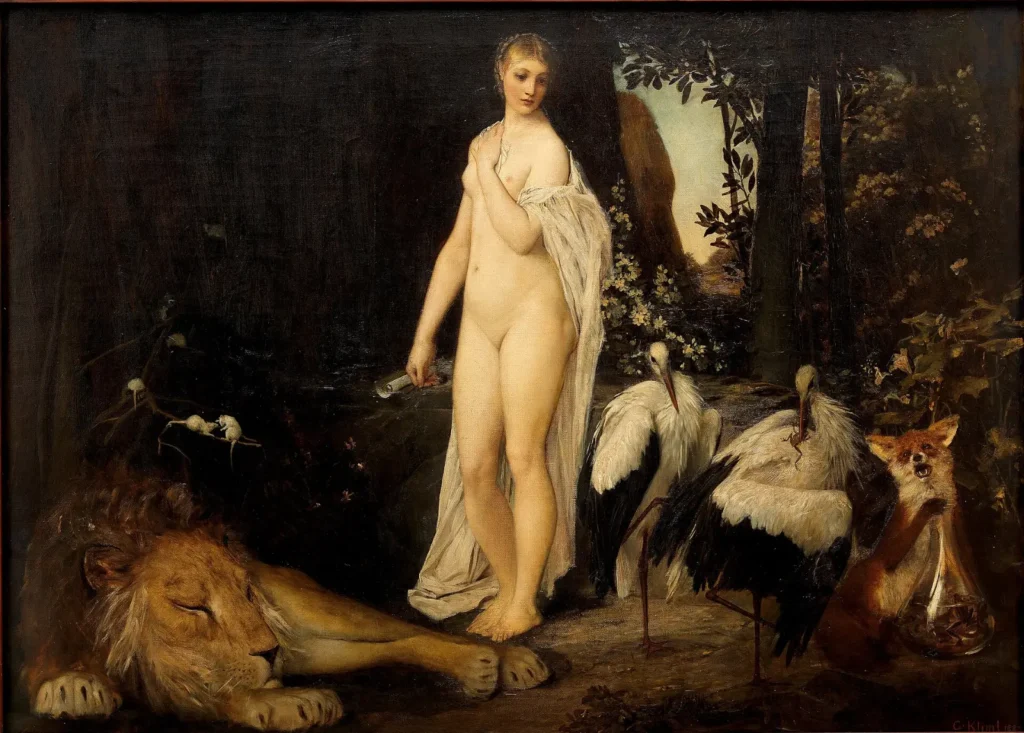
The Künstler-Compagnie, formed by Gustav Klimt, his brother Ernst and Franz Matsch, was commissioned to fill the spandrels and the spaces between the columns of the staircase with figures representing the history of art, from ancient Egypt to the Renaissance. Gustav’s figures, among them a girl from Tanagra representing ancient Greece, already show the slender, self-possessed women of his later work. See our page on the staircase paintings.
To see them, climb the main staircase and look up above the arches, under Hans Makart’s ceiling paintings. Binoculars help.
c. 1895Lady with a Lilac Scarf
This small portrait of an unknown woman was bequeathed to the museum in 2013 by the descendants of Georg Lasus, a Viennese collector who owned several early Klimts, and was shown in public for the first time in 2014. Read more on our page about Lady with a Lilac Scarf.
Practical informationPlanning your visit
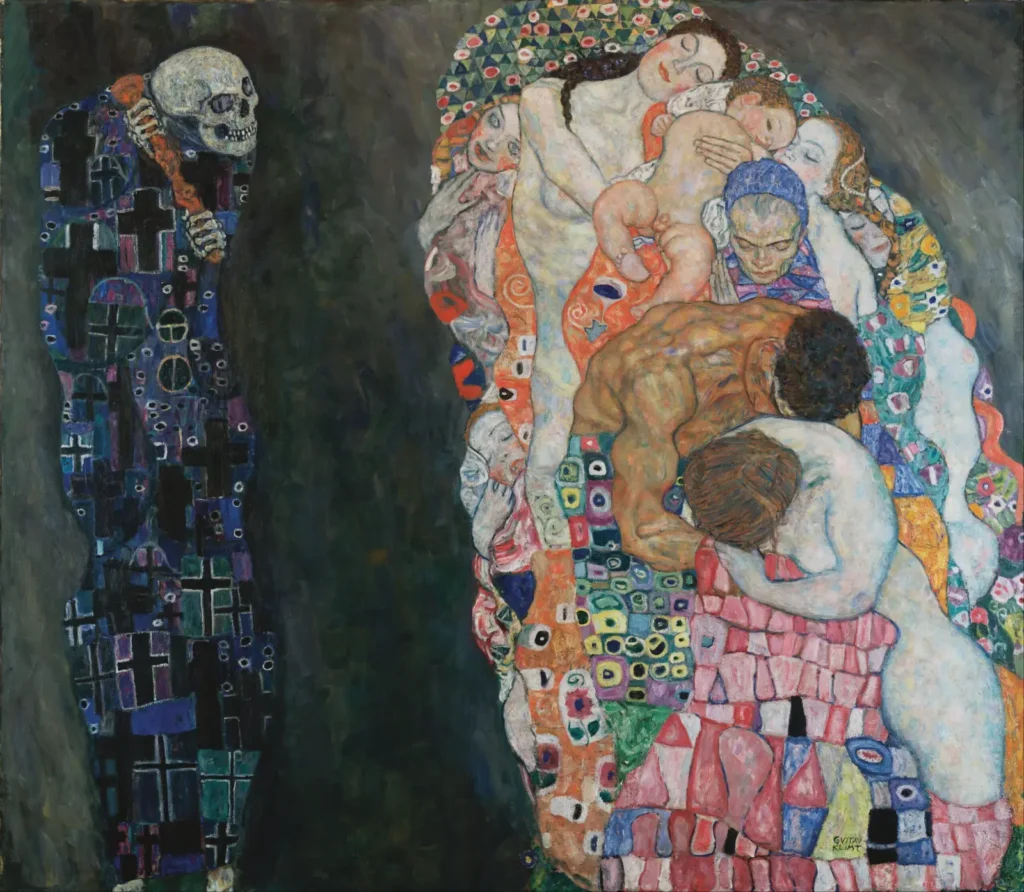
The museum is on Maria-Theresien-Platz, 1010 Vienna, opposite the Natural History Museum and next to the MuseumsQuartier, so it is easy to combine with the Leopold Museum. Check the museum’s website for opening hours, which change by season.
FAQFrequently asked questions
Does the Kunsthistorisches Museum have Klimt paintings?
Yes. Klimt painted part of the decoration of the main staircase in 1890–91, and the museum owns his Lady with a Lilac Scarf of about 1895.
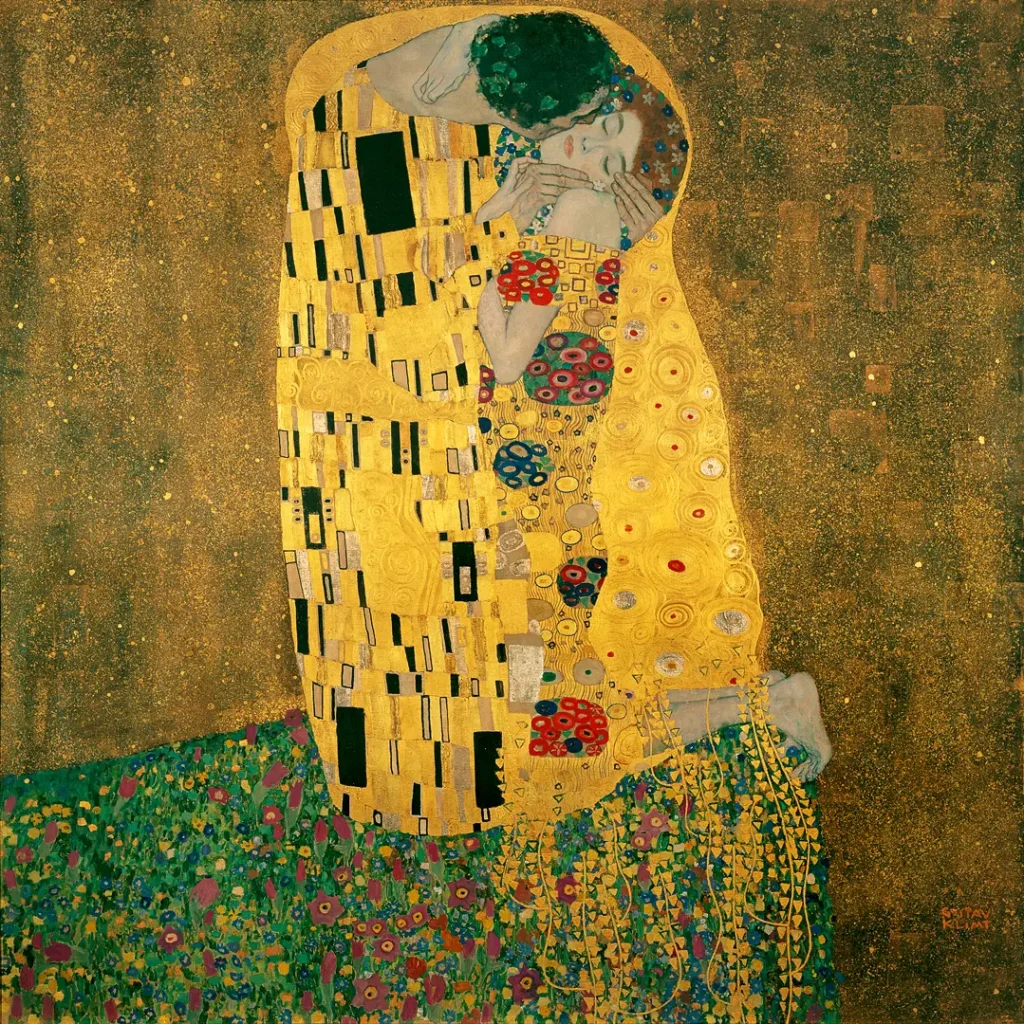
Is The Kiss at the Kunsthistorisches Museum?
No. The Kiss is at the Belvedere.
 Early work
 Leopold Museum
 Belvedere
 Klimt’s Vienna