In 1897 Klimt led a group of young artists out of Vienna’s official artists’ association and founded the Vienna Secession. Over the next five years he moved from the polished historicism of his early commissions to the style the world now recognises as his: flat gold grounds, femmes fatales, square landscapes and portraits of the city’s new rich.
OverviewWhat changed in these years
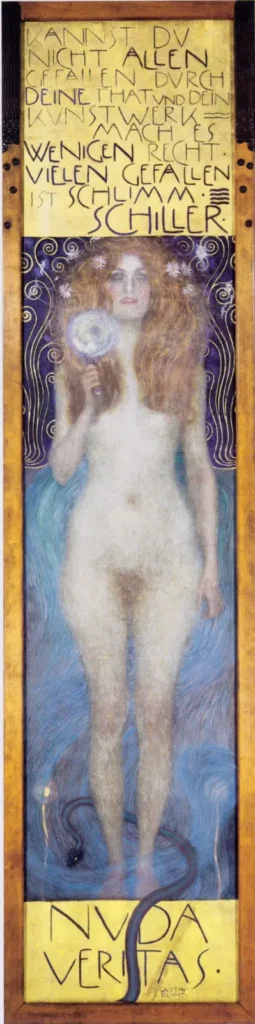
Klimt was the Secession’s first president, and its exhibitions gave him a stage. He designed the poster for the first show in 1898, which the censors made him alter, and painted Pallas Athene, the warrior goddess who became the movement’s emblem. A year later came Nuda Veritas, a naked woman holding up a mirror to the viewer, with a line from Schiller telling artists to please the few rather than the many.
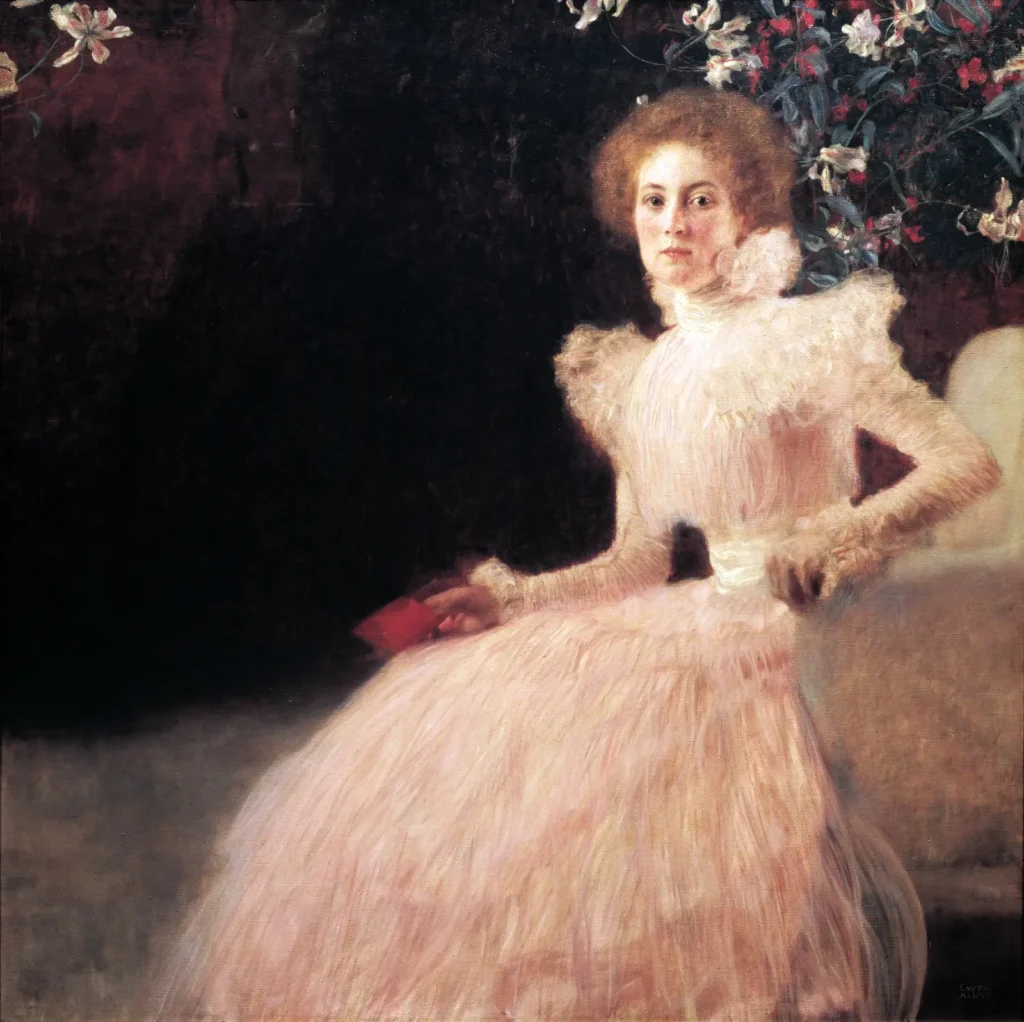
Portraits brought in money and a new kind of client. Portrait of Sonja Knips (1898), with its pale pink dress and dark background, owes a debt to Whistler and Khnopff, and the portrait of Serena Lederer introduced him to the Lederer family, who would become his greatest collectors. At the same time he worked on the Faculty Paintings for the University of Vienna. When Philosophy was shown in 1900, eighty-seven professors signed a petition against it, yet the same painting won a gold medal at the Paris World Exhibition that year.
In the summer of 1900 Klimt went to the Attersee with the Flöge family for the first time, and began painting landscapes on square canvases, with high horizons and no people. They became a private counterweight to the public scandals of the Faculty Paintings, and he kept painting them for the rest of his life. See Klimt at the Attersee.
Every workPortraits (10)
- Portrait of Sonja Knips (1897–98) · Belvedere
- Lady by the Fireplace (1897–98) · Belvedere
- Prince William Nii Nortey Dowuona (1897) · Private collection
- Woman in an Armchair (1897–98) · Private collection
- Portrait of Trude Steiner (1898–1900) · Missing since 1941
- Portrait of Helene Klimt (1898) · Private collection
- Portrait of Serena Pulitzer Lederer (1899) · Metropolitan Museum of Art
- Old Man on His Deathbed (c. 1900) · Belvedere
- Rose von Rosthorn-Friedmann (1900–01) · Private collection
- Portrait of Marie Henneberg (1901–02) · Kunstmuseum Moritzburg
Every workAllegories and myths (7)
- Music II (1897–98) · Destroyed 1945
- Tragedy (1897) · Wien Museum
- Pallas Athene (1898) · Wien Museum
- Moving Water (1898) · Private collection
- Nuda Veritas (1899) · Austrian Theatre Museum
- Schubert at the Piano (1899) · Destroyed 1945
- Water Nymphs (Silverfish) (c. 1899) · Bank Austria collection
Every workFaculty paintings and friezes (1)
- Philosophy (1900–07) · Destroyed in 1945
Every workLandscapes (11)
- After the Rain (1898) · Belvedere
- Orchard in the Evening (1898) · Leopold Museum
- A Morning by the Pond (1899) · Leopold Museum
- On Lake Attersee (1900) · Leopold Museum
- The Large Poplar I (1900) · Neue Galerie
- Cows in the Stable (1900–01) · Lentos Art Museum
- Farmhouse with Birch Trees (1900) · Private collection
- The Black Bull (1900) · Leopold Museum
- Lakeshore with Birches (1901) · Private collection
- Pine Forest II (1901) · Private collection
- Fruit Trees (1901) · Private collection
MuseumsWhere to see these works
The best group is in Vienna: the Belvedere has Sonja Knips and After the Rain, the Wien Museum has Pallas Athene, and the Leopold Museum has several early Attersee landscapes. Nuda Veritas is in the Austrian Theatre Museum. Many of the most important works of these years, including the Faculty Paintings and Schubert at the Piano, were destroyed by fire in 1945.
ExploreAll periods
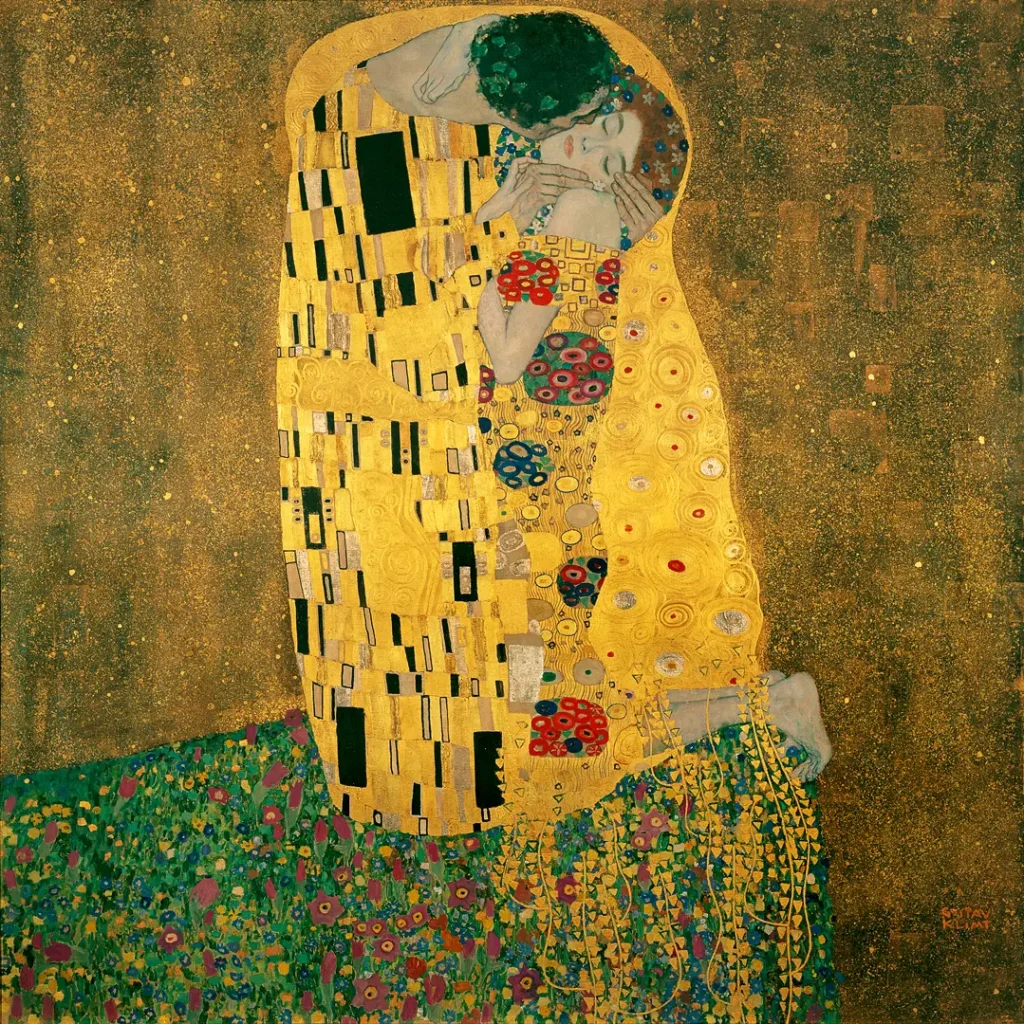
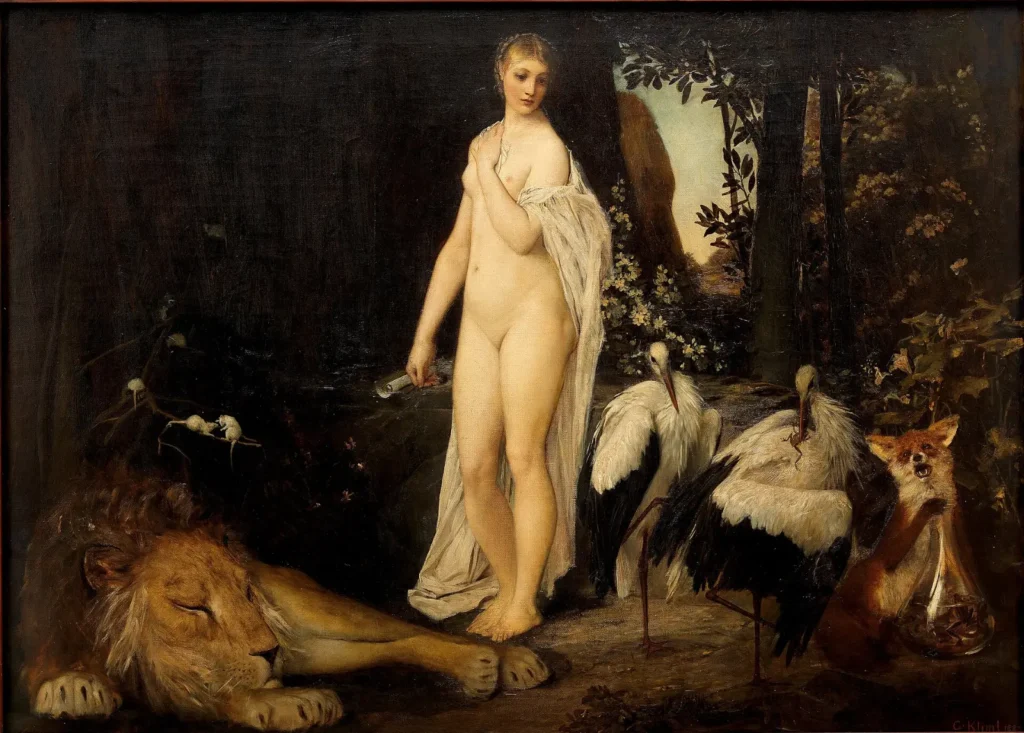
This is one of four period guides to Klimt’s paintings: Early work (1880–1896), Secession years (1897–1901), Golden Phase (1900–1910) and Late work (1910–1918). Or browse all paintings in one place.
FAQFrequently asked questions
What is Klimt’s Secession period?
The years from 1897, when Klimt co-founded the Vienna Secession and became its first president, to around 1901, before the gold paintings of his Golden Phase. In this time he developed his own style and painted his first landscapes.
Why did Klimt leave the Künstlerhaus?
He and a group of younger artists felt that Vienna’s official artists’ association was too conservative and too commercial, and left it in 1897 to found the Secession, which would show modern and foreign art.
Which famous paintings are from Klimt’s Secession years?
Pallas Athene, Nuda Veritas, the Portrait of Sonja Knips, Schubert at the Piano and the first of the Faculty Paintings, Philosophy.
 The Golden Phase
 Early work
 The Vienna Secession
 All paintings