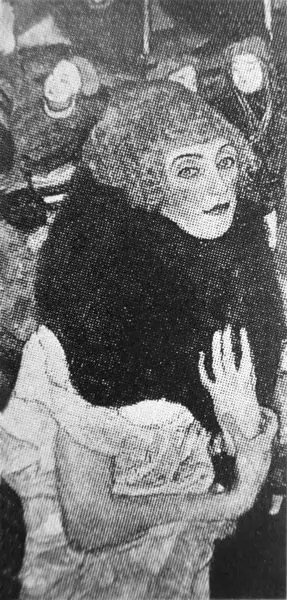
Marie Henneberg was the wife of Hugo Henneberg, a scientist and one of Vienna’s leading art photographers. Klimt painted her in 1901–02, seated in a pale, ruffled dress, her face sharply drawn while the chair and room melt into shadow.
The painting
The Hennebergs commissioned a villa on the Hohe Warte in Vienna from Josef Hoffmann, and the portrait was planned for a place above the fireplace in its double-height hall. The setting helps explain the square format, unusual for a Klimt portrait at the time, and its almost altarpiece-like presence. The picture was shown, still unfinished, at the Vienna Secession in 1902.
Hugo Henneberg worked with the gum bichromate process, which gives photographs a soft, painterly look, and the misty atmosphere of the portrait has often been compared with his pictures.
Where to see it
In the 1920s the painting passed to a collector in Leipzig, and in 1979 it was acquired by the museum in Halle, now the Kunstmuseum Moritzburg. It is one of very few Klimt paintings in a German public collection, alongside Beech Grove I in Dresden and Music I in Munich.
Sources and further reading
- Tobias G. Natter (ed.), Gustav Klimt: The Complete Paintings, Taschen
- Frank Whitford, Klimt, Thames & Hudson
- Klimt Foundation, Gustav Klimt Database
Image: Gustav Klimt, Portrait of Marie Henneberg, public domain, via Wikimedia Commons.
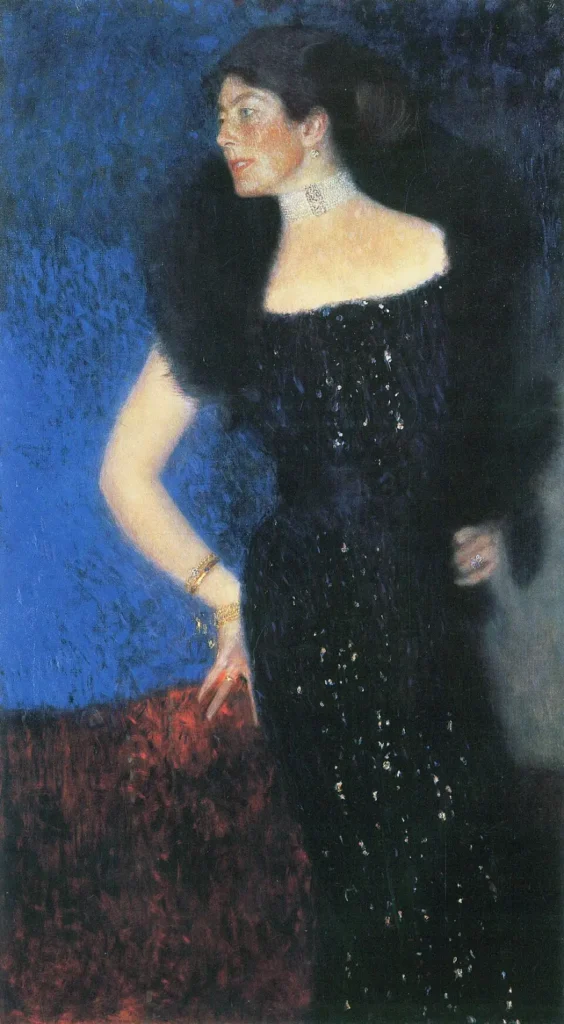 Rose von Rosthorn-Friedmann
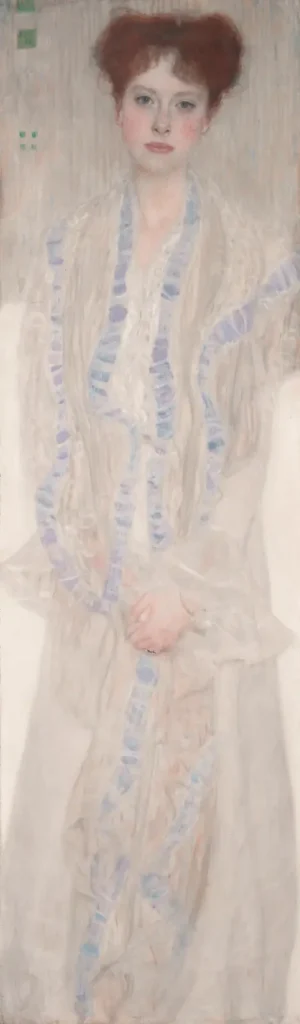 Gertrud Loew
 Josef Hoffmann