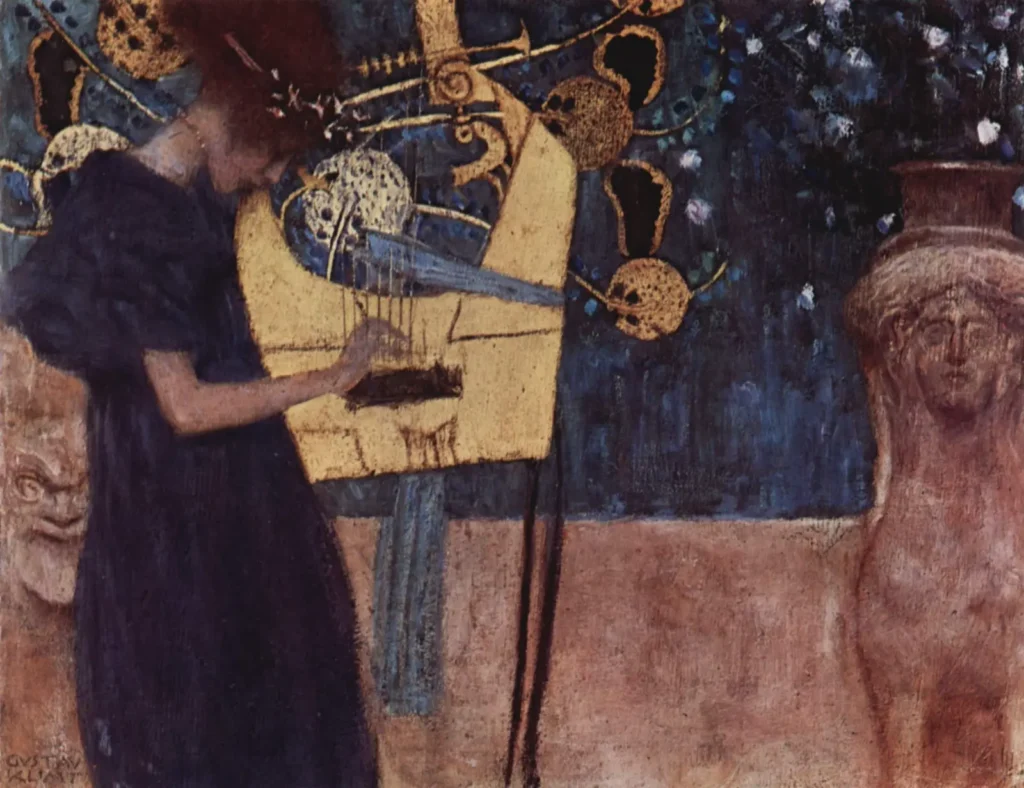
Music I (1895) is a small symbolist painting of a woman playing a kithara, an ancient Greek lyre, painted when Klimt was still best known as a decorator of theatres and museums.
CompositionThe painting
The woman is seen in profile on the right, her instrument decorated with a fierce animal head. On the left is a dark, glittering space with a sphinx-like figure, painted with gold and fine patterning. The flat ornament and the mood of mystery look ahead to the Secession two years later.
ContextA study for a lost room
The theme was developed into Music II, an over-door painting for the music room of the industrialist Nikolaus Dumba in Vienna. Music II and its companion Schubert at the Piano were destroyed by fire at Schloss Immendorf in 1945; see lost Klimt paintings. Music I survives in Munich.
ContextMusic in Klimt’s work
Music was central to the culture of Vienna around 1900, and to Klimt’s circle. His friends included the composer Gustav Mahler, who conducted at the opening of the Beethoven Frieze exhibition, and Mahler’s wife Alma, whom Klimt courted before her marriage. See Klimt and the Mahlers.
Music I of 1895 is a small, jewel-like picture: a woman playing a kithara, the lyre of ancient Greece, beside a stone sphinx, set against a dark background. It is a first version of the subject Klimt developed in the large Music II for the music room of Nikolaus Dumba, destroyed in 1945. The combination of a living woman and an archaic stone figure suggests music as an ancient, almost magical force.
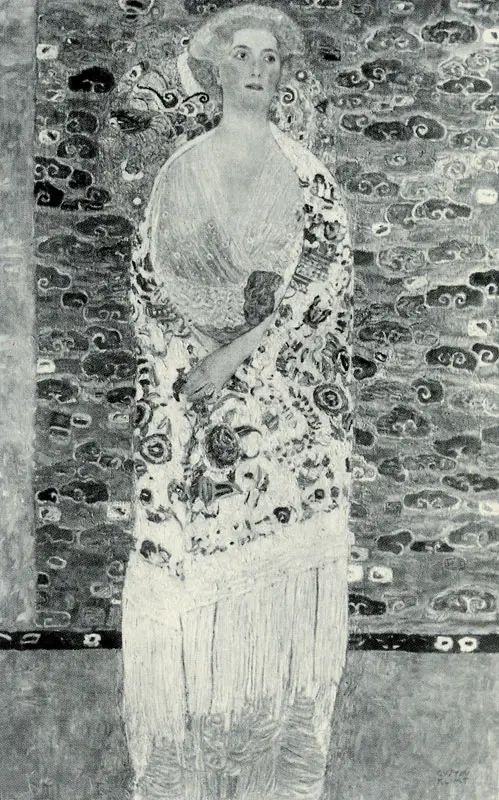
The painting is in the Neue Pinakothek of the Bavarian State Painting Collections in Munich, one of the few Klimts in a German museum, together with Margaret Stonborough-Wittgenstein.
ExploreRelated works
If you are interested in Music I, these works by Klimt make good companions:
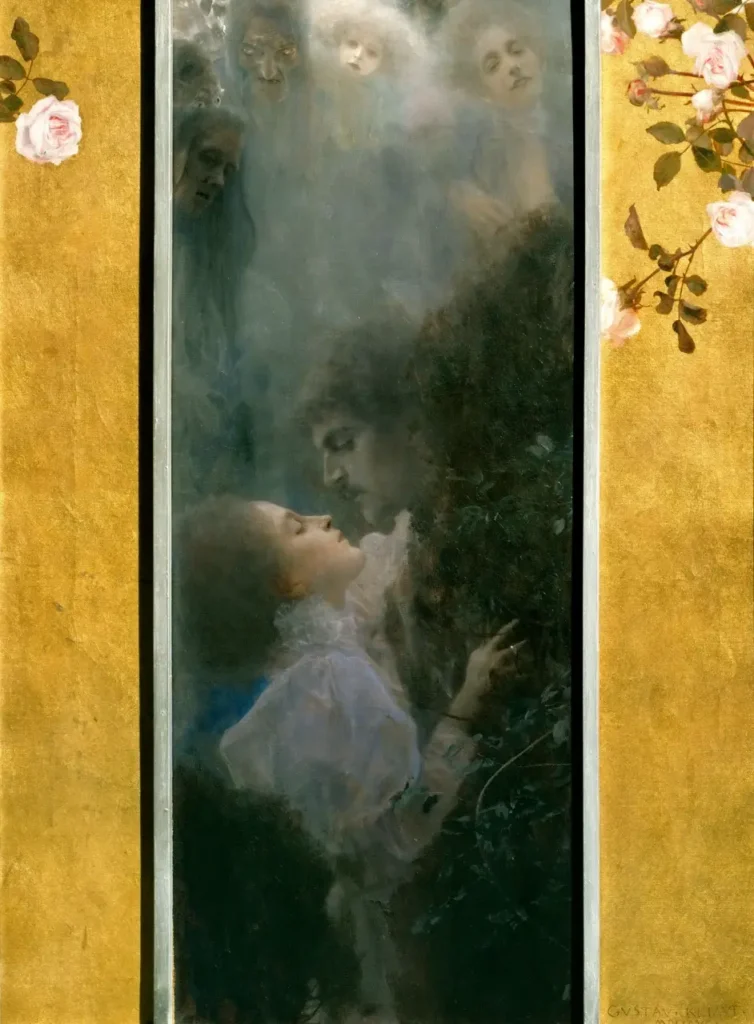
- Love (1895): another allegory, painted around the same time.
- Music II (1897–98): another allegory, painted around the same time.
- Tragedy (1897): another allegory, painted around the same time.
- Allegory of Sacred Music (c. 1885): another allegory.
Browse every known work in our catalogue of Klimt’s paintings, or find out where every Klimt painting is today.
FAQFrequently asked questions
Where is Music I today?
Music I is in the Neue Pinakothek, Munich (Bavarian State Painting Collections).
When did Gustav Klimt paint Music I?
Klimt painted Music I in 1895. It belongs to his early, academic period, before the founding of the Vienna Secession in 1897.
How big is Music I?
It measures 37 × 44.5 cm, or about 15 × 18 inches.
What materials did Klimt use for Music I?
It is oil on canvas.
Sources and further reading
- Tobias G. Natter (ed.), Gustav Klimt: The Complete Paintings (Taschen)
- Frank Whitford, Klimt (Thames & Hudson, World of Art)
- Klimt Foundation, Vienna: Gustav Klimt Database
Image: Gustav Klimt, Music I, public domain, via Wikimedia Commons.
 Lost Klimt paintings
 Love
 Pallas Athene
 All Klimt paintings