Klimt’s Late Work, 1910–1918
After the gold: the colourful portraits, Attersee landscapes and unfinished canvases of Klimt’s last eight years.
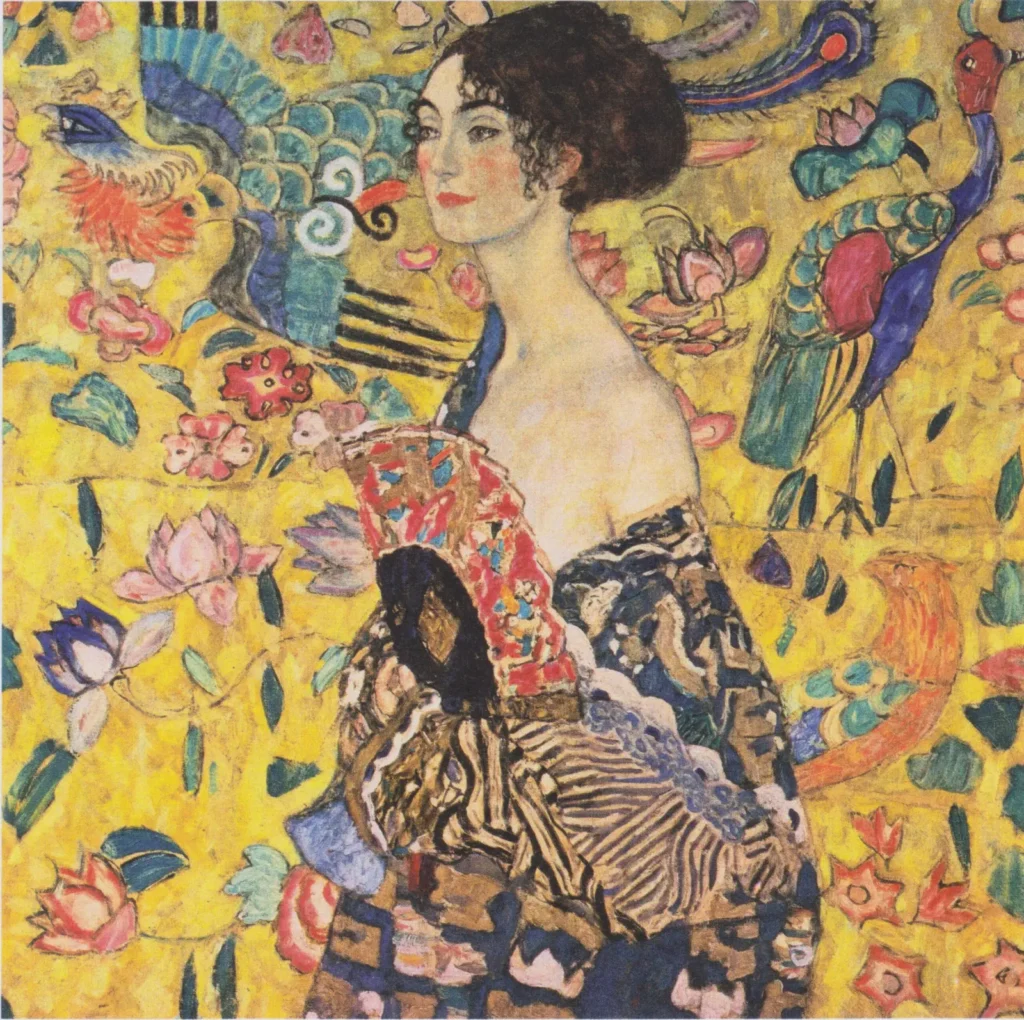
Around 1910 Klimt stopped using gold leaf. In the eight years before his death in February 1918 he painted with brighter colour and looser brushwork, filled his backgrounds with flowers and East Asian motifs, and produced some of the most valuable paintings of the twentieth century.
OverviewWhy his style changed
At the 1909 Internationale Kunstschau in Vienna, Klimt saw work by Van Gogh, Munch, Matisse and the Fauves, and a new generation led by Egon Schiele and Oskar Kokoschka was making his gold paintings look like the end of an era. Klimt answered with colour. Death and Life, begun in 1910 and reworked until 1915, replaced its gold background with a dark blue-green one, and won first prize at the international exhibition in Rome in 1911.
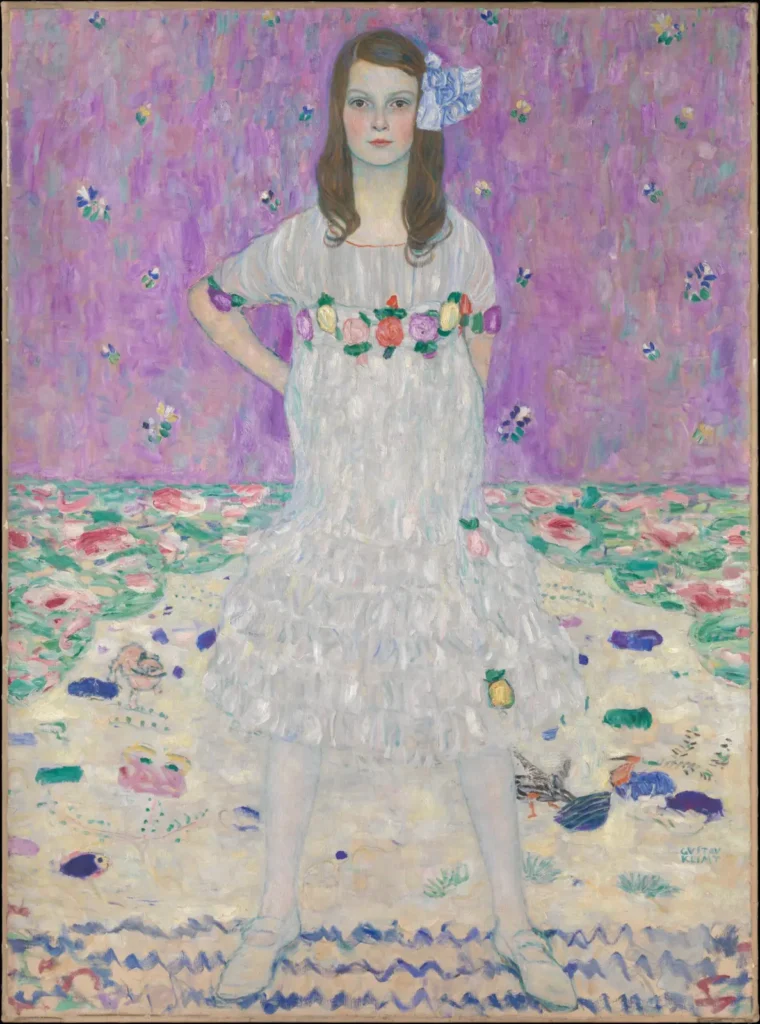
Portraits became his main source of income. Mäda Primavesi and her mother Portrait of Eugenia Primavesi stand against grounds of flowers; Portrait of Adele Bloch-Bauer II (1912) shows how far he had moved from the gold of her first portrait five years earlier. In the last years, Japanese and Chinese robes, prints and porcelain from his own collection appear in the backgrounds, as in Portrait of Friederike Maria Beer and Lady with a Fan.
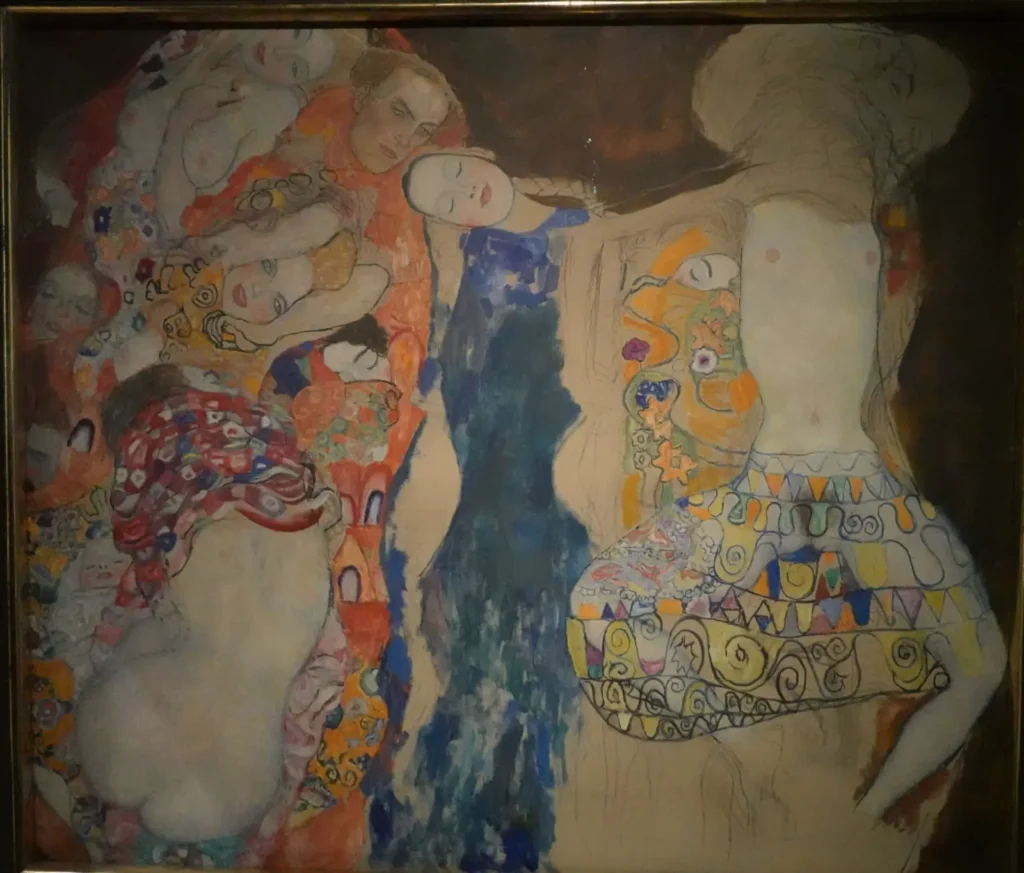
In the summers he kept painting the Attersee, now from Weissenbach on the south shore, with views of Unterach across the water and the forester’s house where he stayed, and in 1913 he painted on Lake Garda. When he died after a stroke, several canvases were still unfinished in his studio, among them The Bride and Adam and Eve. They show how he worked: drawing the figures first, then laying in colour area by area.
Every workPortraits (22)
- Portrait of Adele Bloch-Bauer II (1912) · Private collection
- Mäda Primavesi (1912–13) · Metropolitan Museum of Art
- Portrait of Paula Zuckerkandl (1912) · Whereabouts unknown
- Ria Munk on Her Deathbed (1912) · Private collection
- Portrait of Eugenia Primavesi (c. 1913–14) · Toyota Municipal Museum of Art
- Portrait of Barbara Flöge (c. 1915–18) · Private collection
- Portrait of Elisabeth Lederer (1916) · Private collection
- The Dancer (1916–17) · Private collection
- Portrait of a Lady (1916–17) · Galleria Ricci Oddi
- Portrait of Friederike Maria Beer (1916) · Tel Aviv Museum of Art
- Lady with a Muff (1916–17) · Private collection
- Women Friends (1916–17) · Destroyed 1945
- Wally (1916) · Destroyed 1945
- The Fur Collar (1916) · Whereabouts unknown
- The Polecat Fur (1916) · Private collection
- Lady with a Fan (1917–18) · Private collection
- Portrait of Johanna Staude (1917–18) · Belvedere
- Portrait of Amalie Zuckerkandl (1917–18) · Belvedere
- Portrait of Ria Munk III (1917–18) · Private collection
- Portrait of Fräulein Lieser (1917) · Private collection
- Lady in White (1917–18) · Belvedere
- Head of a Woman (1917) · Lentos Art Museum
Every workAllegories and myths (6)
- Death and Life (1910–15) · Leopold Museum
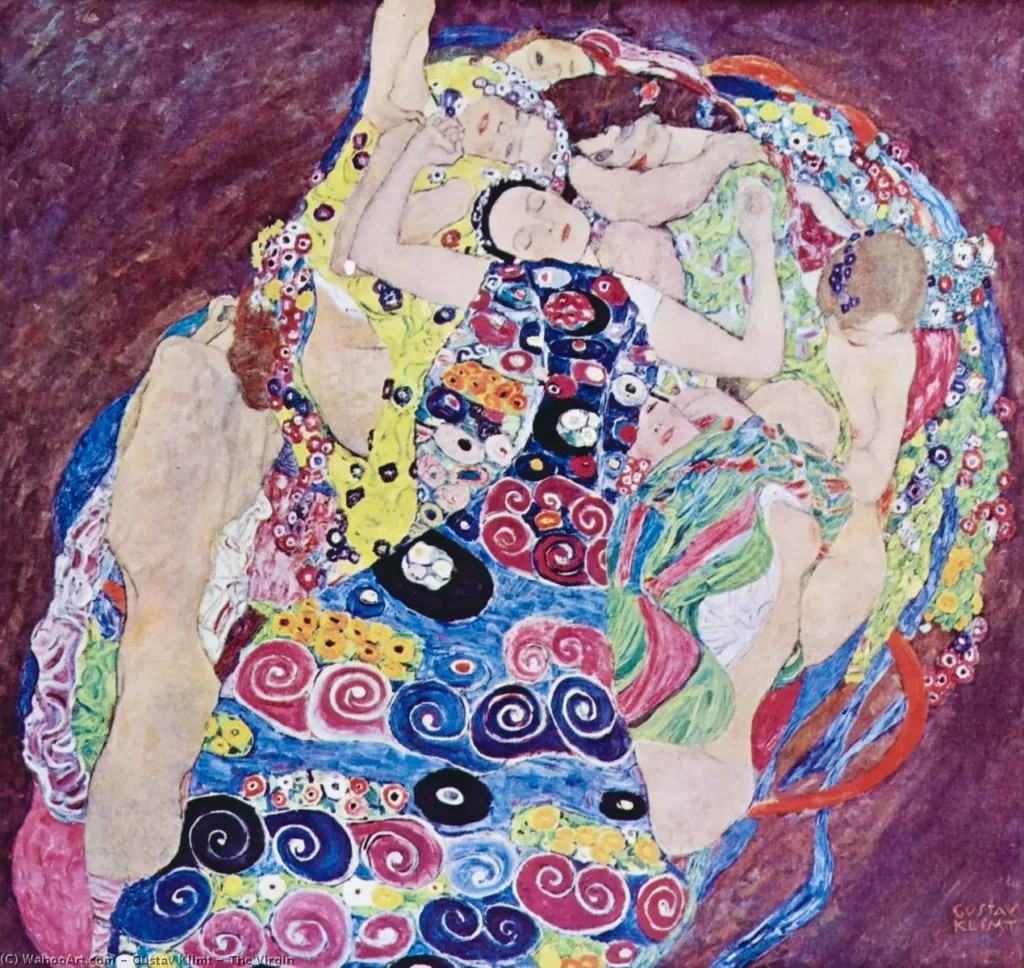
- The Maiden (1913) · National Gallery Prague
- Adam and Eve (1916–18) · Belvedere
- The Bride (1917–18) · Klimt Foundation (on loan to the Belvedere)
- Baby (Cradle) (1917–18) · National Gallery of Art
- Leda (1917) · Destroyed 1945
Every workLandscapes (19)
- Farm Garden with Crucifix (1911–12) · Destroyed 1945
- Upper Austrian Farmhouse (1911) · Belvedere
- Apple Tree I (c. 1912) · Private collection
- Avenue to Schloss Kammer Park (1912) · Belvedere
- Orchard with Roses (1912) · Private collection
- Church in Cassone (1913) · Private collection
- Italian Garden Landscape (1913) · Kunsthaus Zug
- Forester’s House in Weissenbach (1914) · Neue Galerie
- Litzlberg on the Attersee (c. 1914–15) · Private collection
- Country House on the Attersee (1914) · Belvedere
- Litzlbergkeller on the Attersee (1915–16) · Private collection
- Garden Path with Chickens (1916) · Destroyed 1945
- Houses at Unterach on the Attersee (c. 1916) · Private collection
- Church in Unterach on the Attersee (c. 1916) · Private collection
- Forest Slope in Unterach (1916) · Private collection
- Garden Landscape with Mountain Top (1916) · Kunsthaus Zug
- Schönbrunn Landscape (1916) · Private collection
- Apple Tree II (1916) · Fondation Louis Vuitton
- Gastein (1917) · Lost since 1945
MuseumsWhere to see these works
Many late works are in private hands; several sold for record prices, among them Lady with a Fan and Portrait of Fräulein Lieser. Public collections with late Klimts include the Belvedere, the Leopold Museum, the Metropolitan Museum of Art and the National Gallery of Art in Washington. Our location guide lists them all.
ExploreAll periods
This is one of four period guides to Klimt’s paintings: Early work (1880–1896), Secession years (1897–1901), Golden Phase (1900–1910) and Late work (1910–1918). Or browse all paintings in one place.
FAQFrequently asked questions
When did Klimt stop using gold?
Around 1909–10. Death and Life, begun in 1910, was first painted with a gold background that Klimt later painted over, and after that he used colour and pattern instead of gold leaf.
What was the last painting Klimt worked on?
Several canvases were unfinished in his studio when he died in February 1918, including The Bride, Adam and Eve and Lady with a Fan. Which one he touched last is not known.
Are Klimt’s late paintings valuable?
Yes. Some of the highest prices ever paid for his work were for late paintings, including Lady with a Fan, sold at Sotheby’s in London in 2023. See our most expensive Klimt paintings.
 The Golden Phase
 Klimt’s death
 Landscapes
 All paintings