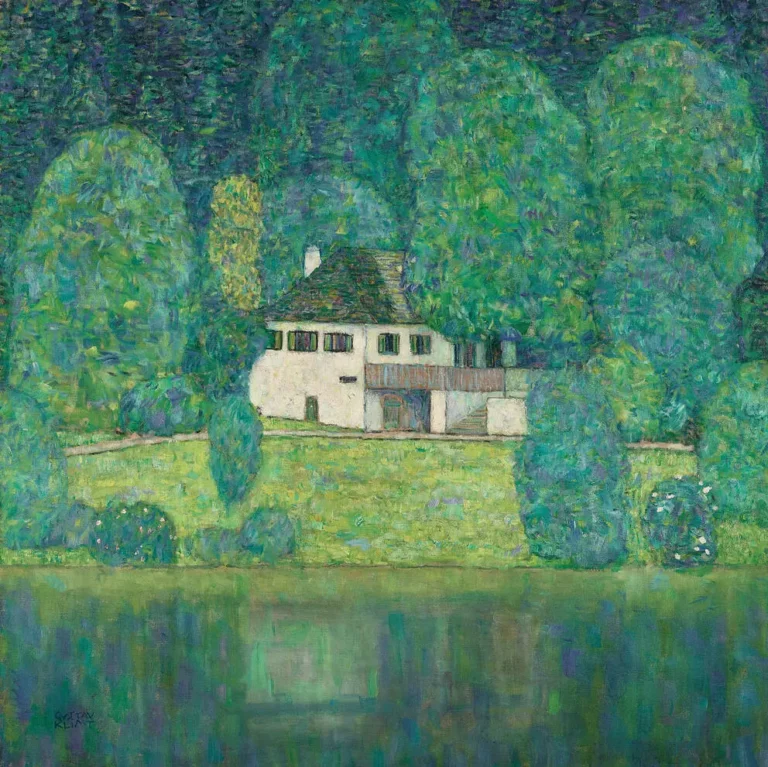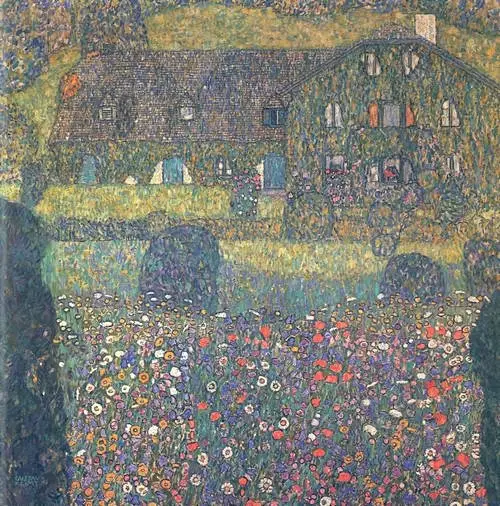
Klimt’s Country House on the Attersee (1914) in the Belvedere shows the forester’s house at Weissenbach behind a meadow of flowers. The painting and the place.
-
-
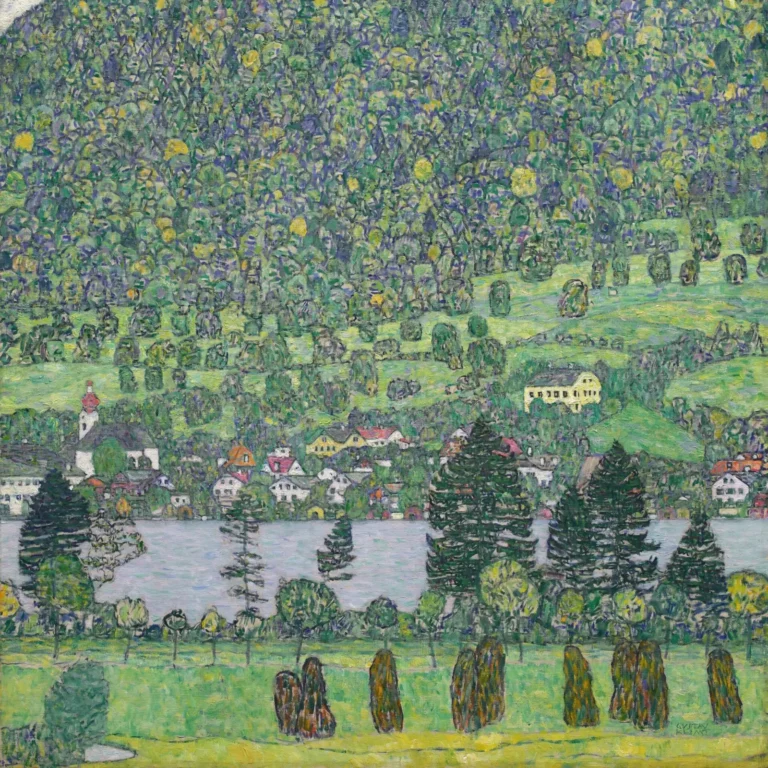
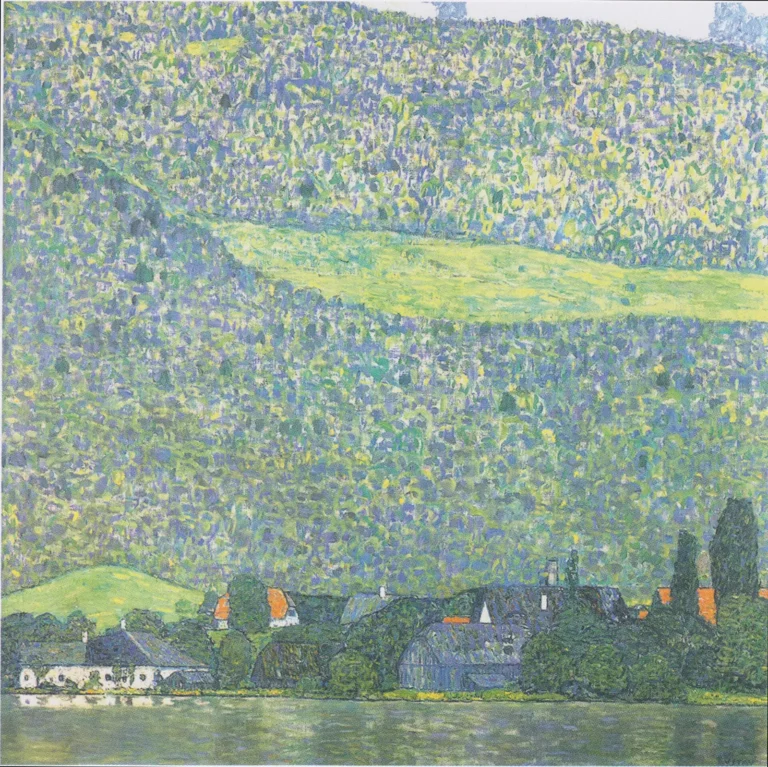
Klimt’s Forest Slope in Unterach (1916): a wooded hillside above the Attersee, from his last summer on the lake. The painting and how he composed it.
-
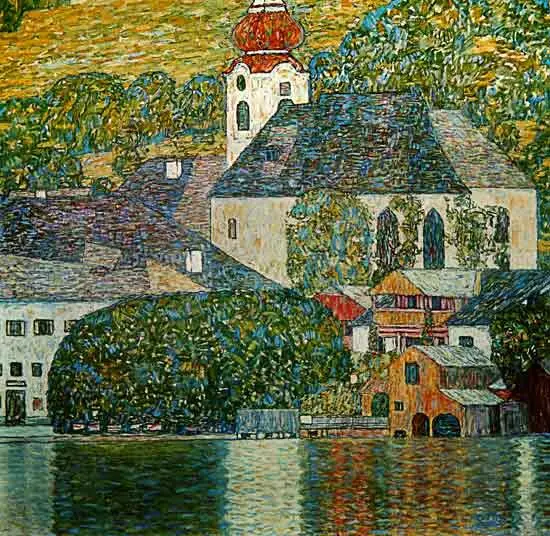
Klimt’s Church in Unterach on the Attersee (c. 1916), painted from across the lake with binoculars. What it shows and how it fits his late landscapes.
-
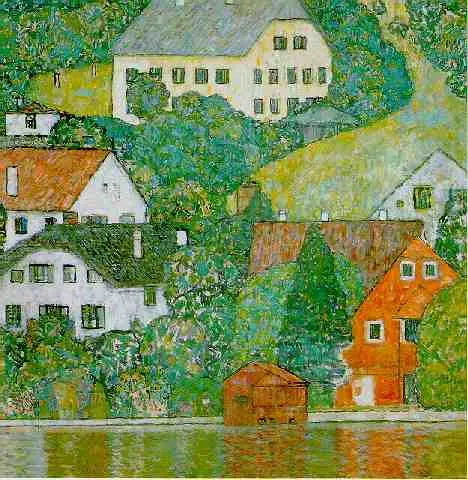
Klimt’s Houses at Unterach (c. 1916) belonged to the Bloch-Bauers, was restituted to Maria Altmann in 2006 and sold at Christie’s for $31.4m. The full story.
-
Klimt’s Litzlbergkeller on the Attersee (1915–16), commissioned by Otto Primavesi, is in the Leopold Museum, Vienna. What it shows and where to see it.
-
Klimt’s Litzlberg on the Attersee was looted from Amalie Redlich, restituted by Salzburg’s Museum der Moderne in 2011 and sold at Sotheby’s for $40.4m.
-
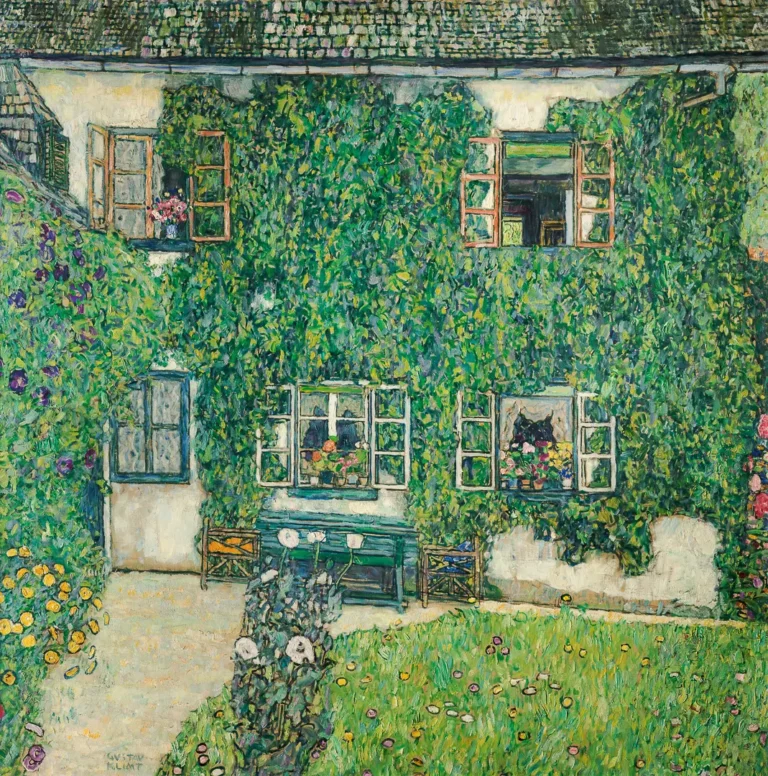
Klimt’s Forester’s House in Weissenbach (1914) shows the house where he stayed on the Attersee. The two versions, Neue Galerie and Belvedere, and the story.
-
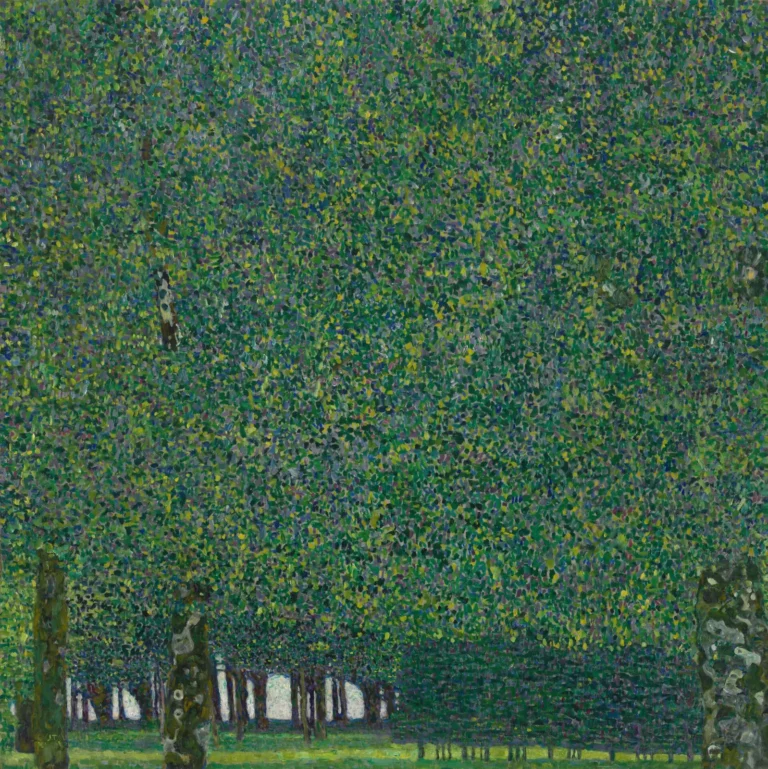
Klimt’s The Park (1909–10) at MoMA, New York, is almost pure pattern: a wall of foliage above a thin band of trunks. Why it looks so modern.
-
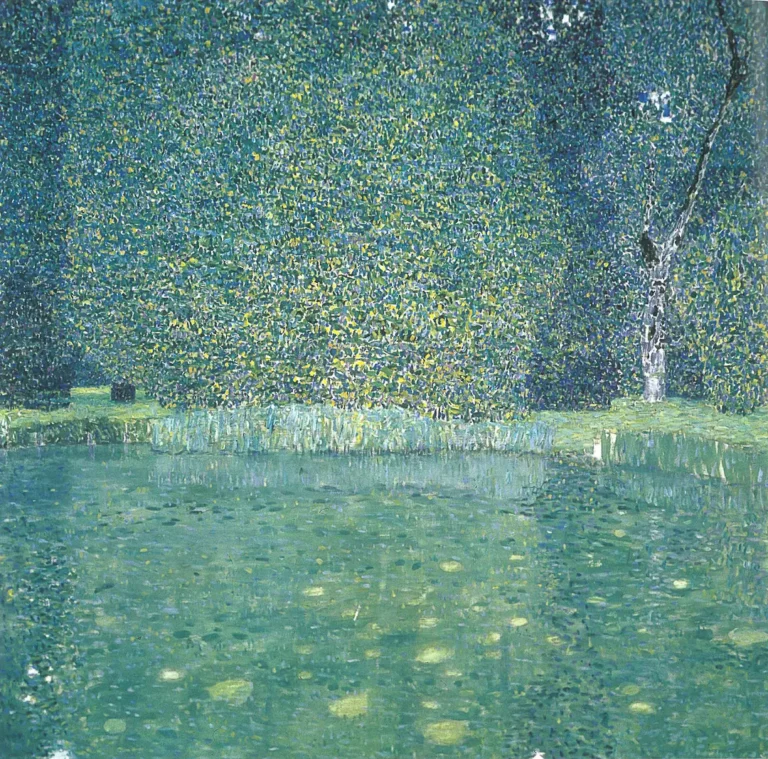
Klimt’s Park at Kammer Castle (1909), Neue Galerie, New York: part of his series on Schloss Kammer on the Attersee. What it shows and how he painted it.
-
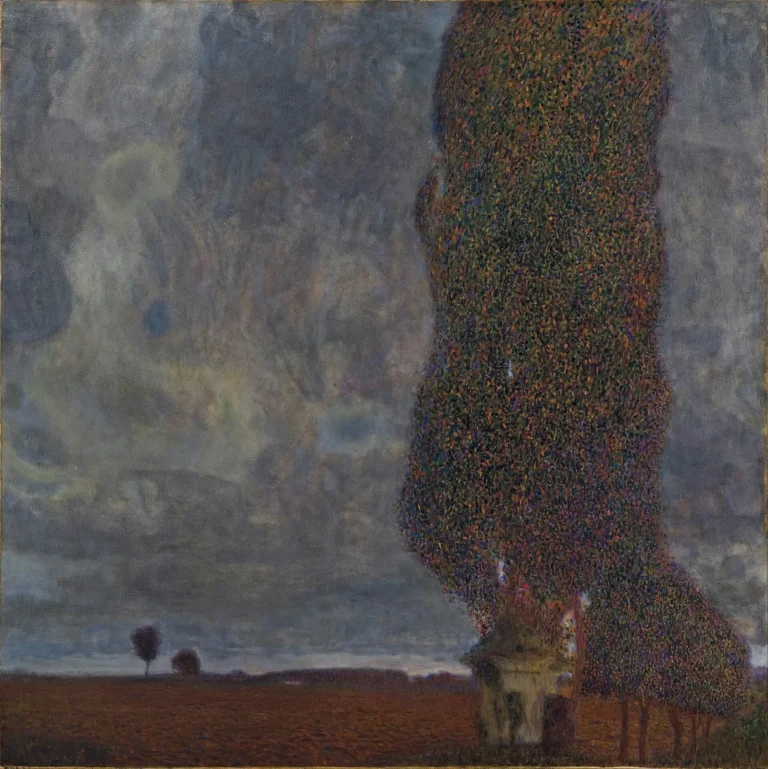
Klimt’s Large Poplar II, or Approaching Thunderstorm (1902–03), in the Leopold Museum: a towering tree before a storm, one of his most dramatic landscapes.